Living With a Retired Racing Greyhound: A Daily Guide
Discover what daily life is really like with a retired racing Greyhound. Learn about their exercise needs, quirks, and how to help them adjust to home life.
The Myth of the Hyperactive Hound
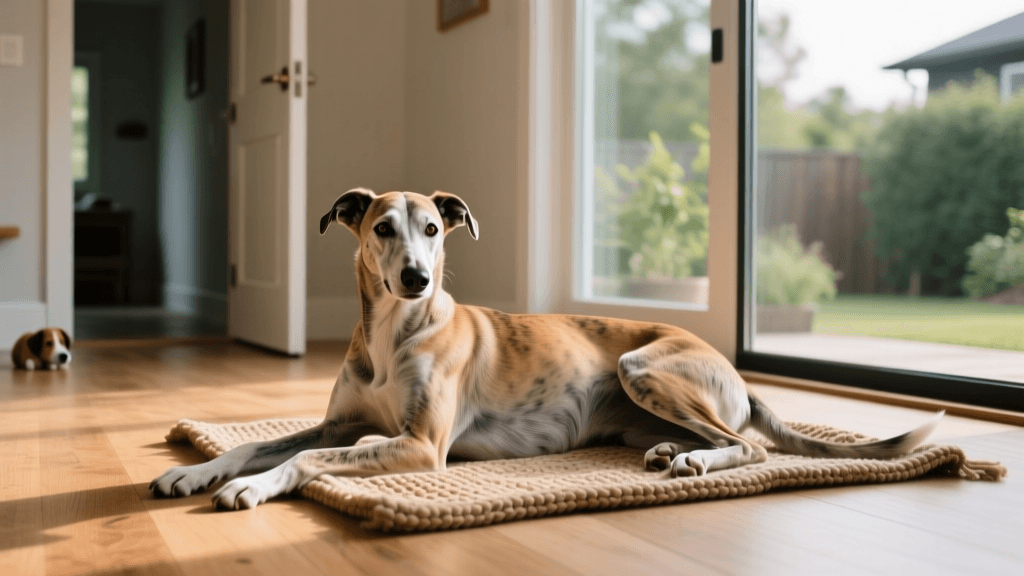
When most people picture a Greyhound, they imagine a blurring streak of canine athleticism rocketing around a track at 45 miles per hour. Because of this association, many potential adopters mistakenly believe that sharing a home with a retired racing Greyhound requires hours of rigorous daily exercise. The reality, however, is vastly different. Affectionately known in the rescue community as "45-mph couch potatoes," Greyhounds are actually one of the most low-energy, lazy breeds you can invite into your living room.
According to the American Kennel Club, Greyhounds are sweet, gentle companions that adapt remarkably well to apartment living. They are sprinters, not endurance athletes. Once they have expended their short burst of daily energy, they are more than happy to curl up on the sofa and sleep for the vast majority of the day. Understanding this unique physiological and behavioral trait is the first step in successfully integrating a retired racer into your daily routine.
Designing a Greyhound-Friendly Daily Routine
Unlike working breeds such as Border Collies or Belgian Malinois that require hours of mental and physical stimulation, a retired Greyhound's daily schedule is delightfully mundane. They thrive on predictability and comfort. Most adult Greyhounds will sleep between 16 to 18 hours a day. Your primary role is to provide a comfortable orthopedic bed (they have very little body fat and prominent joints) and two moderate walks.
| Time of Day | Activity | Duration & Details |
|---|---|---|
| 7:00 AM | Morning Potty & Breakfast | 10 minutes outside, followed by breakfast in an elevated bowl. |
| 8:00 AM | Morning Nap | 3 to 4 hours of deep sleep on an orthopedic mat. |
| 12:00 PM | Midday Potty Break | 10 to 15 minutes of light sniffing and yard time. |
| 1:00 PM | Afternoon Lounge | Couch time with the family; occasional stretching. |
| 5:30 PM | Evening Walk | 20 to 30 minutes of leash walking at a relaxed pace. |
| 6:30 PM | Dinner & Digestion | Elevated feeding, followed by strict rest to prevent bloat. |
| 8:00 PM | Evening Cuddles & Sleep | Settling into their bed for the night. |
Navigating the House: Stairs, Glass, and Hardwood
Retired racing Greyhounds have spent their entire lives in kennels and on tracks. They have never encountered the modern obstacles of a residential home. This lack of exposure creates specific challenges that require immediate, practical solutions.
The Hardwood Floor Ice Rink
Greyhounds have narrow paws with short nails and very little padding. On slippery surfaces like polished hardwood, tile, or laminate, they cannot gain traction. A slipping Greyhound can easily suffer a torn cruciate ligament or a pelvic fracture. You must lay down non-slip rugs, yoga mats, or carpet runners in all high-traffic areas and pathways leading to their bed and food bowls. Products like Gorilla Grip non-slip rug pads are essential for keeping area rugs firmly anchored.
The Invisible Barrier of Glass Doors
A Greyhound's eyesight is adapted for detecting movement at vast distances, not for recognizing stationary, transparent objects. Many Greyhounds will walk full-speed into sliding glass doors or large windows. To prevent severe concussions or lacerations, you must apply opaque window decals, strips of painter's tape, or specialized pet-safe glass markers at the dog's eye level until they learn the layout of your home.
The Staircase Phobia
Stairs are an alien concept to a dog raised on flat ground. Most retired racers will freeze at the top or bottom of a staircase. Never force or drag them up or down. Instead, use high-value treats (like small pieces of boiled chicken or hot dog) to lure them one step at a time. Carpeting the stairs or applying anti-slip stair treads will give them the confidence they need to navigate your home safely.
Feeding the Deep-Chested Athlete
Greyhounds possess a deep, narrow chest cavity, which places them at a significantly higher risk for Gastric Dilatation-Volvulus (GDV), commonly known as bloat. Bloat is a life-threatening emergency where the stomach fills with gas and twists on itself.
To mitigate this risk, feeding routines must be strictly managed. Avoid feeding your Greyhound from a bowl on the floor. Invest in an elevated feeder that raises their food and water bowls to chest level (usually about 12 to 16 inches off the ground, depending on the dog's height). Furthermore, use a slow feeder bowl, such as the Outward Hound Fun Feeder, to prevent them from inhaling their food and swallowing excess air.
Crucially, you must enforce a strict "no vigorous exercise" rule for at least one hour before and two hours after meals. A gentle, slow potty walk is fine, but running or playing fetch immediately after eating can trigger GDV.
The Greyhound Wardrobe: Function Over Fashion
Because Greyhounds have a single, very thin coat and virtually no subcutaneous body fat, they have poor temperature regulation. They feel the cold much faster than double-coated breeds, and they can easily overheat in the summer sun.
In climates where temperatures drop below 50°F (10°C), a Greyhound requires a well-fitting winter coat for outdoor potty breaks and walks. Brands like Kurgo and Hurtta offer excellent, weatherproof coats designed specifically for the unique barrel-chested, narrow-waisted silhouette of sighthounds. Inside the house, if you keep your air conditioning set below 68°F (20°C), you will likely find your Greyhound shivering. Fleece pajamas or snug-fitting snuggle sacks are not just cute; they are a medical necessity to keep your dog's core temperature stable and prevent joint stiffness.
Multi-Pet Households and the Prey Drive Factor
Integrating a retired racer into a multi-pet household requires careful management due to their ingrained prey drive. On the track, they are conditioned to chase anything small and fast that runs away from them. This instinct can easily be triggered by cats, small dogs, or even fast-moving children.
Cat-Testing and Muzzle Training
Reputable adoption groups like Adopt a Greyhound conduct cat testing before placement to gauge a dog's prey drive. However, even a cat-safe Greyhound should be introduced to household felines with extreme caution. For the first several months, your Greyhound should wear a basket muzzle (like the Baskerville Ultra) whenever they are in the same room as a cat or small dog. This ensures safety while the dog learns that the smaller animals are family members, not prey. Always provide your cat with plenty of high vertical escape routes, such as tall cat trees or wall-mounted shelves, where the dog cannot reach them.
Conclusion: Embracing the Quiet Companion
Living with a retired racing Greyhound is an exercise in patience, understanding, and profound reward. They are dogs that have spent their entire lives working, and retirement is their first opportunity to experience the simple joys of a soft bed, a warm coat, and a loving family. By adapting your home to their physical quirks, managing their diet to prevent bloat, and respecting their need for vast amounts of sleep, you will provide a safe haven for a dog that has given so much to the sport. In return, you will gain a gentle, quiet, and fiercely loyal companion who will happily snooze the days away by your side.
aaron-whyte
All our authors care for dogs every day — read more of their work on the authors page.