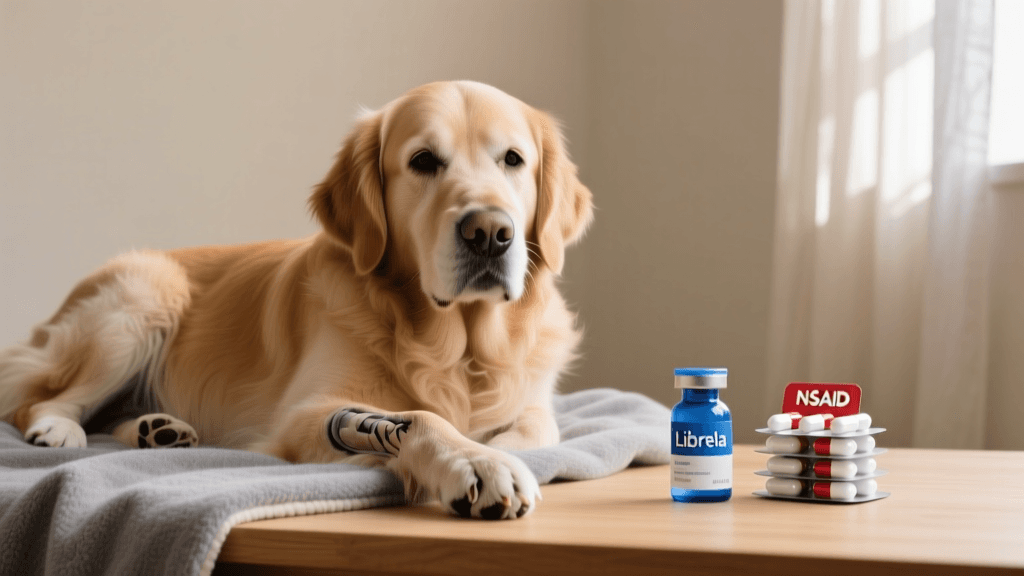
Librela vs NSAIDs for Canine Osteoarthritis: 2026 Guide
Compare Librela and traditional NSAIDs for dog osteoarthritis in 2026. Discover costs, side effects, and the best pain management plan for your senior dog.
The Evolution of Canine Pain Management in 2026
Canine osteoarthritis (OA) is a progressive, degenerative joint disease that affects an estimated 30% of adult dogs and over 80% of senior dogs. As we navigate veterinary care in 2026, the landscape of osteoarthritis treatment has undergone a massive paradigm shift. For decades, non-steroidal anti-inflammatory drugs (NSAIDs) were the undisputed gold standard for managing joint pain. However, the widespread adoption of monoclonal antibody therapies, specifically Librela (bedinvetmab), has fundamentally changed how veterinarians and pet owners approach chronic pain management.
Choosing between daily oral medications and monthly injectable biologics is one of the most common dilemmas faced by dog owners today. According to the American Kennel Club, early intervention and consistent pain management are critical to preserving a dog's mobility and quality of life. This comprehensive 2026 guide breaks down the science, efficacy, safety profiles, and real-world costs of Librela versus traditional NSAIDs to help you make an informed decision for your arthritic dog.
Traditional NSAIDs: The Long-Standing Standard
Non-steroidal anti-inflammatory drugs (NSAIDs) such as Carprofen (Rimadyl), Meloxicam (Metacam), Deracoxib (Deramaxx), and Grapiprant (Galliprant) work by inhibiting cyclooxygenase (COX) enzymes. These enzymes are responsible for producing prostaglandins, which trigger inflammation, pain, and fever in damaged joints.
Advantages of NSAIDs
- Rapid Onset of Action: Most NSAIDs provide noticeable pain relief within hours of the first dose, making them excellent for acute flare-ups.
- Oral Administration: Daily chews or liquids are easy for many owners to administer at home without requiring a veterinary visit.
- Cost-Effective: Generic formulations of Carprofen and Meloxicam remain highly affordable in 2026, often costing less than $1.00 per day for medium-sized dogs.
Limitations and Safety Concerns
While highly effective, NSAIDs are not without risks. Because prostaglandins also protect the stomach lining and maintain blood flow to the kidneys, long-term NSAID use can lead to gastrointestinal ulceration, hepatic toxicity, and renal compromise. The U.S. Food and Drug Administration (FDA) emphasizes the necessity of baseline and bi-annual blood work (CBC and chemistry panels) for any dog on chronic NSAID therapy. For senior dogs with pre-existing kidney disease or liver dysfunction, NSAIDs are often strictly contraindicated, leaving owners searching for safe alternatives.
Librela (Bedinvetmab): The Monoclonal Antibody Revolution
Librela represents a completely different pharmacological approach. It is a caninized monoclonal antibody that specifically targets and neutralizes Nerve Growth Factor (NGF). NGF is a protein that becomes overexpressed in osteoarthritic joints, directly amplifying pain signaling to the brain. By binding to NGF, Librela stops the pain signal at the source before it is ever perceived by the dog.
Advantages of Librela
- Organ-Sparing Metabolism: Unlike NSAIDs, Librela is not metabolized by the liver or excreted by the kidneys. It is broken down into amino acids and recycled by the body, just like naturally occurring proteins. This makes it exceptionally safe for senior dogs with compromised renal or hepatic function.
- Convenience: Administered as a subcutaneous injection by a veterinarian once every 28 days, it eliminates the stress of daily pill-popping and ensures 100% compliance.
- Favorable Safety Profile: Clinical trials and post-market surveillance through 2026 show minimal systemic side effects, with occasional mild injection-site reactions being the most common complaint.
Limitations and Considerations
The primary drawback of Librela is its delayed onset. Because it relies on the accumulation of antibodies to reach a therapeutic threshold, many dogs do not experience significant pain relief until after their second or third monthly injection. Furthermore, it is generally more expensive than generic NSAIDs and requires a monthly veterinary visit, which can induce stress in highly anxious dogs.
2026 Treatment Comparison: Librela vs. NSAIDs
To help you visualize the differences, here is a direct comparison of the two primary medical treatments for canine osteoarthritis as of 2026.
| Feature | Traditional NSAIDs (e.g., Carprofen) | Librela (Bedinvetmab) |
|---|---|---|
| Mechanism of Action | Inhibits COX enzymes to reduce inflammation and prostaglandins. | Targets and neutralizes Nerve Growth Factor (NGF) to block pain signals. |
| Administration | Daily oral chew or liquid. | Subcutaneous injection every 28 days. |
| Onset of Relief | Rapid (within hours to days). | Gradual (peak efficacy after 2nd or 3rd dose). |
| Organ Impact | Requires liver and kidney monitoring; potential for GI ulcers. | No liver or kidney toxicity; safe for dogs with organ dysfunction. |
| Average Monthly Cost (50 lb Dog) | $25 - $45 | $90 - $140 (plus exam fee) |
Building a Multimodal Osteoarthritis Protocol
The WSAVA Global Pain Council consistently advocates for a multimodal approach to osteoarthritis. Relying solely on one medication, whether an NSAID or Librela, is rarely sufficient for moderate to severe OA. A comprehensive 2026 pain management plan should include the following adjunctive therapies:
1. Strict Weight Management
Adipose tissue is not just inert fat; it is an active endocrine organ that secretes pro-inflammatory cytokines, which worsen joint degradation. Keeping your dog at a lean body condition score (BCS of 4/9) is the single most effective non-pharmaceutical intervention for OA. Even a 5% reduction in body weight can drastically improve lameness scores.
2. Therapeutic Omega-3 Fatty Acids
High doses of EPA and DHA (found in marine fish oils) inhibit the inflammatory cascade. The therapeutic dosage for canine OA is significantly higher than standard supplement recommendations. Aim for a combined EPA/DHA dose of approximately 300 mg per 10 kg (22 lbs) of body weight daily. Look for veterinary-specific formulations with third-party purity testing to avoid heavy metal contamination.
3. Advanced Joint Supplements
While Glucosamine and Chondroitin remain popular, newer ingredients like UC-II (undenatured type II collagen) and Green-Lipped Mussel extract have shown superior efficacy in recent veterinary studies. UC-II works via oral tolerance, modulating the immune system's attack on joint cartilage.
4. Environmental Modifications and Rehab
Invest in orthopedic memory foam beds, use raised food bowls, and install non-slip rugs over hardwood floors to prevent micro-slips that aggravate compromised joints. Canine physical rehabilitation, including underwater treadmill therapy and therapeutic laser (photobiomodulation), can help maintain muscle mass, which is vital for supporting unstable joints.
Cost Analysis and Accessibility in 2026
Budgeting for chronic care is a reality for pet owners. In 2026, the cost of generic NSAIDs remains highly accessible, often available through online veterinary pharmacies for under $40 a month. Librela, being a patented biologic, carries a premium price tag. For a 50-pound dog, a single monthly vial typically costs between $90 and $140, depending on your geographic location and clinic markup. Additionally, because it must be administered by a veterinary professional, you may incur a brief nursing or technician exam fee each month, though many clinics offer discounted "injection-only" visits for established OA patients.
For dogs that cannot tolerate NSAIDs due to renal disease, the cost of Librela is widely considered a worthwhile investment, as it prevents the need for expensive emergency treatments related to NSAID-induced kidney failure or gastrointestinal bleeding.
Conclusion: Which is Right for Your Dog?
There is no one-size-fits-all answer in veterinary medicine. If your dog is young, otherwise healthy, and experiencing an acute flare-up of joint pain, a traditional NSAID remains a fast-acting, cost-effective first-line defense. However, if you are managing a senior dog with multiple comorbidities, early-stage kidney disease, or a dog that simply refuses daily medication, Librela offers a safe, highly effective, and convenient alternative. Consult with your veterinarian to evaluate your dog's specific bloodwork, lifestyle, and pain levels to craft the optimal 2026 osteoarthritis treatment plan.
anouk-beaumont
All our authors care for dogs every day — read more of their work on the authors page.