Librela vs Adequan for Canine OA: 2026 Treatment Guide
Compare Librela and Adequan for canine osteoarthritis in 2026. Explore efficacy, costs, side effects, and the best OA treatment plan for your dog.
The Rising Prevalence of Canine Osteoarthritis in 2026
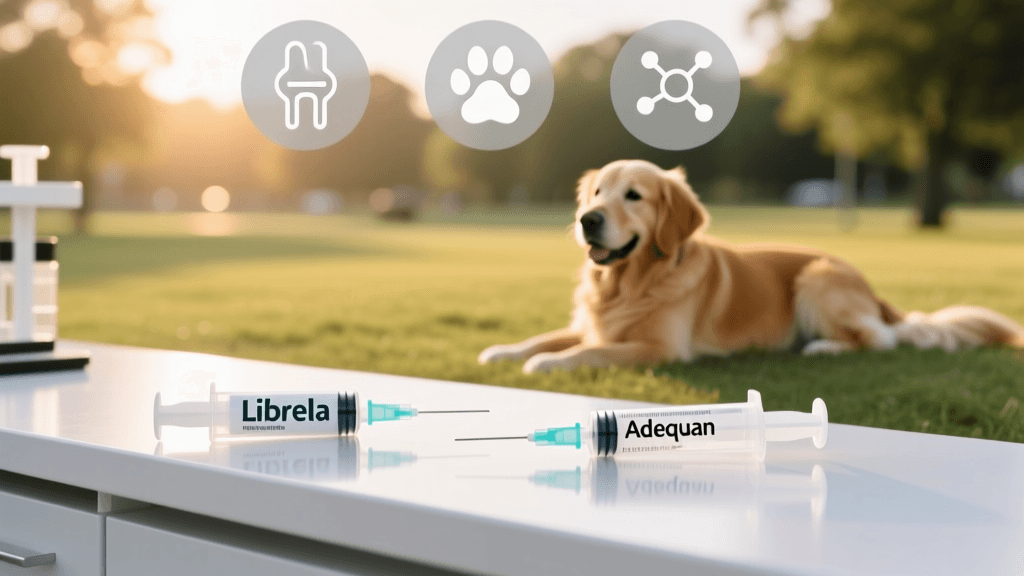
As we navigate veterinary advancements in 2026, managing canine osteoarthritis (OA) remains one of the most critical aspects of senior dog care. Osteoarthritis is a degenerative joint disease that affects approximately 25% of all dogs, leading to chronic pain, reduced mobility, and a diminished quality of life. While traditional NSAIDs (Non-Steroidal Anti-Inflammatory Drugs) have long been the cornerstone of OA management, many dogs cannot tolerate them due to gastrointestinal, renal, or hepatic complications. This has led to a massive shift toward targeted biologic therapies and disease-modifying osteoarthritis drugs (DMOADs). Today, the two most prominent injectable treatments dominating the veterinary landscape are Librela (bedinvetmab) and Adequan Canine (polysulfated glycosaminoglycan). Understanding the distinct mechanisms, benefits, and limitations of each is essential for pet parents looking to optimize their dog's mobility and comfort this year.
Understanding Librela (Bedinvetmab)
Librela represents a revolutionary leap in veterinary pain management. Approved in recent years and widely adopted by 2026, Librela is a monoclonal antibody (mAb) that specifically targets and neutralizes Nerve Growth Factor (NGF). NGF is a protein that plays a crucial role in the transmission of pain signals from damaged joints to the brain. By binding to NGF, Librela effectively blocks the pain signal before it ever reaches the central nervous system. According to the official Librela resource center, this targeted approach provides profound pain relief without the systemic side effects commonly associated with traditional NSAIDs, as it is not metabolized by the liver or kidneys. Instead, it is broken down into natural amino acids via normal cellular degradation pathways. Librela is administered as a simple subcutaneous injection once a month by your veterinarian, making compliance incredibly easy for pet owners.
Understanding Adequan Canine (Polysulfated Glycosaminoglycan)
Adequan Canine has been a trusted staple in veterinary medicine for decades, but its role in 2026 has evolved from a standalone treatment to a vital component of multimodal joint therapy. Adequan is a polysulfated glycosaminoglycan (PSGAG), which classifies it as a DMOAD. Unlike Librela, which masks the pain signal, Adequan actively works to alter the disease process within the joint. It inhibits the enzymes that break down cartilage, stimulates the synthesis of new cartilage matrix, and improves the viscosity of synovial fluid, which lubricates the joint. The standard protocol for Adequan involves a loading phase of intramuscular injections twice a week for four weeks (eight injections total), followed by a maintenance phase of one injection every three to four weeks. While it does not provide the immediate, profound pain-blocking effects of a monoclonal antibody, its ability to preserve joint architecture makes it invaluable for long-term joint health.
Head-to-Head Comparison: Librela vs. Adequan
Choosing between these two injectables depends heavily on your dog's specific clinical picture, age, and concurrent health conditions. Below is a detailed comparison chart to help you and your veterinarian make an informed decision in 2026.
| Feature | Librela (Bedinvetmab) | Adequan Canine (PSGAG) |
|---|---|---|
| Primary Mechanism | Anti-NGF Monoclonal Antibody (Pain blocking) | DMOAD (Cartilage preservation & lubrication) |
| Administration | Subcutaneous injection once monthly | IM loading phase (8 doses), then monthly maintenance |
| Onset of Action | Rapid (often within days to 1 week) | Gradual (improvements seen after loading phase) |
| Organ Metabolism | Cellular degradation (Safe for liver/kidneys) | Renal excretion (Use caution in severe renal disease) |
| Best For | Severe pain, senior dogs, dogs with organ disease | Mild to moderate OA, working dogs, joint preservation |
| Common Side Effects | Mild injection site reactions, occasional lethargy | Mild injection site pain, rare bleeding tendencies |
2026 Cost Breakdown and Accessibility
Budgeting for chronic OA management is a reality for most pet owners. In 2026, the cost of these medications varies based on your dog's weight, geographic location, and veterinary clinic pricing structures. Librela is priced in weight-based tiers. For a medium-sized dog (30-60 lbs), a single monthly injection typically ranges from $85 to $130. Over a year, this equates to roughly $1,000 to $1,560. Adequan, conversely, is sold in multi-dose vials. The initial loading phase can cost between $250 and $400, depending on the size of the dog and the number of vials required. Once on the monthly maintenance schedule, the cost drops significantly to approximately $40 to $70 per month. Many pet insurance providers in 2026 now cover both treatments under chronic illness plans, provided the OA was not diagnosed before the policy's effective date.
Building a Multimodal OA Management Plan
Experts at the Cornell University Veterinary Pain Management Center emphasize that no single medication is a silver bullet for canine osteoarthritis. The gold standard for 2026 is a multimodal approach, combining injectable therapies with lifestyle, nutritional, and environmental modifications.
1. Weight Optimization and Nutrition
Excess body weight exponentially increases the mechanical load on degenerating joints. Keeping your dog at a lean body condition score (BCS of 4 or 5 out of 9) is arguably the most effective non-pharmaceutical intervention for OA. In 2026, veterinary nutritionists highly recommend prescription joint diets formulated with high levels of EPA (eicosapentaenoic acid), an Omega-3 fatty acid proven to downregulate inflammatory enzymes in the joint. If a prescription diet is not feasible, supplementing a high-quality commercial diet with a veterinary-grade Omega-3 fish oil and a comprehensive joint supplement containing undenatured type II collagen (UC-II), green-lipped mussel, and curcumin can yield significant improvements in mobility.
2. Physical Rehabilitation and Laser Therapy
Muscle atrophy is a common secondary consequence of OA, as dogs avoid using painful limbs. This loss of muscle mass destabilizes the joint, accelerating cartilage wear. Canine physical rehabilitation, including underwater treadmill therapy, therapeutic exercises, and balance work, helps rebuild the supportive musculature without placing excessive concussive forces on the joints. Additionally, Class IV therapeutic laser treatments have become a standard offering in most veterinary clinics by 2026. Photobiomodulation increases cellular ATP production, reduces local inflammation, and provides excellent adjunctive pain relief, particularly for dogs experiencing acute flare-ups.
3. Environmental Modifications
Adapting your home environment is crucial for preserving your dog's independence and preventing acute injuries. The American Kennel Club recommends replacing slippery hardwood or tile floors with interlocking foam mats or high-traction area rugs to prevent splaying and falls. Provide orthopedic memory foam beds with low entry points, and utilize pet stairs or ramps to help your dog access furniture or vehicles safely. Elevating food and water bowls can also reduce the strain on the cervical spine and shoulder joints during meals.
Can You Use Librela and Adequan Together?
A common question among pet parents in 2026 is whether these two injectables can be used concurrently. Because they operate through entirely different mechanisms and metabolic pathways, many veterinary orthopedic specialists do combine them for dogs with severe, refractory OA. Librela provides the immediate, potent pain relief necessary to get the dog moving and participating in physical therapy, while Adequan works in the background to preserve the remaining cartilage and improve joint fluid viscosity. However, this combination should only be pursued under the strict guidance of your primary veterinarian or a board-certified veterinary surgeon to monitor for any unforeseen interactions or injection site sensitivities.
Monitoring Your Dog's Progress
Treating OA is not a 'set it and forget it' endeavor. It requires continuous evaluation. Utilizing validated pain scoring systems, such as the Canine Brief Pain Inventory (CBPI) or the Liverpool Osteoarthritis in Dogs (LOAD) questionnaire, can help you objectively track your dog's response to treatment. Keep a digital journal noting your dog's ability to climb stairs, rise from a resting position, and engage in play. If you notice a regression in mobility or a return of stiffness, particularly after cold weather fronts or periods of high activity, schedule a recheck appointment. Your veterinarian may need to adjust the frequency of Adequan maintenance doses, explore alternative pain modalities like Gabapentin or Amantadine, or recommend advanced imaging to assess the progression of the joint disease.
Conclusion
The landscape of canine osteoarthritis treatment in 2026 offers more hope and effective options than ever before. While Librela excels at providing safe, targeted, and profound pain relief for senior or compromised dogs, Adequan remains a powerhouse for preserving joint architecture and managing mild to moderate OA. By partnering closely with your veterinary team and committing to a comprehensive multimodal management plan, you can significantly enhance your dog's comfort, mobility, and overall quality of life well into their golden years.
beth-carrasco
All our authors care for dogs every day — read more of their work on the authors page.