Top Smart Pet Cameras for Dog Separation Anxiety 2026
Discover the best interactive pet cameras for dog separation anxiety in 2026. Compare Furbo, Petcube, and Wyze to keep your pup calm while alone.
The 2026 Landscape of Canine Separation Anxiety
As we navigate the widespread return-to-office mandates and hybrid work schedules of 2026, veterinary behaviorists are seeing a sustained surge in canine separation anxiety. Dogs that were adopted during the remote-work boom or grew accustomed to constant human presence are now struggling with prolonged alone time. According to the ASPCA, separation anxiety is triggered when a dog becomes overly attached to their guardian and exhibits extreme distress upon being left alone. Symptoms range from destructive chewing and inappropriate elimination to excessive vocalization, pacing, and even self-harm.
While traditional behavior modification and environmental enrichment remain the gold standard, modern smart home technology—specifically interactive pet cameras—has become an indispensable tool for pet parents. In 2026, the latest generation of pet cameras offers advanced AI behavioral tracking, automated treat dispensing, and high-definition two-way audio, allowing owners to monitor and interrupt anxiety cycles remotely.
How Interactive Cameras Interrupt the Anxiety Cycle
Separation anxiety typically peaks within the first 20 to 30 minutes of an owner's departure. This is when cortisol levels spike and the sympathetic nervous system goes into overdrive. Interactive cameras allow you to monitor this critical window in real-time. When early signs of distress appear—such as whining, door-scratching, or repetitive pacing—you can use two-way audio to provide a calming verbal cue or deploy a treat to redirect your dog's focus toward a positive reinforcement activity.
However, experts caution against using cameras as a standalone cure. The Humane Society of the United States emphasizes that technology should be paired with systematic desensitization and counterconditioning. A camera is a bridge, not a bandage. It allows you to reward calm behavior remotely and ensure your dog is safe while you gradually increase the duration of your absences without triggering a panic response.
Top 3 Interactive Pet Cameras for Separation Anxiety in 2026
1. Furbo 360 Dog Camera (Premium Pick for Active Dogs)
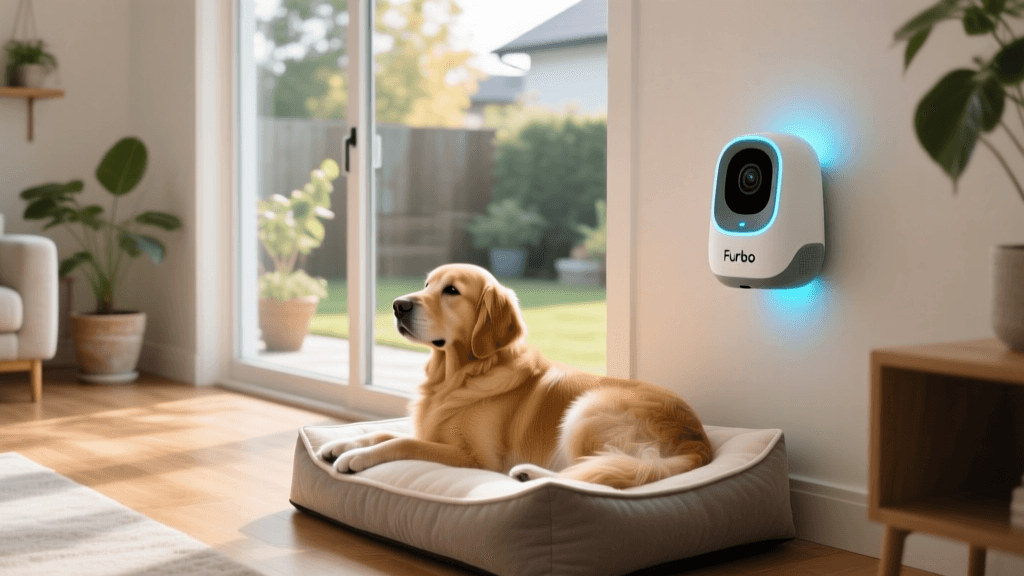
The Furbo 360 remains the market leader for separation anxiety management in 2026, largely due to its motorized base that rotates a full 360 degrees. If your dog paces or moves from room to room while anxious, the Furbo's auto-tracking feature follows them, ensuring they never leave your field of view. This is crucial for dogs who engage in destructive behaviors in corners or behind furniture when stressed.
- Key Features: The treat tosser holds up to 100 standard-sized treats (up to 0.5 inches in diameter) and can be scheduled for automated 'snack breaks' via the app. The 'Doggie Vision' AI alerts you specifically to barking, crying, or destructive chewing, sending a push notification so you can intervene before a full-blown panic attack occurs.
- 2026 Pricing: $219.99 for the hardware, with an optional Furbo Dog Nanny subscription at $6.99/month for cloud recording and advanced AI alerts.
2. Petcube Bites 2 Lite (Best Budget Treat Tosser)
For pet parents who need treat-dispensing capabilities without the premium price tag, the Petcube Bites 2 Lite is a formidable contender. It features a 1080p HD camera with a 120-degree wide-angle lens and a built-in treat hopper that holds about 1.5 cups of kibble or small training treats, such as Zuke's Mini Naturals.
- Key Features: The Petcube app includes a 'Vet Chat' feature, providing on-demand access to veterinary professionals, which is a massive bonus if you are unsure whether your dog's behavior warrants medical intervention. The treat tossing mechanism is slightly louder than the Furbo, which can actually serve as a positive auditory cue for dogs undergoing marker-word conditioning.
- 2026 Pricing: $149.99, with Petcube Care subscriptions starting at $4.99/month for video history.
3. Wyze Cam Pan v3 (Best for Budget Monitoring & Environmental Control)
If your dog is easily startled by the mechanical whir of a treat dispenser, or if you are managing a multi-pet household where treat tossing causes resource guarding, the Wyze Cam Pan v3 is the optimal choice. While it lacks a treat hopper, its 360-degree panning, tilt, and zoom capabilities are unmatched in its price bracket.
- Key Features: The Cam Pan v3 features Color Night Vision and a built-in white noise generator. For separation anxiety, the ability to play soothing white noise or classical music through the camera's speaker can mask triggering outdoor sounds like delivery trucks or neighborhood dogs. The AI pet detection reliably tracks your dog's movements across the room without needing a mechanical hopper.
- 2026 Pricing: $59.98, with Wyze Cam Plus at $2.99/month per camera for continuous recording.
2026 Smart Camera Feature Comparison
| Feature | Furbo 360 | Petcube Bites 2 Lite | Wyze Cam Pan v3 |
|---|---|---|---|
| 2026 Retail Price | $219.99 | $149.99 | $59.98 |
| Treat Tossing | Yes (360 Rotation) | Yes (Fixed Angle) | No |
| AI Bark/Cry Alerts | Yes (Highly Specific) | Yes (Sound Detection) | Yes (Sound Detection) |
| Auto Pet Tracking | Yes (Motorized Base) | No | Yes (Pan/Tilt Tracking) |
| Subscription Needed | Optional ($6.99/mo) | Optional ($4.99/mo) | Optional ($2.99/mo) |
A Step-by-Step Desensitization Protocol Using Pet Cameras
To effectively use your new camera for separation anxiety, follow this systematic desensitization protocol. Never rush these steps; progression is dictated entirely by your dog's comfort level and body language.
Step 1: Desensitize Pre-Departure Cues
Dogs with separation anxiety often panic when they see you pick up your keys, put on your shoes, or grab your coat. Perform these actions multiple times a day without actually leaving the house. Use your pet camera's two-way audio to praise your dog calmly for remaining on their designated mat or bed.
Step 2: The 'Micro-Absence' Treat Toss
Step outside your front door and close it. Immediately use the camera app to toss a high-value treat (like a freeze-dried liver chunk) to your dog. Wait 5 seconds, then re-enter calmly. Repeat this 10 times. This teaches your dog that your departure predicts a reward, not abandonment, effectively counterconditioning their emotional response to the door closing.
Step 3: Graduated Time Extensions
Once your dog is happily anticipating the treat toss upon your exit, begin extending the time you stay outside. Move from 5 seconds to 30 seconds, then 1 minute, then 5 minutes. Use the camera's AI alerts and live feed to monitor visual stress signals. If they begin to pace, pant heavily, or bark, you have increased the time too quickly. Return to the previous successful duration and practice there for another week.
Step 4: Automated Counterconditioning
For longer absences, program the Furbo or Petcube to dispense a small handful of treats every 15 to 20 minutes. Pair this with a long-lasting enrichment toy, such as a frozen Kong stuffed with peanut butter and bone broth, to keep your dog's brain engaged. Chewing and licking promote the release of endorphins, which naturally soothe the canine nervous system.
When Technology Isn't Enough: Seeking Professional Help
It is vital to recognize the limits of consumer technology. If your dog exhibits severe self-injurious behavior, such as breaking teeth on window frames or doors, or if they refuse to eat high-value treats while you are gone (a common sign of acute sympathetic nervous system arousal where the digestive system shuts down), a camera alone will not solve the problem.
In these severe cases, consult a board-certified veterinary behaviorist. They may prescribe anti-anxiety medications, such as fluoxetine or trazodone, to lower your dog's baseline stress levels enough for behavioral modification to take hold. Remember, the goal of the camera is to gather data and provide remote support, but true rehabilitation requires patience, consistency, and sometimes, medical intervention. By combining the latest 2026 smart camera technology with proven, science-based behavioral protocols, you can help your dog build the confidence they need to feel safe, secure, and relaxed while home alone.
priya-sutaria
All our authors care for dogs every day — read more of their work on the authors page.