Canine Osteoarthritis Treatment 2026: Librela vs NSAIDs
Compare Librela and traditional NSAIDs for canine osteoarthritis in 2026. Discover costs, efficacy, and side effects to choose the best joint pain relief.
The Evolution of Canine Osteoarthritis Treatment in 2026
Canine osteoarthritis (OA) is a progressive, degenerative joint disease that affects millions of dogs worldwide. As we navigate the veterinary landscape in 2026, the approach to managing joint pain has undergone a revolutionary shift. While traditional non-steroidal anti-inflammatory drugs (NSAIDs) have been the cornerstone of pain management for decades, the widespread adoption of anti-nerve growth factor (anti-NGF) monoclonal antibodies has fundamentally changed how veterinarians treat chronic joint pain. If your dog is showing signs of stiffness, reluctance to jump, or a decreased interest in daily walks, understanding the differences between these treatment modalities is critical for their quality of life.
Understanding Canine Osteoarthritis
Osteoarthritis occurs when the protective cartilage that cushions the ends of bones wears down over time. This leads to bone-on-bone friction, inflammation, and chronic pain. According to the Cornell University College of Veterinary Medicine, osteoarthritis is the most common joint disease in dogs, affecting an estimated 20% of dogs over one year of age and up to 80% of senior dogs. In 2026, early intervention is heavily emphasized, focusing not just on masking pain, but on preserving joint mobility and halting the pain signaling pathways before severe structural degradation occurs.
Traditional NSAIDs: The Long-Standing Standard
Non-steroidal anti-inflammatory drugs (NSAIDs) such as carprofen (Rimadyl), meloxicam (Metacam), and deracoxib (Deramaxx) work by inhibiting cyclooxygenase (COX) enzymes. These enzymes are responsible for producing prostaglandins, which promote inflammation, pain, and fever. By blocking COX enzymes, NSAIDs effectively reduce joint swelling and provide significant pain relief.
Pros of Traditional NSAIDs
- Rapid Onset: Most dogs show noticeable improvement in mobility within a few days of starting daily oral medication.
- Cost-Effective: Generic versions of carprofen and meloxicam are highly affordable, making them accessible for long-term daily use.
- Oral Administration: Easy to administer at home via chewable tablets or liquid suspensions.
Cons and Risks
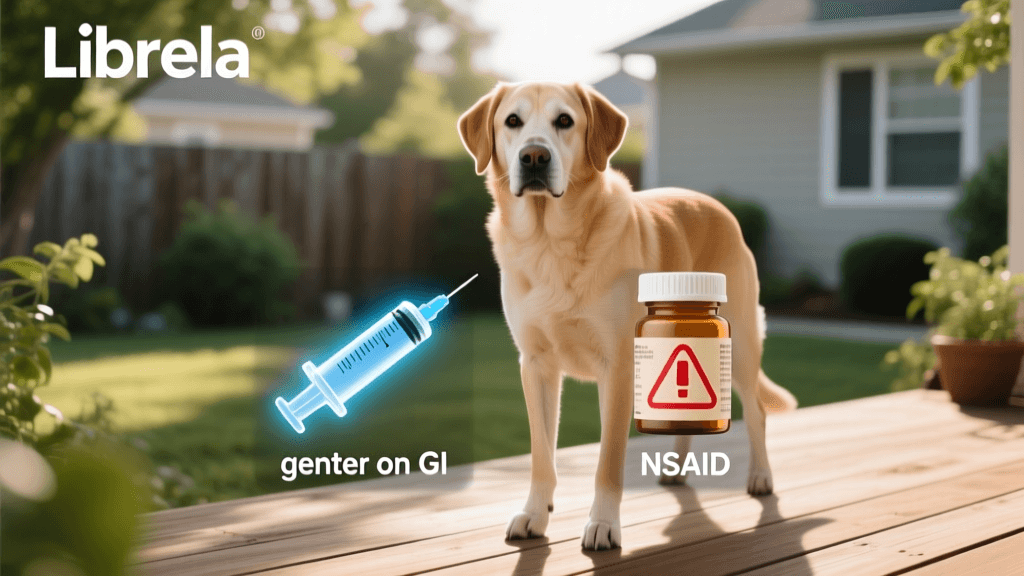
Despite their efficacy, NSAIDs are metabolized by the liver and excreted by the kidneys. Long-term use requires biannual blood panels to monitor hepatic and renal function. The American Kennel Club (AKC) notes that while NSAIDs are generally safe when used correctly, they carry risks of gastrointestinal ulceration, vomiting, diarrhea, and in rare cases, severe liver or kidney toxicity. Furthermore, NSAIDs are contraindicated for dogs with pre-existing renal disease or those taking corticosteroids.
Librela (Bedinvetmab): The Monoclonal Antibody Revolution
Librela (bedinvetmab) is a fully caninized monoclonal antibody that targets Nerve Growth Factor (NGF). NGF is a protein that plays a pivotal role in the generation and transmission of pain signals in the peripheral nervous system. By binding to NGF, Librela prevents the pain signal from reaching the brain, effectively turning off the pain at the source without interfering with the body's natural inflammatory healing processes or organ function.
The U.S. Food and Drug Administration (FDA) highlights that Librela was the first monoclonal antibody approved specifically to treat osteoarthritis pain in dogs. Now, in 2026, it has become a first-line therapy for senior dogs and those with compromised liver or kidney function.
Pros of Librela
- Organ-Sparing: Because it is a protein-based antibody, Librela is broken down into amino acids and recycled by the body. It bypasses the liver and kidneys entirely, making it incredibly safe for geriatric dogs or those with metabolic diseases.
- Convenience: Administered as a subcutaneous injection by a veterinarian once every 30 days, eliminating the stress of daily pill administration.
- Fewer Systemic Side Effects: No risk of gastrointestinal ulcers or systemic toxicity associated with COX inhibition.
Cons and Risks
The primary drawback of Librela in 2026 remains the cost, which is significantly higher than generic NSAIDs. Additionally, some dogs may experience mild, transient injection site reactions, such as localized swelling or lethargy for 24 hours post-injection. It is also important to note that because Librela only masks the pain signal and does not reduce joint inflammation, some veterinarians still combine it with other anti-inflammatory modalities for severe cases.
Head-to-Head Comparison: 2026 OA Treatment Options
To help you and your veterinarian decide on the best protocol, here is a comprehensive comparison of the leading osteoarthritis treatments available in 2026.
| Feature | Librela (Bedinvetmab) | Traditional NSAIDs (Carprofen/Meloxicam) | Grapiprant (Galliprant) |
|---|---|---|---|
| Mechanism of Action | Anti-NGF Monoclonal Antibody | Non-selective / COX-2 Inhibitor | EP4 Receptor Antagonist |
| Administration | Monthly Subcutaneous Injection | Daily Oral Tablet or Liquid | Daily Oral Tablet |
| Organ Processing | Cellular degradation (No liver/kidney load) | Hepatic metabolism / Renal excretion | Hepatic metabolism / Fecal excretion |
| GI / Ulcer Risk | None | Moderate | Low |
| Estimated Monthly Cost (50lb Dog) | $90 - $130 | $20 - $40 | $60 - $85 |
| Best For | Senior dogs, renal/hepatic compromise | Healthy adult dogs, acute flare-ups | Dogs needing targeted prostaglandin blockade |
Building a 2026 Multimodal Treatment Plan
Relying solely on pharmaceuticals is no longer considered the gold standard for canine osteoarthritis. Top veterinary orthopedic specialists in 2026 advocate for a multimodal approach that addresses the disease from multiple angles.
1. Strict Weight Management
Excess body weight exponentially increases the mechanical load on degenerating joints. Keeping your dog at a lean body condition score (BCS of 4 or 5 out of 9) is the single most effective non-pharmaceutical intervention for OA. Prescription joint-support diets, such as Hill's Prescription Diet j/d or Royal Canin Mobility Support, are formulated with high levels of EPA (eicosapentaenoic acid) to naturally inhibit cartilage-degrading enzymes.
2. Physical Rehabilitation and Hydrotherapy
Underwater treadmill therapy and targeted physiotherapy help maintain muscle mass without placing concussive forces on the joints. Strong muscles act as shock absorbers, stabilizing the joint and reducing the burden on damaged cartilage.
3. Disease-Modifying Osteoarthritis Drugs (DMOADs)
Injectable polysulfated glycosaminoglycans (PSGAGs), commonly known by the brand name Adequan, help inhibit the enzymes that break down cartilage while stimulating the production of new joint fluid. In 2026, Adequan is frequently used alongside Librela to provide both pain relief and structural joint support.
4. Environmental Modifications
Simple changes at home can drastically improve your dog's comfort. Invest in orthopedic memory foam beds, place non-slip rugs over hardwood floors to prevent splaying, and use ergonomic ramps to help your dog access vehicles or elevated furniture without jumping.
Conclusion: Choosing the Right Path for Your Dog
The landscape of canine osteoarthritis treatment in 2026 offers more hope and comfort than ever before. While traditional NSAIDs remain a highly effective and affordable option for healthy dogs, the advent of Librela has provided a lifeline for senior pets and those with underlying organ dysfunction who can no longer tolerate daily anti-inflammatory medications. Always consult with your primary care veterinarian or a board-certified veterinary orthopedic specialist to tailor a multimodal pain management plan that ensures your dog remains active, happy, and pain-free in their golden years.
priya-sutaria
All our authors care for dogs every day — read more of their work on the authors page.