2026 Fresh Diet Guide: Green-Lipped Mussel for Senior Dog Joints
Discover how to safely add green-lipped mussel and fresh anti-inflammatory toppers to your senior dog's raw or cooked diet for joint health in 2026.
As we move through 2026, the veterinary nutrition community continues to recognize the profound impact of whole-food matrices over isolated synthetic supplements, particularly for aging dogs suffering from osteoarthritis. For pet parents committed to raw, fresh, or alternative diets, managing a senior dog's joint health requires more than just a standard glucosamine pill. It demands a strategic, biologically appropriate approach to inflammation. One of the most potent, scientifically backed fresh food additions for canine joint care is the New Zealand Green-Lipped Mussel (Perna canaliculus).
Unlike traditional kibble, which often relies on high-heat extrusion that degrades delicate omega-3 fatty acids, a fresh or raw diet preserves the bioavailability of essential nutrients. In this comprehensive 2026 guide, we will explore how to safely and effectively integrate green-lipped mussel and other synergistic fresh toppers into your senior dog’s raw or lightly cooked meal plan to support mobility, reduce joint pain, and enhance their overall quality of life.
The Science Behind Green-Lipped Mussel and Fresh Matrices
Osteoarthritis is a degenerative joint disease that affects a vast majority of senior dogs. According to the American College of Veterinary Surgeons, managing this condition requires a multimodal approach, with nutrition playing a foundational role. Green-lipped mussel (GLM) is unique because it contains a rare combination of eicosatetraenoic acid (ETA), alongside EPA and DHA, which actively inhibit inflammatory pathways at the cellular level.
When fed as a whole, fresh, or minimally processed freeze-dried food, GLM provides a complex matrix of glycosaminoglycans (GAGs), chondroitin sulfate, and amino acids that work synergistically. In 2026, veterinary nutritionists emphasize that the "food matrix effect"—how nutrients interact within their natural biological structure—significantly enhances absorption compared to isolated joint supplements.
Sourcing GLM: Fresh, Freeze-Dried, or Oil?
When formulating a raw or fresh diet, the form of GLM you choose matters immensely for both safety and nutritional integrity. Here is how the three primary forms compare for senior dog diets this year.
| Form | Bioavailability | Safety Profile | Best For |
|---|---|---|---|
| Fresh (Steamed lightly) | Highest | Requires careful sourcing to avoid heavy metals/bacteria | Dogs on fully cooked or lightly seared diets |
| Freeze-Dried Powder | High | Excellent (pathogens eliminated via freeze-drying) | Raw feeders (PMR/BARF) and picky eaters |
| Cold-Pressed Oil | Moderate (Lacks GAGs) | Good, but prone to oxidation if not stored properly | Dogs needing pure Omega-3 boosts without extra calories |
For raw feeders adhering to a Prey Model Raw (PMR) or Biologically Appropriate Raw Food (BARF) framework, freeze-dried GLM powder is generally the safest and most convenient option in 2026. It preserves the heat-sensitive ETA and GAGs while eliminating the risk of marine pathogens. Always look for brands that source exclusively from the pristine, regulated waters of New Zealand and provide third-party heavy metal testing certificates.
Building the Base: Balancing the Raw Diet
Before adding joint-supporting toppers, your dog’s base diet must be complete and balanced. The World Small Animal Veterinary Association (WSAVA) strongly recommends that any homemade or raw diet be formulated by a board-certified veterinary nutritionist to ensure proper calcium-to-phosphorus ratios and adequate micronutrient levels.
A standard PMR diet consists of 80% muscle meat, 10% bone, 5% liver, and 5% other secreting organs. While this mimics the macronutrient profile of a wild canine's diet, it can sometimes fall short in specific anti-inflammatory fatty acids and trace minerals required by aging joints. This is where fresh toppers bridge the gap. Because GLM is a shellfish, it should be factored into the "muscle meat" or "whole food" portion of your dog's daily caloric intake, ensuring you do not inadvertently unbalance the diet's core ratios.
Synergistic Fresh Toppers for Joint Health
To maximize the anti-inflammatory effects of GLM, consider pairing it with these fresh, whole-food alternatives:
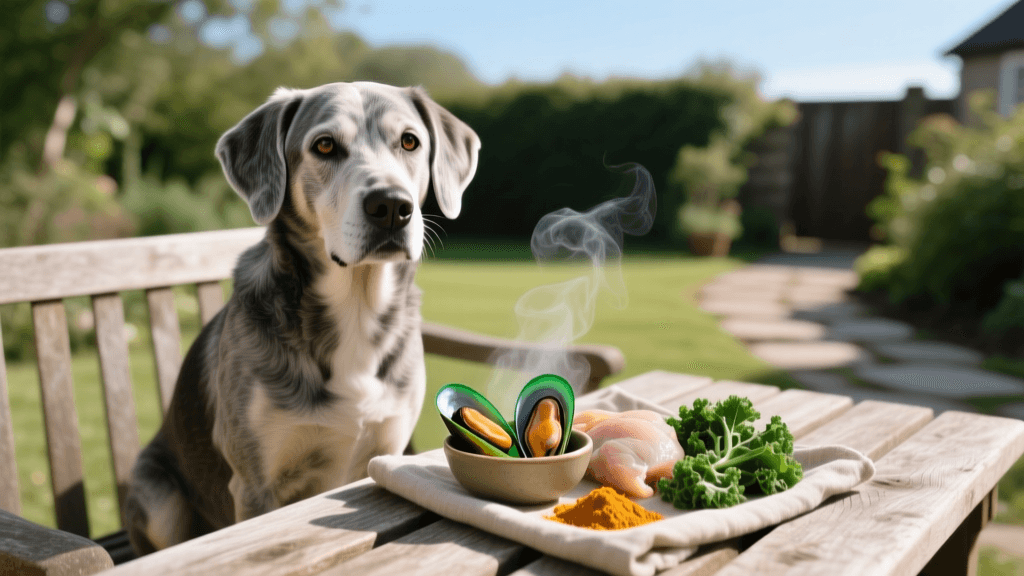
- Golden Paste (Turmeric & Black Pepper): Curcumin, the active compound in turmeric, is a potent anti-inflammatory. Because curcumin is fat-soluble, mixing a small amount of organic turmeric powder with a healthy fat (like raw goat's milk or coconut oil) and a tiny pinch of black pepper enhances absorption. A standard dose is roughly 1/8 teaspoon per 10 lbs of body weight.
- Homemade Bone Broth: Simmering beef knuckles or chicken feet for 24 to 48 hours extracts natural collagen, glucosamine, and chondroitin. Unlike store-bought broths that may contain toxic alliums (onions/garlic) or excess sodium, homemade broth provides a safe, hydrating base that supports joint cartilage and gut health.
- Wild-Caught Sockeye Salmon: Rich in astaxanthin and marine omega-3s, adding a small portion of fresh or canned (water-packed, no salt added) sockeye salmon twice a week provides a massive boost to skin, coat, and joint lubrication.
Step-by-Step Transition and Feeding Guide
Introducing new proteins and rich toppers to a senior dog requires a slow, methodical approach to avoid gastrointestinal upset. The U.S. Food and Drug Administration (FDA) also reminds pet owners to practice strict hygiene when handling any raw or fresh pet foods to prevent cross-contamination.
- Week 1 (Introduction): Add a micro-dose of freeze-dried GLM powder (about 1/4 of the recommended dose) to your dog's standard fresh meal. Monitor stool quality and appetite.
- Week 2 (Building Up): Increase to half the recommended dose. Introduce a teaspoon of homemade, fat-skimmed bone broth as a meal topper.
- Week 3 (Full Integration): Reach the full GLM dosage based on your dog's weight (typically 15-20 mg per pound of body weight for therapeutic joint support, but consult your vet). Add the golden paste.
- Week 4 (Maintenance): Observe your dog's mobility. You should notice a reduction in morning stiffness, easier rising from a resting position, and a more willing gait during walks.
Calculating Calories: Don't Overfeed the Senior Dog
One of the most common pitfalls when transitioning to a fresh food topper regimen is inadvertently increasing the dog's daily caloric intake. Senior dogs typically have slower metabolisms and lower activity levels, making them highly susceptible to obesity. Excess weight places compounding mechanical stress on osteoarthritic joints, completely negating the anti-inflammatory benefits of the GLM and omega-3s.
To prevent this, you must practice "caloric subtraction." If you are adding 30 calories worth of freeze-dried mussel powder and bone broth to your dog's bowl, you must remove 30 calories from their base raw or cooked meal. Weighing your dog's food using a digital kitchen scale is non-negotiable in 2026 for precise portion control. A general rule of thumb for a moderately active senior dog is to feed roughly 2% to 2.5% of their ideal body weight daily, adjusting based on their body condition score (BCS).
Signs Your Fresh Diet Strategy is Working
How do you know if the green-lipped mussel and fresh toppers are actually making a difference? Unlike pharmaceutical pain medications which can mask symptoms within hours, whole-food nutritional therapy takes time to alter cellular inflammation. Expect to wait 4 to 8 weeks to see the full therapeutic effects.
- Improved Morning Mobility: Your dog should exhibit less "warming up" time when getting out of bed.
- Increased Enthusiasm for Walks: A reduction in joint pain often translates to a renewed interest in sniffing, exploring, and walking longer distances.
- Better Coat and Skin: The ETA and EPA in GLM will also manifest as a softer, shinier coat and reduced skin flakiness.
- Stable Digestion: A properly balanced fresh diet should result in firm, well-formed stools, indicating excellent nutrient absorption and gut microbiome health.
Safety, Sourcing, and Veterinary Oversight
While fresh and raw diets offer incredible benefits, they are not without risks if mishandled. Senior dogs often have compromised immune systems or underlying renal issues. Therefore, the high protein and phosphorus content of some raw meats and shellfish must be carefully monitored. Always consult with your primary veterinarian or a canine nutritionist before making significant dietary shifts, especially when introducing nutrient-dense whole foods like green-lipped mussel.
In 2026, the standard of care for canine osteoarthritis beautifully marries conventional veterinary medicine with evidence-based fresh nutrition. By prioritizing high-quality, whole-food matrices like green-lipped mussel, bone broth, and targeted botanicals, you can provide your senior dog with a delicious, biologically appropriate diet that actively fights inflammation and keeps them moving comfortably through their golden years.
tom-renshaw
All our authors care for dogs every day — read more of their work on the authors page.