2026 Canine OA Care: Librela Injections & Home Setup
Discover how to manage canine osteoarthritis in 2026. Learn about Librela injections, orthopedic home modifications, and daily routines for mobility.
The Evolution of Canine OA Treatment in 2026
Sharing your life with a senior dog is a profound privilege, but it often comes with the heartbreak of watching them struggle with mobility issues. Canine osteoarthritis (OA) is a degenerative joint disease that affects a significant portion of the aging dog population. As we navigate 2026, the landscape of canine OA treatment has evolved dramatically, shifting from merely masking pain to actively targeting the biological pathways of discomfort while optimizing the home environment for long-term mobility.
According to the American Kennel Club, osteoarthritis is the most common cause of chronic pain in dogs, affecting roughly one in five adult dogs and an even higher percentage of seniors. In 2026, veterinary professionals emphasize a multimodal approach. This means combining cutting-edge biologic therapies with strategic home modifications, targeted physical therapy, and precise nutritional support to ensure your dog's golden years are truly golden.
Librela (Bedinvetmab): The Biologic Breakthrough
For decades, Non-Steroidal Anti-Inflammatory Drugs (NSAIDs) were the undisputed frontline treatment for canine OA. While effective, long-term NSAID use requires rigorous monitoring of liver and kidney function, and some dogs experience gastrointestinal distress. Enter Librela (bedinvetmab), a revolutionary monoclonal antibody that has become a cornerstone of OA management in 2026.
Librela works by targeting and neutralizing Nerve Growth Factor (NGF), a protein that plays a critical role in the transmission of pain signals from damaged joints to the brain. Unlike NSAIDs, which are metabolized by the liver and kidneys, Librela is a protein-based biologic that is broken down into amino acids and recycled by the body. This makes it an exceptionally safe option for senior dogs with pre-existing renal or hepatic conditions.
Administration and Expectations
Librela is administered as a monthly subcutaneous injection by your veterinarian. Most pet owners report a noticeable improvement in their dog's mobility, willingness to climb stairs, and overall zest for life within the first two to three doses. Because it does not cause the drowsiness or gastrointestinal upset sometimes associated with traditional pain medications, dogs on Librela often retain their bright, alert personalities while experiencing profound pain relief.
Designing an OA-Friendly Home Environment
Medical intervention is only half the battle. The 'Life with Your Dog' philosophy dictates that your home must be a sanctuary that accommodates your dog's physical limitations. In 2026, pet owners have access to a wide array of specialized products designed to reduce joint strain and prevent catastrophic slips and falls.
Flooring and Traction Solutions
Hardwood, tile, and laminate floors are the natural enemies of arthritic dogs. A single slip can exacerbate joint inflammation or lead to secondary injuries like torn cruciate ligaments.
- Interlocking Foam Tiles: Brands like Gorilla Grip and BalanceFrom offer high-density, non-toxic foam mats that provide excellent shock absorption and traction.
- Runners and Rug Pads: For aesthetic integration, use low-pile carpet runners secured with heavy-duty, non-slip rug pads. Ensure the pads extend to the very edges of the rug to prevent tripping hazards.
- Paw Grip Enhancements: If your dog refuses to wear dog boots, consider veterinary-grade paw waxes or reusable silicone paw grips that provide immediate traction on slick surfaces.
Ramps and Stairs
Jumping on and off furniture or in and out of vehicles places immense concussive force on compromised joints. Eliminating the need to jump is non-negotiable for OA management.
- Vehicle Ramps: The PetSafe Happy Ride Telescoping Pet Ramp is a 2026 favorite due to its adjustable length, lightweight aluminum frame, and high-traction grit surface. It folds down compactly for trunk storage.
- Furniture Stairs: For beds and couches, opt for high-density foam pet stairs rather than plastic ones. Products like the Best Pet Supplies 4-Step Foam Stair provide a gentle incline and a non-skid base that won't slide when your dog ascends.
Orthopedic Bedding
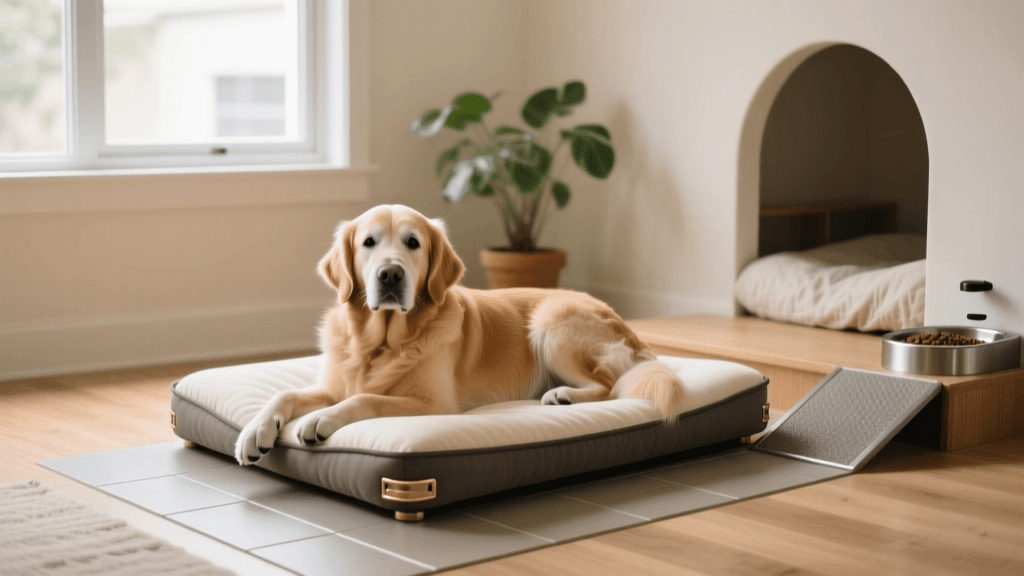
A standard stuffed dog bed will flatten out within weeks, offering zero support for arthritic joints. Invest in a true orthopedic bed featuring therapeutic memory foam.
- The Big Barker 7-Inch Orthopedic Dog Bed: Engineered specifically for large breeds and senior dogs, this bed uses a three-layer foam system that prevents the dog from 'bottoming out' and touching the hard floor.
- Heating Elements: In colder months, joint stiffness worsens. Beds with integrated, chew-resistant, low-voltage heating pads (like those from K&H Pet Products) can provide soothing warmth that increases blood flow and reduces morning stiffness.
2026 OA Treatment Comparison Chart
Understanding your options is crucial for building a multimodal pain management plan with your veterinarian. Below is a comparison of the primary medical therapies available in 2026.
| Treatment | Type | Administration | Best For | Considerations |
|---|---|---|---|---|
| Librela | Monoclonal Antibody (Anti-NGF) | Monthly Vet Injection | Dogs with liver/kidney issues; long-term pain management | Highly targeted; minimal systemic side effects |
| Galliprant | NSAID (Piprant class) | Daily Oral Chew | Dogs needing targeted COX-2/PGE2 inflammation control | Spares some GI/kidney pathways compared to older NSAIDs |
| Adequan | Polysulfated Glycosaminoglycan | Series of IM Injections | Cartilage protection and joint lubrication | Disease-modifying; requires initial loading dose series |
| Carprofen | Traditional NSAID | Daily Oral Chew/Tablet | Acute flare-ups and general inflammation | Requires regular bloodwork to monitor organ function |
Adjusting Your Daily Routine and Exercise
According to the Washington State University College of Veterinary Medicine, controlled, low-impact exercise is vital for maintaining muscle mass, which in turn supports and stabilizes arthritic joints. However, the type of exercise must be carefully curated.
The Rise of the 'Sniffari'
Instead of long, brisk walks that leave your dog limping the next day, transition to 'sniffaris.' Allow your dog to set the pace on a long leash in a grassy, soft-surfaced area. Sniffing provides immense mental stimulation and tires the dog out cognitively without placing repetitive concussive stress on their joints. Ten minutes of intense sniffing can be as exhausting as a thirty-minute walk.
Hydrotherapy and Swimming
Water therapy remains one of the most effective modalities for canine OA. The buoyancy of the water supports the dog's weight, eliminating joint impact while the resistance of the water builds muscle. In 2026, many veterinary rehabilitation centers offer underwater treadmills with adjustable water heights and speeds, allowing for highly customized therapy sessions tailored to your dog's specific joint deficits.
Nutritional Support and Weight Management
No amount of medication or home modification can compensate for excess body weight. Every extra pound your dog carries multiplies the force exerted on their joints during movement. Keeping your dog at a lean, ideal body condition score (BCS of 4/9 or 5/9) is the single most effective non-pharmaceutical intervention for OA.
Joint-Specific Supplements
While Librela manages pain, supplements aim to support joint fluid and cartilage health. Look for veterinary-recommended formulations containing:
- Omega-3 Fatty Acids (EPA and DHA): Sourced from wild-caught fish oil or green-lipped mussel extract, Omega-3s naturally inhibit inflammatory pathways in the joint capsule.
- UC-II Undenatured Type II Collagen: Works via oral tolerance to modulate the immune system's inflammatory response to damaged cartilage.
- ASU (Avocado/Soybean Unsaponifiables): Found in premium supplements like Dasuquin Advanced, ASU helps protect existing cartilage from degradation.
Conclusion: Embracing the New Standard of Care
Living with a dog suffering from osteoarthritis requires empathy, observation, and a willingness to adapt. The veterinary advancements of 2026, particularly the widespread adoption of biologic therapies like Librela, have fundamentally changed the prognosis for arthritic dogs. By pairing these advanced medical treatments with a thoughtfully modified home environment, strategic low-impact exercise, and strict weight management, you can ensure your loyal companion remains comfortable, mobile, and deeply engaged in the life you share together. Always consult with your primary veterinarian or a board-certified veterinary pain specialist to tailor this multimodal approach to your dog's unique needs.
robin-maitland
All our authors care for dogs every day — read more of their work on the authors page.