Best Dog Breeds for Remote Workers in 2026: Top 5 Quiet Picks
Discover the best low-barking, moderate-energy dog breeds for remote workers in 2026. Boost your work-from-home productivity with these perfect office companions.
The 2026 Remote Work Landscape: Why Your Dog's Temperament Matters
As we navigate the permanent flexible work models of 2026, the home office is no longer a temporary setup; it is a permanent fixture of daily life. With millions of professionals operating on fully remote or hybrid schedules, the presence of a canine companion during the workday has become a standard perk. However, not every dog is suited for the quiet focus required during deep work sessions or high-stakes virtual meetings. A sudden bark at the delivery driver can derail a crucial Zoom presentation, and a high-energy dog demanding constant attention can severely impact your daily productivity.
Finding the right balance between companionship and professional focus requires selecting a breed that aligns with the rhythms of a remote worker. According to the American Kennel Club, a dog's baseline temperament, vocalization tendencies, and energy levels are critical factors to consider before bringing a pet into a work-from-home environment. In this guide, we break down the absolute best dog breeds for remote workers in 2026, focusing on quiet, adaptable, and moderately active companions.
What Makes a Great Work-From-Home Dog?
Before diving into specific breeds, it is essential to understand the criteria that make a dog an ideal office companion. The best remote work dogs share several key traits:
- Low Vocalization: They are not prone to alarm barking or excessive whining, ensuring your microphone stays clear during calls.
- Moderate to Low Indoor Energy: While they still need daily exercise, they are content to lounge near your desk for hours rather than pacing or demanding constant play.
- Independence: They can self-soothe and entertain themselves with a chew toy while you are in a state of deep focus.
- Adaptability: They adjust well to the shifting environments of a hybrid worker, whether that means working from a home office, a local cafe, or a co-working space.
Top 5 Best Dog Breeds for Remote Workers
1. Cavalier King Charles Spaniel
The Cavalier King Charles Spaniel is arguably the ultimate lap dog, making them a phenomenal choice for remote workers who want a quiet, affectionate presence nearby. Bred historically as companion animals, Cavaliers are incredibly attuned to their owner's emotions but are rarely demanding or hyperactive. They are perfectly content to sleep on a plush bed beneath your standing desk while you type away. Their low barking tendency and gentle disposition make them ideal for apartment dwellers and those in shared-wall housing where noise complaints are a concern.
2. Greyhound
It might surprise some to see a racing breed on a list of calm office dogs, but Greyhounds are famously known as '45-mph couch potatoes.' In 2026, retired racing Greyhounds and rescue sighthounds remain incredibly popular among remote workers who have a fenced yard for a morning sprint. After a brief, high-intensity morning run, a Greyhound will happily sleep for up to 18 hours a day. They are exceptionally quiet, rarely bark, and take up minimal visual space when curled up on a rug, making them the ultimate unobtrusive office mates.
3. Japanese Chin
For those with smaller home offices or apartment setups, the Japanese Chin is a masterclass in quiet companionship. This ancient toy breed is often described as 'cat-like' due to their independent nature, quiet demeanor, and tendency to perch on the back of the sofa or a designated desk chair. They do not require extensive physical exercise, making them perfect for busy professionals who only have time for short neighborhood walks between meetings. Their alert but silent observation style means they will watch you work without interrupting your flow.
4. Whippet
Similar to the Greyhound but in a more compact, apartment-friendly package, the Whippet is a sighthound that thrives in a calm indoor environment. Whippets are deeply affectionate with their families but possess an 'off-switch' that activates the moment they cross the threshold of your home office. They are highly sensitive to loud noises and chaotic environments, meaning they will naturally encourage a calm, quiet, and stress-free workspace. A quick 20-minute flirt-pole session in the morning is usually enough to satisfy their exercise needs for the entire workday.
5. Bichon Frise
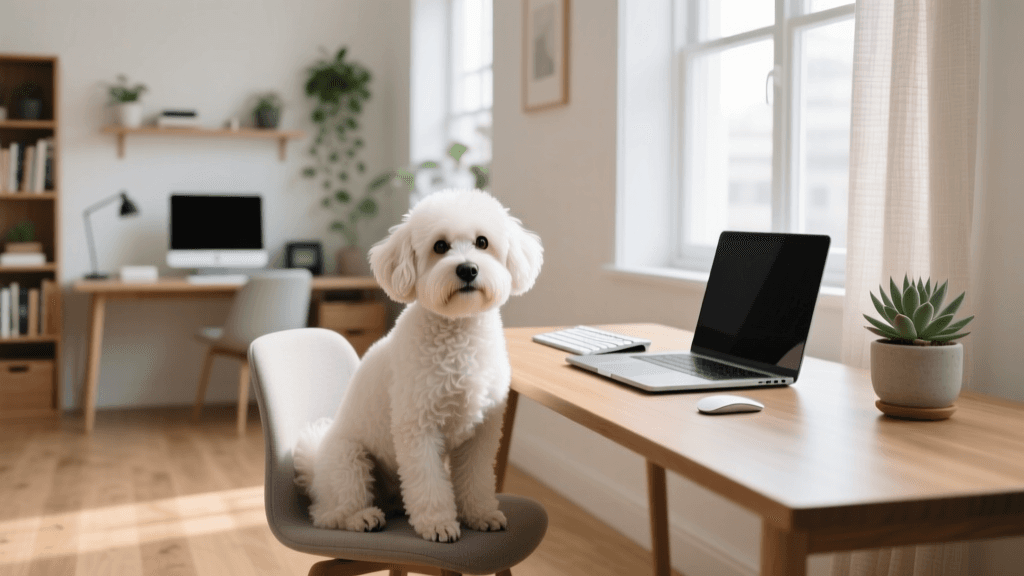
If you prefer a slightly more cheerful and interactive companion without the yappiness associated with other small breeds, the Bichon Frise is an excellent choice. Known for their hypoallergenic, low-shedding coats, they are great for keeping home office air quality high and preventing pet dander from accumulating on your tech equipment. While they are playful and enjoy a midday training session, they are highly trainable and can easily learn the 'quiet' command. Their adaptable nature makes them great travel companions for digital nomads and hybrid workers who occasionally take their laptops to dog-friendly cafes.
Quick Comparison Chart: WFH Dog Breeds
| Breed | Weight Range | Indoor Energy | Barking Level | Ideal Space |
|---|---|---|---|---|
| Cavalier King Charles | 12-18 lbs | Low | Very Low | Apartments / Small Homes |
| Greyhound | 60-70 lbs | Very Low | Low | Homes with Yards |
| Japanese Chin | 7-11 lbs | Low | Low | Apartments / Desks |
| Whippet | 25-40 lbs | Low | Very Low | Apartments / Homes |
| Bichon Frise | 12-18 lbs | Moderate | Moderate | Any / Travel-Friendly |
Optimizing Your Home Office for Your Dog in 2026
Choosing the right breed is only half the equation. To maintain peak productivity in 2026, remote workers must curate an environment that supports both human ergonomics and canine enrichment.
Smart Tech for Zoom Call Peace
When you are locked into a two-hour virtual strategy session, you cannot always get up to soothe a restless dog. The latest generation of pet cameras offers incredible solutions. The Furbo 360 Pro features auto-tracking and a quiet treat-tossing mechanism, allowing you to reward your dog for calm behavior without making a sound that your microphone will pick up. Pairing this with a smart automated puzzle feeder can keep your dog's brain engaged for hours, preventing the boredom that leads to disruptive whining.
Ergonomic Resting Zones
Dogs tend to mirror our work habits. If you are sitting at a desk, they want to be near you. Investing in a high-quality, supportive dog bed placed directly in your line of sight but out of your rolling chair's path is crucial. The Casper Dog Bed remains a top pick for remote workers due to its durable, washable cover and supportive foam, which is especially important for older Greyhounds or Whippets who need joint support after sleeping on hard floors. Alternatively, an elevated Kuranda Cot provides a breathable, designated 'place' that you can train your dog to go to when guests arrive or deliveries are made.
Managing the 'Pomodoro' Dog Routine
One of the greatest risks for remote workers with dogs is the blurring of boundaries between work time and playtime. If you give in to your dog's demands for attention every time they nudge your hand, you will train them to interrupt you constantly. Instead, adapt the Pomodoro time-management technique for your pet.
Work in focused 45-minute blocks where the dog is expected to be on their mat or bed, engaged with a long-lasting chew like a Yak Cheese stick or a frozen Kong Classic. When the timer goes off, take a 10-minute break dedicated entirely to your dog. Use this time for a quick game of tug, a short walk around the block, or a brief training session. This structured routine teaches your dog that calm behavior during work blocks is reliably rewarded with high-quality attention during break times.
Preventing Separation Anxiety in the Hybrid Era
A critical, often overlooked aspect of owning a dog as a remote worker is the risk of separation anxiety. Because you are home 40 hours a week, your dog may become entirely dependent on your constant presence. If you are required to travel for a conference or return to a corporate office for a few days, this sudden absence can be deeply distressing for the animal.
The ASPCA strongly recommends that work-from-home pet owners practice deliberate absences. Even if you work from home every day, you should leave your dog alone in the house or in a separate room for at least one to two hours daily. Utilize a baby gate to create physical boundaries within the home, and practice leaving the house for short errands without making a big fuss. This ensures your dog remains confident, independent, and resilient, regardless of where your 2026 work schedule takes you.
Conclusion
Sharing your home office with a dog is one of the greatest benefits of the modern remote work lifestyle. By selecting a low-barking, adaptable breed like the Cavalier King Charles Spaniel, Greyhound, or Japanese Chin, and pairing them with smart routines and ergonomic pet gear, you can create a harmonious environment. You will enjoy the stress-reducing benefits of canine companionship without sacrificing your professional productivity or disrupting your next big virtual meeting.
tom-renshaw
All our authors care for dogs every day — read more of their work on the authors page.