Canine Osteoarthritis Treatment 2026: Librela & Home Care
Discover the latest 2026 canine osteoarthritis treatments, including Librela injections, home modifications, and daily routines to keep your dog comfortable.
Understanding the 2026 Landscape of Canine Osteoarthritis
Living with a senior dog or a large breed prone to joint issues means osteoarthritis (OA) is likely a part of your daily vocabulary. As we navigate 2026, the approach to managing canine OA has shifted dramatically from merely masking pain to fundamentally altering pain signaling and optimizing the home environment. Osteoarthritis is a progressive, degenerative joint disease that affects the cartilage, synovial fluid, and underlying bone, leading to chronic pain, stiffness, and a decreased quality of life. According to the American Kennel Club, arthritis is one of the most common chronic conditions seen in aging dogs, affecting up to 80% of dogs over the age of eight.
In the past, pet parents relied almost exclusively on daily non-steroidal anti-inflammatory drugs (NSAIDs) to manage their dog's discomfort. While NSAIDs remain a valuable tool in the veterinary arsenal, the 2026 standard of care heavily emphasizes a multimodal approach. This includes targeted biologic therapies, specialized home modifications, weight management, and low-impact physical conditioning. By combining advanced veterinary medicine with thoughtful environmental adjustments, you can significantly extend your dog's active years and ensure their daily life is as comfortable as possible.
The Medical Breakthrough: Librela and Anti-NGF Therapies
The most significant shift in canine osteoarthritis treatment over the last few years has been the widespread adoption of anti-Nerve Growth Factor (anti-NGF) monoclonal antibodies. In 2026, Librela (bedinvetmab) has firmly established itself as a gold-standard therapy for chronic OA pain in dogs. Unlike traditional pain medications that are metabolized by the liver or kidneys, Librela works by specifically targeting and neutralizing NGF, a protein that plays a central role in transmitting pain signals from the joints to the brain.
Administered as a monthly subcutaneous injection by your veterinarian, Librela provides continuous, targeted pain relief without the systemic side effects commonly associated with long-term NSAID use. The FDA approval and ongoing monitoring of bedinvetmab have confirmed its safety profile, making it an ideal option for senior dogs with pre-existing renal or hepatic conditions. In 2026, the cost of a monthly Librela injection typically ranges from $110 to $160, depending on your dog's weight tier and your geographic location. Many pet insurance policies now routinely cover this biologic therapy when prescribed for diagnosed osteoarthritis, significantly reducing out-of-pocket expenses for pet owners.
Essential Home Modifications for Arthritic Dogs
Medical management is only half the battle; the other half is adapting your living space to accommodate your dog's changing mobility. A dog with OA struggles with slipping, jumping, and navigating stairs. Implementing the following home modifications will drastically reduce joint strain and prevent secondary injuries.
Orthopedic Bedding and Smart Heating
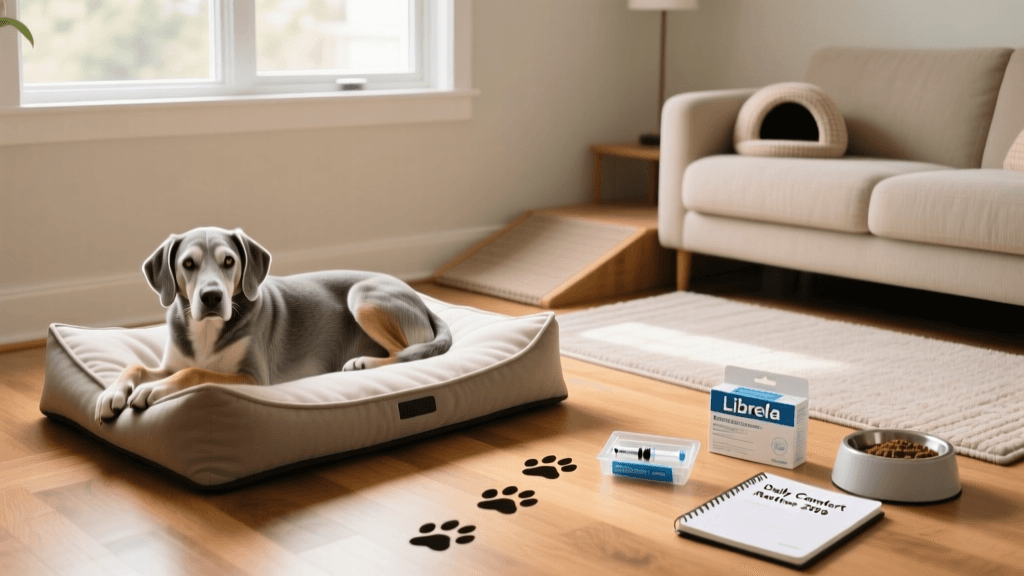
A standard plush dog bed offers little to no support for aching joints. In 2026, therapeutic orthopedic beds are essential. The Big Barker Orthopedic Dog Bed remains a top recommendation due to its 10-year warranty and specialized foam that prevents the bed from flattening out over time, ensuring consistent joint support. For dogs that struggle to stand up from a soft surface, a firm, elevated cot-style bed like the Kuranda Chewproof Dog Bed provides excellent stability and allows for easier rising. Additionally, integrating a smart, thermostatically controlled heating pad under their bedding during colder months can help soothe stiff joints and improve morning mobility.
Ramps, Stairs, and Traction Solutions
Jumping on and off furniture or into vehicles places immense concussive force on arthritic joints. To mitigate this, invest in high-quality ramps. The Pet Gear Tri-Fold Ramp is a 2026 favorite; it extends to 71 inches, providing a gentle, low-angle incline that is much easier on the hips and spine than steeper, shorter ramps. Ensure the ramp features a high-traction grip surface to prevent slipping.
Hardwood and tile floors are the enemies of arthritic dogs. When a dog loses its footing, the micro-adjustments required to regain balance cause severe joint pain and muscle fatigue. Cover high-traffic areas with interlocking foam mats or low-pile, non-slip area rugs. For dogs that struggle to get traction even on carpets, Dr. Buzby's ToeGrips are a revolutionary, non-invasive solution. These soft, natural rubber cylinders slide onto the dog's toenails, providing instant grip on slippery surfaces without the need for cumbersome dog booties.
Elevated Feeding and Hydration Stations
Bending down to floor level to eat and drink puts unnecessary strain on the cervical spine and shoulder joints. Elevating your dog's food and water bowls to chest height allows them to maintain a neutral spine posture during meals. Look for adjustable, sturdy bamboo or stainless-steel elevated feeders that will not tip over when your dog leans on them for support.
Adjusting Your Daily Routine for Joint Health
A dog with osteoarthritis still needs physical and mental stimulation, but the type of activity must be carefully curated to avoid flare-ups.
The 'Sniffari' and Low-Impact Exercise
High-impact activities like fetching tennis balls, agility courses, or long-distance running should be retired. Instead, embrace the 'Sniffari.' This involves taking your dog on a slow, meandering walk where the primary goal is mental enrichment through scent work rather than physical exertion. Sniffing lowers a dog's heart rate and provides immense mental fatigue, tiring them out without the joint impact of a fast-paced walk. For physical conditioning, hydrotherapy using an underwater treadmill is highly recommended in 2026. The buoyancy of the water supports the dog's weight while the resistance builds muscle mass to support the failing joints.
Targeted Joint Supplements in 2026
Nutraceuticals play a vital supporting role in OA management. The most effective 2026 joint supplements contain a synergistic blend of ingredients rather than just basic glucosamine. Dasuquin Advanced is a leading veterinary-recommended supplement that includes ASU (avocado/soybean unsaponifiables), Boswellia serrata extract, and undenatured type-II collagen (UC-II), all of which have been shown to reduce cartilage degradation and modulate inflammation. Additionally, high-dose Omega-3 fatty acids (specifically EPA and DHA) sourced from wild-caught Alaskan salmon oil are crucial for their natural anti-inflammatory properties. Always consult your veterinarian for the correct therapeutic dosage based on your dog's exact weight.
2026 Product Comparison Chart for OA Home Care
| Product Category | Top 2026 Recommendation | Key Feature | Estimated Cost |
|---|---|---|---|
| Orthopedic Bed | Big Barker 7' Orthopedic Dog Bed | Therapeutic foam that won't flatten; 10-year warranty | $250 - $350 |
| Mobility Ramp | Pet Gear Tri-Fold Ramp (71') | Extra-long length for a gentle, low-stress incline angle | $90 - $120 |
| Floor Traction | Dr. Buzby's ToeGrips | Non-invasive nail grips for instant traction on hard floors | $30 - $40 |
| Joint Supplement | Dasuquin Advanced Soft Chews | Contains ASU, Boswellia, and UC-II collagen | $70 - $90 (60 ct) |
| Elevated Feeder | Neater Feeder Express (Adjustable) | Spill-proof design with adjustable height settings | $45 - $65 |
Monitoring Quality of Life and Pain Levels
Because dogs are evolutionarily hardwired to hide their pain, it is up to the pet parent to become a vigilant observer. In 2026, veterinarians strongly recommend using standardized assessment tools like the Liverpool Osteoarthritis in Dogs (LOAD) questionnaire. This simple at-home survey asks you to evaluate your dog's mobility during specific activities, such as walking up stairs, playing, or rising from a resting position. Tracking your dog's LOAD score monthly allows you and your veterinarian to objectively measure the efficacy of treatments like Librela and adjust dosages or home modifications as needed.
Furthermore, adhering to the AAHA pain management guidelines ensures that your dog receives comprehensive, compassionate care. Regular veterinary checkups every six months are non-negotiable for dogs with OA. These visits allow your vet to monitor muscle atrophy, adjust pain management protocols, and ensure that your dog's weight remains in an optimal, lean range to minimize joint loading.
Conclusion: Embracing a Comfortable Life Together
A diagnosis of canine osteoarthritis is not a reason to despair; rather, it is a call to action to adapt your shared life. By leveraging modern medical breakthroughs like Librela, investing in strategic home modifications, and adjusting your daily routines to prioritize low-impact enrichment, you can profoundly improve your dog's comfort. The goal in 2026 is not just to add years to your dog's life, but to add vibrant, pain-free life to their years. With proactive management and a supportive home environment, your arthritic dog can continue to enjoy the daily joys of being your faithful companion.
aaron-whyte
All our authors care for dogs every day — read more of their work on the authors page.