Canine OA Treatment 2026: Best Daily Routines & Home Hacks
Discover the best 2026 canine OA treatments, including Librela, and learn how to adapt your daily routine and home setup for your senior dog's comfort.
Understanding the 2026 Landscape of Canine Osteoarthritis
Osteoarthritis (OA) is a progressive, degenerative joint disease that affects the cartilage, bone, and surrounding soft tissues of a dog's joints. As of 2026, veterinary medicine recognizes OA not merely as a natural consequence of aging, but as a complex, chronic pain state requiring multifaceted, lifelong management. According to the American Kennel Club, up to 80% of senior dogs show radiographic signs of OA, and it is increasingly diagnosed in young, large-breed dogs due to developmental orthopedic diseases. Living with a dog with OA means fundamentally shifting how you approach your shared daily life. From the layout of your living room to the pacing of your weekend adventures, every detail matters when your goal is to maximize your dog's comfort and mobility.
The 2026 Gold Standard in Veterinary OA Treatments
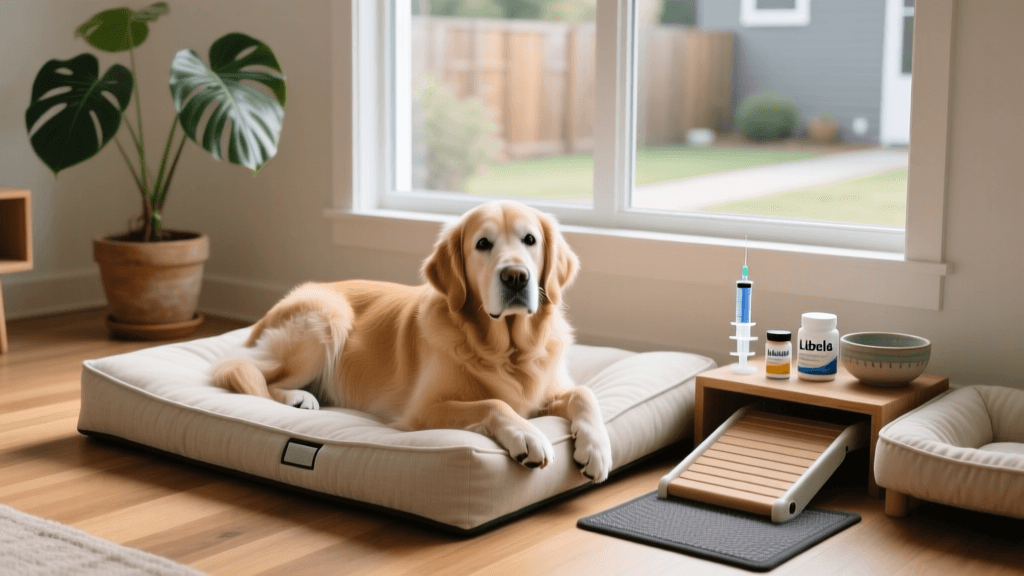
The pharmacological landscape for canine OA has evolved dramatically. While traditional Non-Steroidal Anti-Inflammatory Drugs (NSAIDs) remain a cornerstone of therapy, the U.S. Food and Drug Administration continually emphasizes the need for routine bloodwork to monitor liver and kidney function when dogs are on long-term NSAID regimens. In 2026, the veterinary community has fully embraced anti-Nerve Growth Factor (anti-NGF) monoclonal antibodies, such as bedinvetmab (marketed as Librela). Unlike NSAIDs that target inflammation, anti-NGF therapies specifically target the pain signaling pathways associated with OA, offering profound relief for dogs that cannot tolerate traditional medications or require multimodal pain management.
2026 Canine OA Treatment Comparison
| Treatment Type | Mechanism of Action | Average Monthly Cost (2026) | Administration |
|---|---|---|---|
| Monoclonal Antibodies (e.g., Librela) | Targets and neutralizes Nerve Growth Factor (NGF) to block pain signals | $85 - $160 | Monthly subcutaneous veterinary injection |
| NSAIDs (e.g., Carprofen, Meloxicam) | Inhibits COX enzymes to reduce joint inflammation and swelling | $35 - $90 | Daily oral chew or liquid |
| Polysulfated Glycosaminoglycans (Adequan) | Inhibits cartilage degradation and stimulates joint fluid production | $60 - $120 | Intramuscular injection series (loading then maintenance) |
| Omega-3 Fatty Acids (High EPA/DHA) | Modulates inflammatory pathways and improves joint lubrication | $25 - $50 | Daily oral pump oil or capsule |
Optimizing Your Home Environment for Joint Health
Medical management is only half the battle; environmental modification is where the "Life with Your Dog" category truly shines. A dog with OA struggles with impact, slipping, and extreme ranges of motion. Adapting your home in 2026 is easier than ever with specialized pet products.
Strategic Flooring and Traction
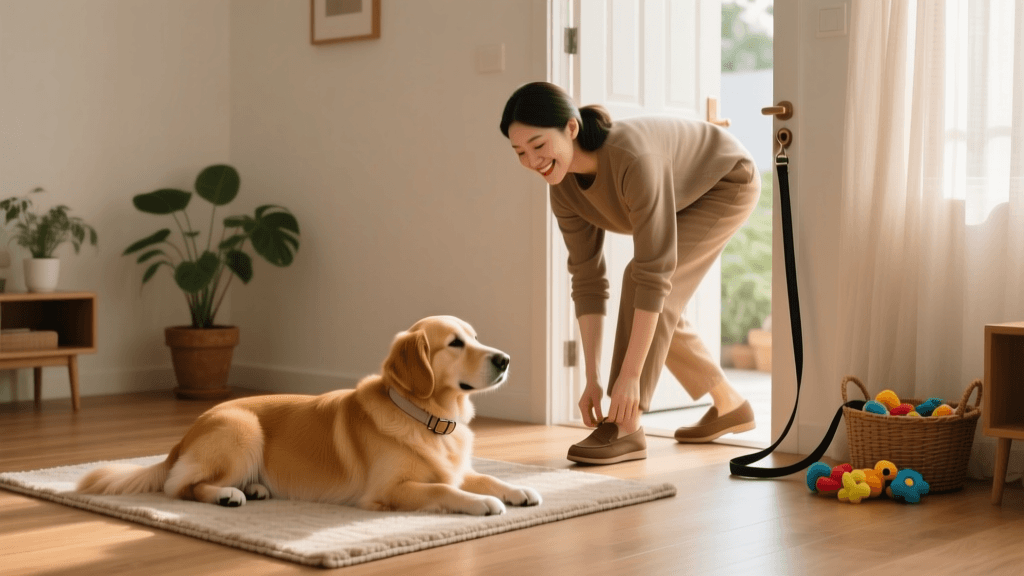
Hardwood, tile, and laminate floors are the enemy of arthritic joints. When a dog slips, the micro-tears in the joint capsule cause immediate inflammation. Cover high-traffic areas and your dog's favorite resting spots with low-pile, non-slip area rugs. For a more permanent and aesthetic 2026 solution, many owners are utilizing interlocking EVA foam puzzle tiles (often used in home gyms) covered by washable, fitted rug covers. If your dog refuses to walk on rugs, consider applying veterinary-grade paw waxes or reusable silicone paw grips to increase friction.
Orthopedic Sleeping Arrangements
Standard dog beds compress under the weight of a dog, offering zero joint relief. Invest in a true orthopedic bed featuring a minimum of 4 inches of high-density, medical-grade memory foam. In 2026, many premium beds feature dual-sided temperature regulation—cooling gel for summer months and self-warming thermal layers for winter, as cold weather notoriously exacerbates OA stiffness. Ensure the bed has a low-profile entry point or a built-in ramp so your dog doesn't have to jump to get in.
Ramps and Stairs
Never allow an arthritic dog to jump into an SUV or onto a bed. The impact of landing can cause severe pain spikes. Use a folding or telescoping pet ramp. The ideal incline for a dog with OA is between 18 and 22 degrees. Look for ramps with a minimum width of 18 inches and a high-traction, sandpaper-like or ribbed rubber surface. Practice ramp training using high-value treats when your dog is pain-free, so they associate the ramp with positive experiences.
Revamping Your Daily Routine and Exercise Regimen
Exercise is critical for maintaining muscle mass, which acts as the primary shock absorber for arthritic joints. However, the type of exercise must change.
The Power of the Sniffari
High-impact games like fetch or frisbee are strictly off-limits. Instead, embrace the "Sniffari." A 20-minute walk where your dog is allowed to stop, sniff, and process environmental scents provides immense mental stimulation and low-impact physical movement. Canine behaviorists note that 15 minutes of intense sniffing can tire a dog out as much as 30 minutes of brisk walking, without the concussive joint impact.
Passive Range of Motion (PROM) Exercises
Incorporate daily PROM exercises into your evening routine while your dog is relaxed on their orthopedic bed. Gently support the joint above and below the affected area (e.g., the stifle/knee or elbow). Slowly flex and extend the joint through its natural, pain-free range of motion. Hold the extension for 3 to 5 seconds and repeat 10 times. This promotes synovial fluid circulation, which nourishes the cartilage and prevents joint contracture.
Hydrotherapy
If available in your area, canine hydrotherapy is a premier 2026 treatment for OA. Underwater treadmills and warm-water swimming pools (kept at 82-86°F) provide buoyancy that unloads the joints while the water's resistance builds stabilizing muscles. Aim for one 20-minute session per week as part of your multimodal routine.
Nutrition, Weight Management, and Supplements
Weight management is arguably the most critical non-pharmaceutical intervention for canine OA. Every extra pound of body weight places roughly four pounds of additional stress on a dog's joints. Your dog should be maintained at a lean Body Condition Score (BCS) of 4 out of 9. You should be able to easily feel their ribs without pressing hard, and they should have a visible abdominal tuck. Work with your veterinarian to calculate exact caloric needs, often utilizing prescription joint-support diets that are fortified with therapeutic levels of EPA (eicosapentaenoic acid) and DHA (docosahexaenoic acid).
Monitoring Progress with 2026 Pet Tech
Dogs are stoic and often hide chronic pain until it becomes severe. In 2026, smart collars and wearable health monitors have advanced to include specific "mobility indices." These devices use accelerometers and gyroscopes to track not just total active minutes, but also gait symmetry, resting heart rate, and sleep quality. If your dog's wearable alerts you to a sudden drop in mobility or an increase in restless nighttime pacing, it serves as an early warning system to contact your vet for a treatment adjustment before a major pain flare-up occurs.
Conclusion
Managing canine osteoarthritis in 2026 is a highly rewarding endeavor that blends cutting-edge veterinary science with compassionate, practical home care. By combining advanced therapies like Librela with strategic environmental modifications, controlled mental and physical exercise, and strict weight management, you can drastically improve your dog's quality of life. The goal is not just to add years to your dog's life, but to add vibrant, comfortable life to their senior years. Regular check-ins with your veterinary team, guided by the WSAVA Global Pain Council guidelines, will ensure your dog's pain management plan evolves as their needs change.
hannah-wickes
All our authors care for dogs every day — read more of their work on the authors page.