Top Leash Training Mistakes Ruining Your Daily Dog Walks
Avoid these common leash training mistakes to stop pulling and reactivity. Learn expert tips, gear recommendations, and timing for better dog walks.
Introduction: The Frustration of Leash Pulling
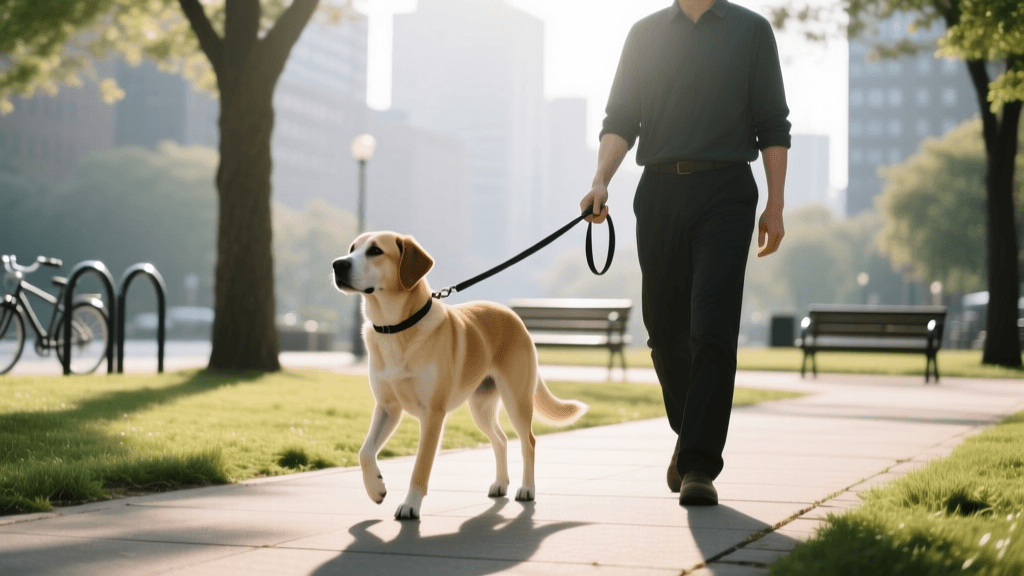
Walking your dog should be a relaxing, bonding experience, but for many owners, it devolves into a frustrating game of tug-of-war. Leash pulling is one of the most common behavioral issues reported by dog owners, often leading to abandoned walks, physical strain, and even leash reactivity. While dogs are naturally inclined to explore their environment at a pace much faster than our own, walking politely on a loose leash is not an innate behavior. It is a complex skill that requires patience, consistency, and the right technique.
Unfortunately, many well-meaning dog owners inadvertently reinforce the very behaviors they are trying to eliminate. By making a few critical errors in timing, gear selection, and environmental management, you might be accidentally teaching your dog that pulling is the fastest way to get where they want to go. In this comprehensive guide, we will break down the most common leash training mistakes to avoid and provide actionable, expert-backed strategies to transform your daily walks.
Mistake 1: Choosing the Wrong Walking Gear
The pet market is saturated with walking equipment, and selecting the wrong tool can set your training back by months. Many owners default to standard flat collars or back-clip harnesses. While back-clip harnesses are excellent for car safety and preventing tracheal damage, they trigger a dog's natural opposition reflex. When a dog feels pressure on their back, their instinct is to lean into it and pull harder—think of sled dogs pulling a sled.
Conversely, aversive tools like prong collars or choke chains rely on positive punishment and negative reinforcement. While they may suppress pulling in the short term, they often increase anxiety and leash reactivity, as the dog begins to associate the pain around their neck with the presence of other dogs or environmental triggers.
The Solution: Front-Clip Harnesses and Biothane Leashes
For loose leash training, a front-clip harness is the gold standard. When the dog pulls, the front attachment point gently redirects their momentum back toward the handler, naturally discouraging forward surging. We highly recommend the Ruffwear Front Range Harness (retailing around $39.95), which offers both a front and back clip for transitional training. Pair this with a 6-foot Biothane leash ($25 to $40). Biothane is waterproof, easy to clean, and provides a consistent grip without the friction burns associated with thin nylon leashes. Avoid retractable leashes entirely during training, as they teach the dog that tension on the line is required to gain more distance.
Mistake 2: Inconsistent Tension Rules
Dogs are opportunistic learners. If you allow your dog to pull you toward a fire hydrant just once because you are in a hurry, you have just taught them that pulling sometimes works. This creates a "variable ratio reinforcement schedule"—the same psychological mechanism that makes slot machines so addictive. The dog will continue to pull because they never know which attempt will result in the reward of reaching their destination.
The 180-Degree Pivot Drill
To establish consistent rules, you must implement a zero-tolerance policy for leash tension. Try the 180-Degree Pivot Drill:
- Walk forward with your dog on a 6-foot leash.
- The exact moment the leash clicks taut, stop immediately. Do not yank the leash; simply become a tree.
- Say nothing. Wait for your dog to turn their head back toward you or take a single step back, releasing the tension.
- The moment the leash is slack, mark the behavior with a cheerful "Yes!" and pivot 180 degrees to walk the other way.
- When your dog catches up to your side, deliver a high-value treat right at the seam of your pants.
This drill teaches the dog that a tight leash means the walk stops or goes backward, while a loose leash means forward progress and rewards.
Mistake 3: Poor Marker Timing and Reward Placement
Timing is everything in behavioral conditioning. A common mistake is saying "good boy" or clicking a clicker while the dog is actively pulling, or fumbling with treats for three seconds before delivering the reward. By the time the treat reaches the dog's mouth, they may have already lunged at a squirrel, meaning you just rewarded the lunge.
The 0.5-Second Rule
Your marker word (e.g., "Yes!") or clicker must occur within 0.5 seconds of the desired behavior. The marker acts as a bridge, telling the dog exactly which action earned the reward. Furthermore, where you deliver the treat matters immensely. If you hold the treat out in front of you, the dog will forge ahead to get it. Always deliver the reward at your hip or knee (depending on the dog's size) to reinforce the "heel" position. Use a dedicated treat pouch, like the Ruffwear Treat Trader ($34.95), which features a magnetic closure for lightning-fast treat retrieval.
Comparison Chart: Leash Walking Gear
Understanding the mechanics of your equipment is vital for successful training. Below is a comparison of common walking tools:
| Gear Type | Mechanism | Pros | Cons | Avg Cost |
|---|---|---|---|---|
| Back-Clip Harness | Attaches on the dog's upper back | Safe for trachea, easy to put on | Encourages pulling (opposition reflex) | $20 - $35 |
| Front-Clip Harness | Attaches at the center of the chest | Redirects forward momentum safely | Can alter natural gait if worn 24/7 | $30 - $45 |
| Flat Buckle Collar | Rests around the mid-neck | Great for ID tags, lightweight | Risk of tracheal damage if dog pulls | $10 - $20 |
| Head Halter | Loops around the snout and neck | Provides maximum steering control | Requires slow desensitization, risk of neck whip | $15 - $30 |
Mistake 4: Ignoring Environmental Thresholds
You cannot train a dog effectively if they are over their stress threshold. A common mistake owners make is taking a highly reactive or easily distracted dog to a busy farmer's market or a crowded dog park to "socialize" them or practice walking. When a dog's nervous system is flooded with cortisol and adrenaline, the learning centers of the brain shut down. No amount of Zuke's Mini Naturals ($12 for 16oz) will convince a dog to sit politely when a loud truck drives by or an off-leash dog approaches.
Managing Distance and Latency
Start your training in a low-distraction environment, such as your living room or a quiet driveway. Gradually increase the difficulty using the concept of "distance." If your dog reacts to other dogs at 20 feet, your training threshold is 25 feet. You must maintain enough distance that your dog notices the trigger but remains capable of making eye contact with you and eating treats. Only decrease the distance when your dog consistently offers loose-leash behavior at the current range.
Mistake 5: Forbidding Decompression Sniffing
Many handlers view the walk purely as a physical exercise and a strict obedience drill, constantly demanding a rigid heel position. This leads to mental frustration for the dog. Dogs experience the world primarily through their olfactory system. A dog's olfactory bulb is proportionally 40 times larger than a human's, and sniffing provides immense mental stimulation.
"Dogs do not inherently know how to walk on a leash. It is an unnatural constraint that must be taught with patience, clear communication, and proper management."
Studies in canine cognition suggest that 15 minutes of intense sniffing can tire a dog out as much as an hour of brisk physical walking. To avoid the mistake of creating a frustrated, hyperactive dog, incorporate "decompression walks" into your routine. Use a 15-foot long line in a safe, open field and allow your dog to roam, sniff, and explore at their own pace. This mental enrichment lowers their baseline arousal levels, making them significantly more receptive to structured leash training on subsequent days.
Expert-Backed Strategies for Success
Overcoming leash pulling requires a shift in perspective from "correcting bad behavior" to "rewarding the absence of tension." Leading veterinary and behavioral organizations emphasize the importance of positive reinforcement and proper management over punitive measures.
According to the American Kennel Club (AKC), consistency in rewarding the dog for checking in with the handler is the foundation of loose leash walking. The AKC recommends utilizing high-value rewards and changing directions unpredictably to keep the dog engaged and focused on the handler rather than the environment.
Furthermore, the ASPCA highlights the importance of the "red light, green light" method, reinforcing the idea that forward movement is entirely contingent upon a slack leash. By combining the ASPCA's red-light methodology with proper front-clip equipment and high-value reward timing, you create a clear, frustration-free communication loop with your dog.
Conclusion
Leash training is a marathon, not a sprint. By avoiding the common mistakes of using the wrong gear, maintaining inconsistent rules, fumbling your marker timing, pushing past environmental thresholds, and denying sniffing opportunities, you will save yourself months of frustration. Invest in a quality front-clip harness, stock your treat pouch with pea-sized, high-value rewards, and commit to the 180-degree pivot drill. With patience, precise timing, and a deep understanding of your dog's behavioral needs, you can transform your daily walks from a stressful chore into the highlight of your day.
jonas-cole
All our authors care for dogs every day — read more of their work on the authors page.