LAT Protocol & Adaptil Pheromones for Reactive Dogs 2026
Master leash reactivity in 2026 using the Look At That protocol and Adaptil pheromones. A step-by-step guide to calming anxious dogs on walks.
Understanding Leash Reactivity and the Canine Nervous System
Leash reactivity remains one of the most pervasive and stressful behavioral challenges for dog owners in 2026. Characterized by barking, lunging, and hyper-vigilance when encountering triggers such as other dogs, strangers, or vehicles, reactivity is fundamentally an emotional response rooted in the canine sympathetic nervous system. When a reactive dog spots a trigger, their amygdala initiates a fight-or-flight response, flooding their bloodstream with cortisol and adrenaline. In this heightened state of arousal, the dog is neurologically incapable of learning or processing new commands.
According to the American Kennel Club's behavioral guidelines, reactivity is rarely about unprovoked aggression; rather, it is a manifestation of fear, frustration, or anxiety. To effectively manage a reactive dog, modern veterinary behaviorists advocate for a dual-pronged approach: lowering the dog's baseline physiological anxiety while simultaneously utilizing desensitization and counter-conditioning (DS/CC) techniques. In 2026, the gold standard for this combined approach involves pairing synthetic pheromone therapy, specifically Adaptil DAP (Dog Appeasing Pheromone), with Leslie McDevitt's renowned 'Look At That' (LAT) protocol.
The Role of Adaptil DAP Pheromones in 2026
Before any behavioral modification can occur, the dog's nervous system must be supported. Adaptil mimics the natural canine appeasing pheromone produced by nursing mothers to comfort and reassure their puppies. When inhaled by an adult dog, these synthetic pheromones bind to the vomeronasal organ, sending a direct signal to the brain's limbic system to decrease heart rate and reduce cortisol levels.
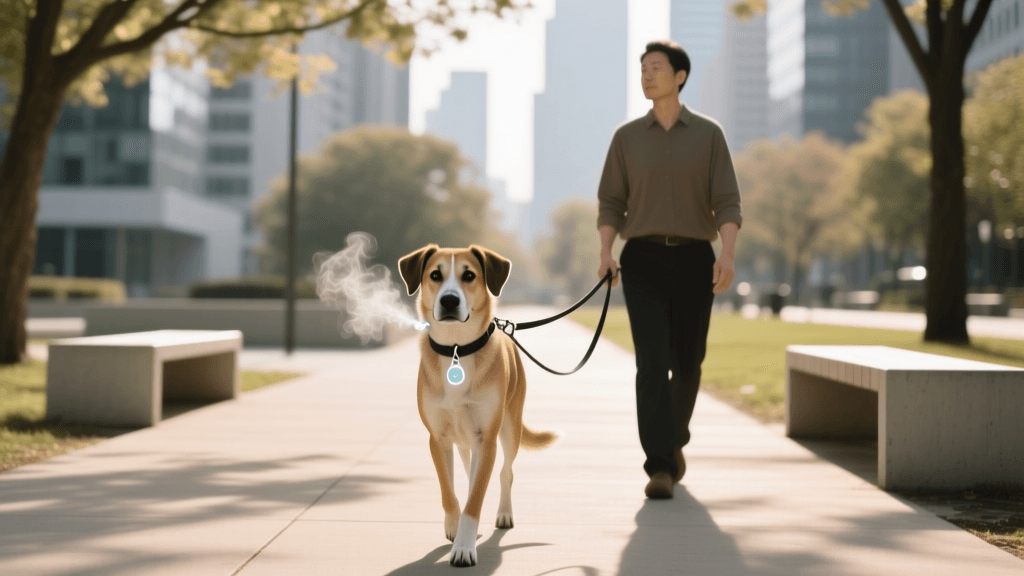
In 2026, Adaptil is available in several formats, but for leash reactivity, the Adaptil Calm-On-The-Go Collar is the most effective. Priced between $28 and $35, the collar releases a continuous, localized dose of pheromones activated by the dog's body heat. For acute trigger exposure, the Adaptil Transport Spray ($18-$22) can be applied to a bandana or the dog's harness 15 minutes before a walk. It is critical to note that pheromones are not a sedative; they do not make the dog drowsy. Instead, they raise the dog's 'reactivity threshold,' allowing them to remain under their cognitive threshold for longer periods when a trigger appears.
The 'Look At That' (LAT) Protocol: A Step-by-Step Guide
Developed by dog trainer Leslie McDevitt in her seminal book Control Unleashed, the LAT protocol flips traditional counter-conditioning on its head. Instead of demanding the dog look away from the trigger and focus on the handler, LAT teaches the dog that looking at the trigger is the actual cue that earns a reward. This removes the conflict and frustration the dog feels when forced to ignore something they are hyper-fixated on.
The American Veterinary Society of Animal Behavior (AVSAB) strongly endorses force-free, reward-based protocols like LAT, noting that aversive methods only suppress outward symptoms while increasing internal anxiety. Here is how to implement LAT in 2026:
Step 1: Establish the Sub-Threshold Distance
Find a distance from the trigger (e.g., a stationary dog across a large park) where your dog notices the trigger but does not react. They should be able to look at the trigger and then easily look back at you. For highly anxious dogs, this distance may be 100 yards or more. If your dog is stiff, staring, or vocalizing, you are too close. Retreat immediately.
Step 2: Mark and Reward the Look
The moment your dog glances at the trigger, use a marker word like 'Yes!' or click a clicker, then immediately deliver a high-value treat (such as boiled chicken or freeze-dried liver). The sequence is: Dog looks at trigger -> Handler marks -> Dog turns to handler for treat. You are rewiring the dog's brain to associate the sight of the trigger with the anticipation of a high-value reward.
Step 3: Build Fluency and Decrease Distance
Repeat this process until the dog begins to offer a 'check-in' with you immediately after spotting the trigger. Once the dog is reliably offering this behavior at the current distance, take one step closer. If the dog reacts, you have crossed the threshold; calmly increase the distance and try again. Progress is measured in inches, not miles.
Equipment Checklist for Reactive Dog Walks in 2026
Managing a reactive dog requires specialized gear that prioritizes safety, comfort, and escape prevention. The Fear Free Pets organization emphasizes that restrictive or painful equipment exacerbates anxiety and can trigger redirected aggression. Ensure your 2026 walking kit includes:
- Front-Clip Y-Harness: Brands like Rabbitgoo or Kurgo Tru Fit ($35-$50) distribute pressure evenly across the chest, avoiding the trachea while providing steering control if the dog lunges.
- Dual-Handle Leash: A 6-foot biothane or padded nylon leash with a traffic handle near the clip allows for rapid, safe shortening of the leash without wrapping it around your hands.
- High-Capacity Treat Pouch: A magnetic-closure pouch (e.g., Dog Treat Pouch by Mighty Paw, ~$20) ensures rapid treat delivery, which is vital for precise LAT timing.
- Biometric Smart Collar: Modern GPS collars like the Fi Series 3 or Whistle Go allow owners to track resting heart rate and sleep quality. A sudden drop in sleep quality in 2026's smart-collar apps is often the first indicator of chronic stress overload, signaling the need for a 'decompression day' indoors.
Comparison Chart: LAT vs. Traditional Counter-Conditioning
| Feature | Traditional Counter-Conditioning (Open Bar/Closed Bar) | Look At That (LAT) Protocol |
|---|---|---|
| Primary Focus | Changing the emotional response by pairing trigger with food. | Teaching a default behavior (looking at trigger) that yields a reward. |
| Dog's Gaze | Handler encourages dog to look away from trigger and focus on them. | Handler encourages dog to look at the trigger, then disengage voluntarily. |
| Frustration Levels | Can cause frustration in highly fixated dogs who feel forced to ignore the trigger. | Reduces frustration by allowing the dog to acknowledge the trigger safely. |
| Best Used For | Mild to moderate fear-based reactivity. | High-arousal reactivity, barrier frustration, and leash lunging. |
| Handler Skill Required | Moderate (timing of food delivery is key). | High (requires precise marking the exact millisecond the dog looks). |
Troubleshooting Common Setbacks in LAT Training
Even with the meticulous application of Adaptil and the LAT protocol, setbacks are a normal part of the reactive dog journey. If your dog's reactivity suddenly worsens, consider the following 2026 troubleshooting guidelines:
1. Trigger Stacking: Cortisol takes up to 72 hours to fully metabolize out of a dog's system. If your dog encounters a rogue off-leash dog on Monday, their baseline anxiety will remain elevated through Wednesday. During this period, skip structured LAT training and opt for 'sniffaris' in empty, fenced areas or indoor mental enrichment like lick mats and puzzle feeders.
2. Inadequate Treat Value: In high-stress environments, dry kibble or standard biscuits are entirely ineffective. The brain requires a massive dopamine hit to override the adrenaline of a trigger. Use novel, pungent proteins like sardines, tripe, or real cheese. If the dog spits out the treat, the environment is too stimulating, or the treat value is too low.
3. Handler Anxiety Transfer: Dogs are incredibly adept at reading human biometrics. If you tense up, hold your breath, or grip the leash tightly when you spot a trigger, your dog will assume there is a genuine threat. Practice deep breathing and maintain a loose leash whenever possible. If you feel overwhelmed, hiring a certified Fear Free or IAABC (International Association of Animal Behavior Consultants) professional in 2026 typically costs between $150 and $250 per session and is a worthy investment for your mental health and your dog's progress.
Conclusion: Patience and Neuroplasticity
Managing a reactive and anxious dog is a marathon, not a sprint. By combining the physiological calming support of Adaptil DAP pheromones with the empowering, choice-based mechanics of the Look At That protocol, you are actively rewiring your dog's neural pathways. In 2026, veterinary science and force-free behavioral methodologies have proven that reactivity can be managed, and in many cases, vastly improved. Celebrate the micro-victories—a single second of loose leash, a voluntary check-in, or a relaxed sigh—and trust the process of compassionate, science-based rehabilitation.
robin-maitland
All our authors care for dogs every day — read more of their work on the authors page.