Force-Free Dog Nail Care 2026: Cooperative Scratch Board Guide
Learn force-free cooperative care for dog nail trimming in 2026. Discover scratch board training, positive reinforcement, and top tools.
The Hidden Health Crisis: Long Nails and Canine Posture
When we think about canine health and wellbeing in 2026, we often focus on diet, exercise, and preventive veterinary check-ups. However, one of the most critical yet frequently overlooked aspects of a dog's physical health is nail length. Overgrown nails are not merely a cosmetic issue; they are a significant orthopedic hazard. When a dog's nails grow too long, they make contact with the ground before the toe pads do. This constant upward pressure pushes the toe joint backward, forcing the dog to shift its weight onto its hindquarters and altering its natural spinal alignment.
According to veterinary orthopedic specialists, this chronic postural shift can accelerate the development of hip dysplasia, exacerbate arthritis in senior dogs, and lead to chronic back pain. Maintaining short nails is essential for proper biomechanics. Yet, for many dog owners, the traditional methods of nail trimming—restraint, clipping, and wrestling—have turned this vital health maintenance task into a monthly battleground, causing immense psychological stress for both the dog and the human.
The 2026 Standard: Cooperative Care Over Restraint
In recent years, the veterinary and animal behavior communities have undergone a massive paradigm shift regarding handling and grooming. The gold standard in 2026 is cooperative care—a force-free methodology where the dog is an active, willing participant in their own medical and grooming procedures. Rather than pinning a dog down and inducing a state of learned helplessness, cooperative care relies on positive reinforcement to teach the dog to offer specific behaviors that facilitate care.
This approach is heavily supported by leading behavioral organizations. The American Veterinary Society of Animal Behavior (AVSAB) explicitly advocates for humane, reward-based training methods, noting that force-free techniques minimize stress and reduce the risk of fear-based aggression. When a dog is held down forcefully, their sympathetic nervous system (fight-or-flight) activates. This surge in adrenaline and blood pressure actually causes the "quick" (the blood vessel inside the nail) to engorge and lengthen, making it significantly harder to trim the nail short without causing pain and bleeding.
Why the Scratch Board is a Force-Free Game Changer
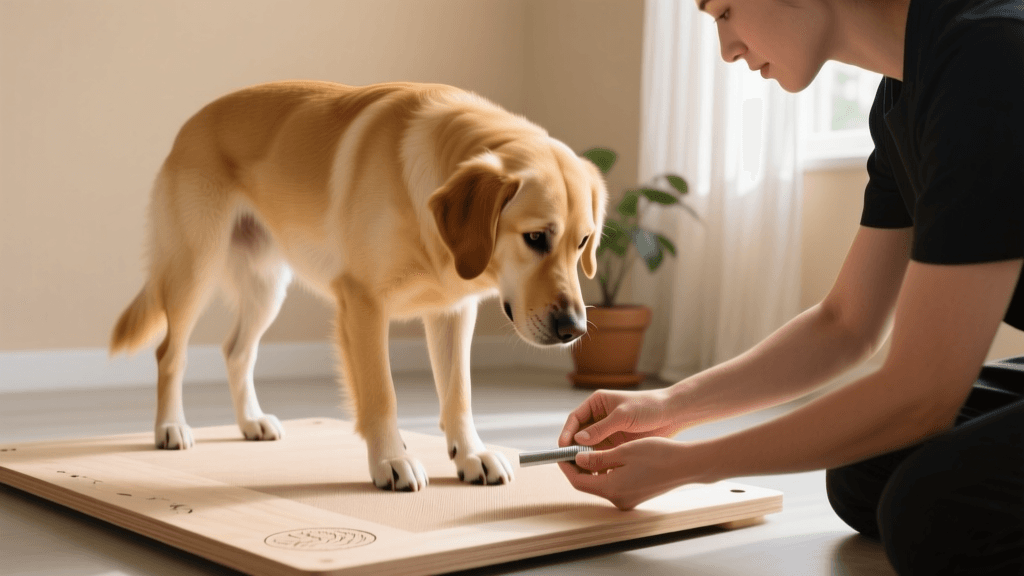
For dogs with severe handling sensitivities, paw phobias, or past trauma related to nail clippers, the scratch board is a revolutionary tool. A scratch board is typically a flat piece of wood or heavy-duty plastic covered with abrasive sandpaper or grip tape. Through positive reinforcement, the dog is taught to actively scratch the board with their front paws, effectively filing down their own nails.
This method offers several distinct advantages:
- Total Autonomy: The dog controls the pace and pressure of the filing, eliminating the fear of the quick being cut.
- Zero Restraint: The dog remains in a parasympathetic (relaxed) state, standing or sitting freely while working.
- Cognitive Enrichment: Shaping the scratching behavior provides excellent mental stimulation, turning a dreaded chore into a rewarding game.
Selecting the Right Materials in 2026
Modern scratch boards have evolved past simple DIY projects. In 2026, you can purchase ergonomically angled, wall-mounted scratch boards or craft your own using high-quality adhesive abrasive tapes. The grit of the sandpaper is crucial:
- 40-Grit: Best for large breeds (e.g., German Shepherds, Rottweilers) with thick, dense nails.
- 60-Grit: The standard for medium-sized breeds; offers a great balance of filing speed and smooth finish.
- 80-Grit to 100-Grit: Ideal for small breeds, puppies, or senior dogs with brittle nails that might splinter under heavy abrasion.
Step-by-Step: Shaping the Scratch Behavior
Training your dog to use a scratch board requires patience and a high rate of reinforcement using high-value treats (like freeze-dried liver or boiled chicken). Here is the proven shaping protocol:
Step 1: Introduce the Board
Place the scratch board flat on the ground. Do not prompt or lure the dog. Simply wait for the dog to investigate the board. The moment they look at it, sniff it, or step near it, mark the behavior with a clicker or a verbal "Yes!" and toss a treat away from the board. This builds a positive emotional response to the object's presence.
Step 2: Capture Paw Movement
Once the dog is comfortable, raise your criteria. Wait for the dog to lift a paw and make physical contact with the board. Mark and reward. If the dog just stands on it, wait them out until they shift their weight and lift a paw. Mark that exact moment of movement.
Step 3: Shape the Forward Motion
Now, you only reward when the paw moves forward across the abrasive surface. A single scratch earns a treat. Gradually require two scratches, then three, before delivering the reward. This builds the endurance needed to actually file the nail.
Step 4: Add the Verbal Cue
Once the dog is reliably offering the scratching behavior to earn treats, introduce your cue word (e.g., "File," "Scratch," or "Get your nails"). Say the cue right before the dog initiates the behavior, then mark and reward.
Step 5: Elevate and Angle
For maximum efficiency, prop the scratch board up at a 30-to-45-degree angle against a wall or couch. This encourages the dog to reach up and scratch with full extension, ensuring the nails make flush, even contact with the grit.
Comparing Force-Free Nail Care Methods in 2026
While the scratch board is incredible, it is not the only force-free option. Below is a comparison of the most common nail care methods available to dog owners today, evaluated on stress, cost, and alignment with positive reinforcement principles.
| Method | Stress Level | Force-Free? | 2026 Avg Cost | Best For |
|---|---|---|---|---|
| Scratch Board | Very Low | Yes | $25 - $45 | Front nails, handling-sensitive dogs |
| Cooperative Dremel | Low to Medium | Yes | $30 - $60 | Dewclaws, precision shaping, hind nails |
| Guillotine Clippers | Medium to High | Rarely | $15 - $25 | Small dogs, thin nails, experienced handlers |
| Veterinary Sedation | High (Medical) | No | $150 - $300+ | Severe phobia, medical necessity, bite risk |
Troubleshooting Common Scratch Board Challenges
Even with the best positive reinforcement techniques, you may encounter a few hurdles during training.
Challenge: The dog sits instead of standing.
Solution: If your dog sits and tries to scratch the board with their hind legs (which is ineffective and can cause pad burns), simply do not reward the behavior. Reset by tossing a treat behind them so they have to stand up to get it. Only reward scratching when the dog is in a standing position.
Challenge: The dog scratches too aggressively and damages the board.
Solution: Switch to a lower grit sandpaper or reinforce the wooden backing with a metal plate. You can also train a "gentle" cue by rewarding slower, more deliberate paw movements.
Challenge: The quick is still too long.
Solution: The scratch board files the hard outer shell of the nail. If the quick (the pink inner vein) is overgrown, you must file the nails down to the very edge of the quick and then wait. Over the course of a few weeks, the quick will naturally recede back into the nail bed. Consistency is key; aim for three 5-minute scratch sessions per week.
Handling Dewclaws and Hind Nails: The Target Stick Combo
The primary limitation of the scratch board is that it only files the front nails that naturally strike the ground during a forward digging motion. It does not address the hind nails or the dewclaws (the higher-up "thumb" nails on the inner leg). As noted by the American Kennel Club (AKC), dewclaws never touch the ground and can curl back into the paw pad, causing severe infections if left unmanaged.
To address these nails force-free, combine your scratch board training with targeting and a cooperative Dremel (a rotary grinding tool). Teach your dog to place their chin on a designated "chin rest" (like a folded towel or a specialized grooming mat) and hold that position while you gently handle their paw. Introduce the Dremel by first turning it on in another room and treating, then bringing it closer, and eventually touching the smooth side of the spinning head to the nail before ever attempting to grind. By breaking the process down into micro-steps, you maintain the dog's trust and keep their nervous system regulated.
Final Thoughts on Force-Free Wellness
Embracing cooperative care and the scratch board method in 2026 is about more than just keeping your dog's nails short; it is about fundamentally changing how your dog views physical handling. By replacing fear and restraint with communication and positive reinforcement, you are actively improving your dog's mental health, deepening your mutual bond, and ensuring their orthopedic longevity. Grab a piece of sandpaper, load up on high-value treats, and empower your dog to take their health into their own paws.
jonas-cole
All our authors care for dogs every day — read more of their work on the authors page.