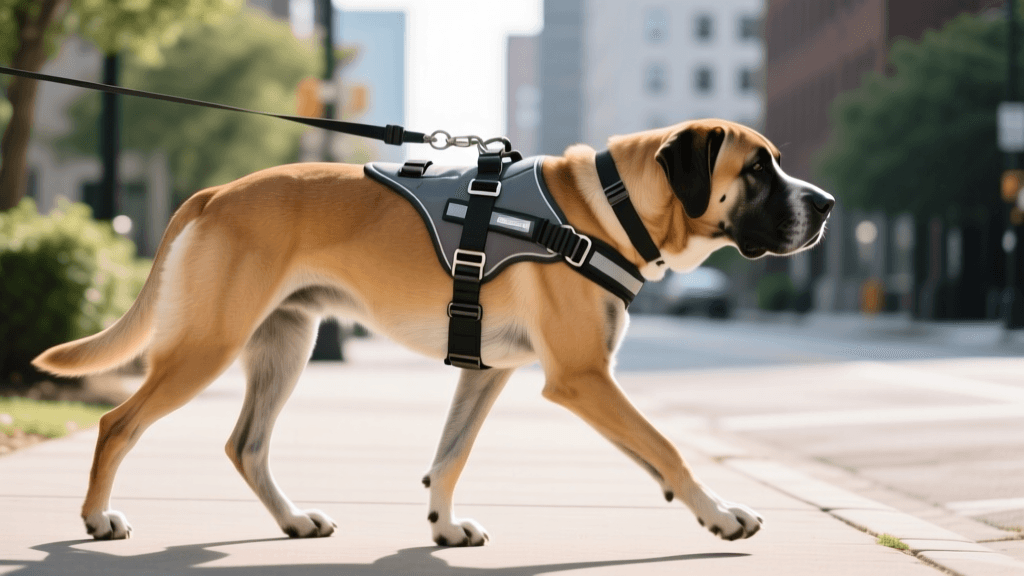
Top Mobility Harnesses for Large Service Dogs in 2026
Discover the best mobility harnesses for large service dogs in 2026. Compare top ergonomic designs, lifting capabilities, and fitting guides.
The Evolution of Mobility Assistance Gear in 2026
Mobility assistance dogs are life-changing partners for individuals with physical disabilities, providing essential tasks such as bracing, counterbalance, retrieval, and even helping their handlers stand or navigate stairs. As we move through 2026, the landscape of service dog equipment has seen massive leaps in material science, ergonomic design, and biomechanical safety. The days of simply strapping a modified backpack or a standard walking harness onto a working dog are long gone. Today, the best mobility harnesses are engineered specifically to protect the canine athlete while maximizing the mechanical advantage for the handler.
According to the U.S. Department of Justice ADA guidelines, service animals must be harnessed, leashed, or tethered unless these devices interfere with the animal's work. For mobility dogs, the harness is not just a legal requirement; it is the primary interface between the handler's physical needs and the dog's biomechanical capabilities. Furthermore, organizations like Assistance Dogs International (ADI) continuously update their welfare standards to ensure that working dogs are not subjected to undue physical strain. In 2026, ADI-accredited programs heavily emphasize the use of custom-fitted, force-distributing harnesses to prevent long-term joint and spinal issues in large breed service dogs.
Understanding Canine Biomechanics and Force Distribution
When a handler leans on a dog for bracing or uses a rigid handle for counterbalance, the downward and lateral forces applied to the dog's body can be substantial. A standard Y-front or back-clip walking harness concentrates these forces on the dog's trachea, shoulders, or spine, which can lead to severe injuries over time, including shoulder impingement, spinal misalignment, and cartilage degradation.
A proper 2026 mobility harness must feature a wide, padded sternum plate and broad girth straps that distribute the handler's weight across the dog's ribcage and core. The handle itself must be positioned directly over the dog's center of gravity—typically just behind the shoulder blades—to ensure that downward pressure is transferred safely through the dog's sturdy ribcage and down to the ground, rather than torquing the spine. Modern harnesses also incorporate aerospace-grade aluminum buckles and bio-based ripstop nylons that offer immense tensile strength without adding unnecessary weight to the dog.
2026 Comparison Chart: Top Mobility Harnesses
| Harness Model | Best For | Handle Type | Estimated 2026 Price |
|---|---|---|---|
| Ruffwear Web Master Pro | Everyday Mobility and Balance | Padded Rigid Aluminum | $165.00 |
| Bold Lead Designs Mobility | Heavy-Duty Bracing and Pulling | Leather Ergonomic Grip | $245.00 |
| Dogline Unimax Multi-Purpose | Multi-Tasking Service Dogs | Modular Padded MOLLE | $185.00 |
In-Depth Reviews of the Top 3 Mobility Harnesses
1. Ruffwear Web Master Pro (The 2026 Standard)
The Ruffwear Web Master Pro has long been a staple in the service dog community, and its 2026 iteration sets a new benchmark for off-the-shelf mobility harnesses. Designed in collaboration with veterinary orthopedic specialists, this harness features a multi-point adjustment system with five distinct straps, ensuring a custom-like fit for almost any large breed anatomy, from Labrador Retrievers to Bernese Mountain Dogs.
The standout feature for 2026 is the updated closed-cell foam padding along the sternum and belly bands. Unlike older open-cell foams that absorbed sweat and rain, the new hydrophobic foam repels moisture, preventing chafing and bacterial buildup during long working shifts. The rigid, padded handle is reinforced with an internal aluminum frame, allowing handlers to apply significant downward pressure for balance without the handle collapsing onto the dog's spine. Additionally, the dual leash attachment points (a reinforced V-ring on the back and a chest-mounted loop) provide excellent steering control in crowded public spaces.
2. Bold Lead Designs Custom Mobility Harness
For handlers who require heavy-duty bracing or those whose dogs fall outside standard sizing charts, Bold Lead Designs remains the gold standard. Operating on a made-to-order model, this company crafts each harness using premium, full-grain leather and heavy-duty Cordura nylon. The 2026 lineup introduces a new ergonomic leather handle that molds to the handler's specific grip over time, significantly reducing hand fatigue for individuals with limited grip strength or conditions like rheumatoid arthritis.
The biomechanical advantage of the Bold Lead harness lies in its wide, contoured chest plate and the optional belly support band, which prevents the harness from shifting forward when the dog is performing a forward-pull task, such as opening a heavy door or pulling a wheelchair up a slight incline. While the price point is higher and the lead time for custom manufacturing can take several weeks, the lifetime warranty on stitching and hardware makes it a worthwhile investment for dedicated working dogs.
3. Dogline Unimax Multi-Purpose Tactical Harness
The Dogline Unimax has gained massive popularity in 2026 due to its incredible versatility. Originally designed for tactical and search-and-rescue applications, it has been widely adopted by mobility service dog teams who require a modular setup. The harness features a full-coverage MOLLE (Modular Lightweight Load-carrying Equipment) system on both sides of the dog's torso.
This modularity allows handlers to easily attach specialized pouches for medical supplies, treat rewards, or biometric GPS tracking units without needing separate collars or vests. The Unimax features a heavily padded, traffic-style top handle that is excellent for quick stabilization in transit or when navigating stairs. The quick-release AustriAlpin buckles on the girth straps mean the harness can be put on and taken off without requiring the dog to step through loops, which is a massive benefit for older mobility dogs with arthritis in their own joints.
Step-by-Step Fitting Guide for Working Dogs
Even the most expensive, technologically advanced harness will cause injury if it is not fitted correctly. Follow these steps to ensure your mobility dog is comfortable and safe:
- Measure the Neck: Measure around the thickest part of the neck, right at the base. You should be able to slide two fingers comfortably between the tape measure and the dog's skin.
- Measure the Chest (Sternum): Measure the circumference of the chest right behind the front legs. This is the most critical measurement for weight distribution.
- Check the Shoulder Clearance: Once the harness is on, ensure the front straps do not rub against the dog's shoulder blades (scapula) during a full stride. The harness must sit behind the shoulder joint to allow for unrestricted front-leg extension.
- The Two-Finger Rule: All straps should be snug enough that the harness does not shift side-to-side when the handler applies lateral counterbalance pressure, but loose enough that you can slide two fingers under any strap.
- Observe the Gait: Have the dog trot on a loose leash. Watch for any shortened strides, head bobbing, or chafing, which indicate a poor fit.
Conditioning and Care for Your Mobility Partner
Equipping your dog with a top-tier 2026 mobility harness is only half the equation. The dog must be physically conditioned to handle the rigors of mobility work. Just as a human athlete trains for a marathon, a mobility dog requires targeted core strengthening and proprioception exercises.
Canine conditioning experts recommend incorporating cavaletti poles, balance discs, and sit-to-stand repetitions into the dog's weekly routine. These exercises build the deep stabilizing muscles of the spine and hips, protecting the dog from the asymmetric loads experienced during counterbalance tasks. It is also vital to schedule bi-annual evaluations with a veterinary sports medicine specialist or a certified canine rehabilitation therapist to check for early signs of joint wear or muscle fatigue.
Maintenance of the gear is equally important. Inspect all stitching, buckles, and D-rings weekly for signs of fraying or metal fatigue. Wash fabric harnesses according to the manufacturer's instructions—usually with a mild, unscented detergent in cold water—and allow them to air dry completely to preserve the integrity of the hydrophobic foams and structural webbing. By combining cutting-edge 2026 equipment with rigorous conditioning and meticulous care, you ensure that your mobility assistance dog remains a healthy, happy, and effective partner for years to come.
marcus-aldridge
All our authors care for dogs every day — read more of their work on the authors page.