Top No-Pull Harness for Rescue Dogs in 2026: Kurgo Tru-Fit Guide
Discover why the Kurgo Tru-Fit is the top no-pull harness for new rescue dogs in 2026. Learn fitting tips, training methods, and day-one walking strategies.
Bringing Home a Rescue: The Day-One Leash Challenge
Welcoming a newly adopted dog into your home is one of the most rewarding experiences in life, but it comes with immediate logistical hurdles. Among the most common and frustrating challenges new dog owners face in 2026 is leash pulling. Whether you have adopted an energetic Labrador mix, a powerful Shepherd cross, or a terrified rescue who panics and bolts on the leash, managing their momentum from day one is critical for both safety and bonding. When you are in the 'Getting a Dog' phase, your primary goal is to establish trust and routine without risking injury to your new pet or yourself.
Many first-time owners make the mistake of relying on standard flat collars, assuming that a dog will naturally learn to walk politely. However, rescue dogs often arrive with zero leash manners, ingrained pulling habits from previous environments, or high prey drives that make them lunge unpredictably. To set your new dog up for success, investing in a high-quality, front-clip no-pull harness is not just a recommendation—it is a day-one essential. In this comprehensive guide, we will explore the biomechanics of no-pull harnesses, review the updated 2026 Kurgo Tru-Fit Smart Harness, and provide a step-by-step protocol for your first decompression walks.
Why Traditional Collars Are a Safety Hazard for New Dogs
Before diving into harness solutions, it is vital to understand why traditional neck collars are inadequate—and potentially dangerous—for newly adopted dogs. When a dog pulls against a flat collar, the entirety of the kinetic force is concentrated on their delicate trachea, cervical spine, and thyroid gland. According to The Humane Society of the United States, continuous pressure on a dog's neck can lead to severe medical issues, including tracheal collapse, chronic coughing, and exacerbated glaucoma in susceptible breeds.
Furthermore, rescue dogs are notorious 'Houdinis.' A frightened or overstimulated dog can easily back out of a standard collar by dropping their head and pulling backward. This escape risk is a leading cause of lost dogs during the critical first month of adoption. A well-fitted harness distributes pressure across the dog's robust chest and ribcage, eliminating neck strain and providing a secure, escape-proof anchor point while you both learn to navigate the world together.
The Biomechanics of Front-Clip No-Pull Harnesses
Not all harnesses are created equal. Back-clip harnesses, where the leash attaches between the shoulder blades, are excellent for small dogs or hiking, but they actually encourage pulling. They engage a dog's natural 'opposition reflex'—the instinct to pull against pressure—which is why sled dogs wear back-clip harnesses. If you attach a leash to the back of a strong rescue dog, you are essentially giving them the mechanical advantage to tow you down the street.
Front-clip no-pull harnesses solve this problem through simple physics. By placing the leash attachment ring on the center of the dog's chest (the sternum), you alter their center of gravity. When the dog surges forward and hits the end of the leash, the front clip gently pivots their body back toward the handler. This redirection breaks their forward momentum without causing pain or relying on aversive choking mechanisms. It gives the handler steering control, allowing you to guide the dog's attention back to you and reward them for making eye contact.
2026 Gear Spotlight: The Kurgo Tru-Fit Smart Harness
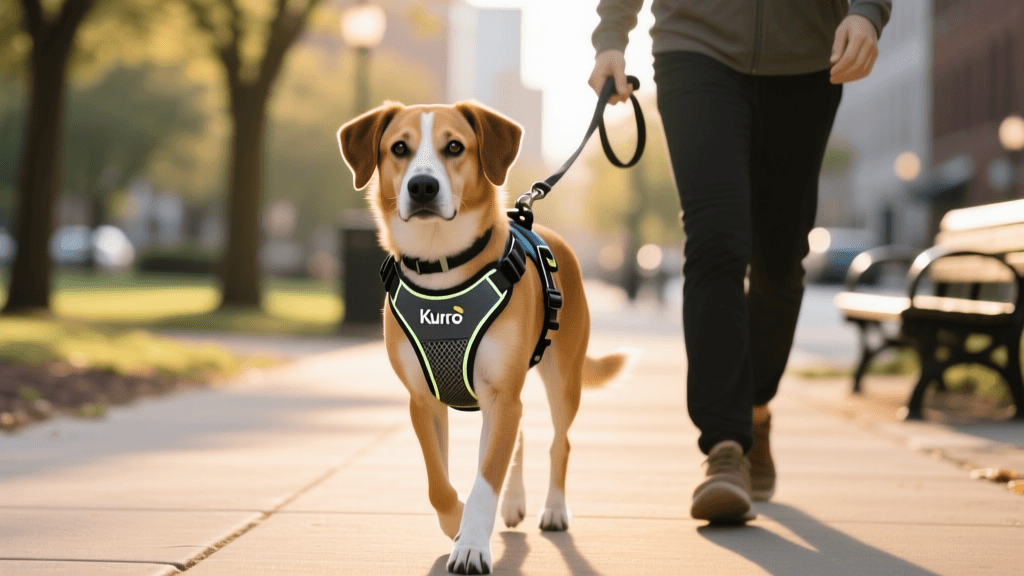
As we evaluate the best gear for new dog owners in 2026, the Kurgo Tru-Fit Smart Harness remains a standout choice for rescue dogs and strong pullers. Priced at approximately $39.99, it offers an exceptional balance of durability, safety, and affordability. The 2026 iteration of the Tru-Fit features upgraded, eco-friendly ripstop materials that are highly resistant to chewing and scratching, which is crucial for anxious dogs who might try to bite through their gear during the decompression period.
Key Features for the Modern Dog Owner
- Dual Attachment Points: Features a sturdy V-ring on the chest for no-pull training and a back D-ring for casual walks or car tethering.
- Crash-Tested Safety: The included 10-inch seat belt tether has been crash-tested up to 75 lbs, making it a safe option for transporting your new rescue from the shelter to your home.
- Padded Chest Plate: A broad, neoprene-padded chest plate prevents chafing and distributes pressure evenly, which is ideal for deep-chested breeds like Greyhounds or German Shepherds.
- Five Adjustment Points: Unlike cheaper harnesses that only adjust at the neck, the Kurgo offers five distinct adjustment points, ensuring a custom fit for asymmetrical or uniquely proportioned rescue dogs.
Step-by-Step: Fitting the Kurgo Tru-Fit for Maximum Control
A no-pull harness is only effective if it fits correctly. A loose harness will chafe the armpits and allow the dog to slip out, while a tight harness will restrict shoulder movement and cause gait abnormalities. Follow these steps on your dog's first day home:
- Loosen All Straps: Before putting the harness on, loosen the neck and girth straps completely.
- Slip Over the Head: Gently guide the padded chest plate over your dog's head. Offer high-value treats (like boiled chicken or freeze-dried liver) to create a positive association.
- Clip the Girth Straps: Reach under your dog's front legs, pull the straps up behind their elbows, and clip them into the buckles on the back.
- The Two-Finger Rule: Adjust all straps until you can comfortably slide exactly two fingers between the harness and your dog's body. This ensures it is snug but not restrictive.
- Check the Armpits: Ensure the straps sit high enough in the armpit to avoid rubbing the sensitive skin during long walks, but low enough not to impede the shoulder joint's full range of motion.
Equipment Comparison Chart for New Dog Owners
Choosing the right walking equipment can be overwhelming. Below is a comparison of common tools to help you understand why the front-clip harness is the superior choice for day-one rescue dog management.
| Equipment Type | Best Used For | Pros | Cons for Rescue Dogs |
|---|---|---|---|
| Front-Clip Harness | Leash training, strong pullers, day-one walks | Redirects momentum, prevents neck injury, escape-resistant | Requires proper fitting, leash can get caught between front legs |
| Back-Clip Harness | Small dogs, hiking, car rides | Easy to put on, keeps leash away from paws | Encourages pulling via opposition reflex, offers zero steering control |
| Head Halter | Severe aggression/reactivity, giant breeds | Maximum head control, stops lunging instantly | Requires extensive desensitization, risk of neck whiplash if dog bolts |
| Martingale Collar | Sighthounds, dogs with narrow heads | Prevents slipping out, lightweight | Still applies pressure to the neck, does not stop pulling |
Your First Week: Training Protocols for Loose-Leash Walking
While a front-clip harness provides mechanical advantage, it is not a magic wand. It is a training tool designed to buy you the time and control needed to teach your dog proper leash manners. The American Kennel Club (AKC) training guidelines emphasize that consistency and positive reinforcement are the cornerstones of successful loose-leash walking. During your dog's first week, implement the following protocols.
The 'Be a Tree' Method
When your rescue dog hits the end of the leash and pulls, immediately stop walking. Do not yank the leash, do not shout, and do not drag the dog backward. Simply 'be a tree.' Stand completely still and wait. The moment the leash slackens—even if the dog just turns their head to look at you or takes a half-step back—mark the behavior with a cheerful 'Yes!' and resume walking. This teaches the dog a fundamental rule: pulling makes the walk stop; a loose leash makes the walk continue.
High-Value Reward Placement
Where you deliver treats is just as important as the treats themselves. When your dog is walking nicely by your side, deliver the treat exactly at the 'seam of your pants' on the side you want them to walk. If you hold the treat too high, the dog will jump; if you deliver it in front of them, you will encourage them to surge ahead. By keeping the reward zone low and close to your leg, you magnetize your dog to your side, making the area right next to your knee the most rewarding place in the world.
Common Fitting Mistakes to Avoid in 2026
Even with a premium harness like the Kurgo Tru-Fit, new owners frequently make fitting errors that compromise safety. One common mistake is twisting the girth straps. A twisted strap creates a concentrated pressure point that will dig into the dog's ribs and cause severe chafing within minutes. Always ensure the nylon webbing lies completely flat against the fur.
Another mistake is leaving the harness on 24/7. Harnesses are walking and travel equipment, not indoor loungewear. Leaving a harness on a dog while they are crated or playing with other dogs poses a severe entanglement and choking hazard. Make it a household rule: the harness goes on right before the front door opens, and it comes off the moment you return inside.
Final Thoughts on Patience and Decompression
Getting a dog is a marathon, not a sprint. The '3-3-3 Rule' of rescue dog adoption dictates that it takes three days for a dog to decompress, three weeks to learn your routine, and three months to truly feel at home. During those first few days, your walks should not be about covering miles or achieving perfect heeling. They should be 'decompression walks'—slow, meandering explorations where the dog is allowed to sniff, process new scents, and build confidence in their new environment.
By equipping yourself with a reliable, front-clip no-pull harness like the Kurgo Tru-Fit, you remove the physical struggle from the equation. You protect your dog's physical health, secure them against escape, and give yourself the peace of mind needed to focus on what truly matters: building a lifelong bond with your new best friend. Approach those first walks with patience, a pocket full of high-value treats, and the right gear, and you will lay the foundation for a lifetime of enjoyable adventures together.
robin-maitland
All our authors care for dogs every day — read more of their work on the authors page.