2026 Force-Free Leash Training: Kurgo Tru-Fit Guide
Master force-free leash walking in 2026 using the Kurgo Tru-Fit front-clip harness and treat-pacing techniques for pullers.
The 2026 Standard for Force-Free Leash Training
As we navigate through 2026, the landscape of dog training has definitively shifted away from outdated, aversive methods and firmly embraced the science of positive reinforcement. Force-free leash training is no longer just a niche philosophy; it is the gold standard recommended by veterinary behaviorists worldwide. If you are struggling with a dog that pulls, lunges, or drags you down the sidewalk, you are not alone. Leash reactivity and pulling remain the most common behavioral challenges reported by dog owners this year. However, with the right equipment and a structured, reward-based protocol, you can transform your daily walks from a stressful tug-of-war into a harmonious bonding experience.
In this comprehensive guide, we will break down the exact methodology for teaching loose-leash walking using the highly acclaimed Kurgo Tru-Fit Smart Harness. By combining biomechanically sound gear with a technique known as 'treat-pacing,' you can effectively communicate your expectations to your dog without ever relying on fear, pain, or intimidation.
Why We Ditch Aversives: The Science of Positive Reinforcement
Historically, many trainers relied on slip leads, prong collars, or electronic shock collars to suppress pulling. In 2026, the veterinary and behavioral communities have universally solidified their stance against these tools. Aversive methods do not teach a dog what to do; they merely suppress behavior through the threat of discomfort. This often leads to 'fallout,' where a dog becomes anxious, fearful, or even aggressive toward triggers in their environment because they associate the pain of the collar with the presence of another dog or person.
Conversely, reward-based training focuses on operant conditioning. When a dog is rewarded for making the correct choice, neural pathways associated with that behavior are strengthened. According to the ASPCA's official dog training guidelines, positive reinforcement is not only the most humane method but also the most effective for long-term behavioral modification. Furthermore, The Humane Society's reward-based training resources emphasize that force-free methods build a foundation of trust between the handler and the dog, which is critical when navigating distracting outdoor environments.
The RSPCA Knowledge Base on reward-based training further corroborates that dogs trained with rewards show fewer stress-related behaviors and exhibit a greater willingness to learn new tasks compared to those trained with punitive measures.
Gear Spotlight: Kurgo Tru-Fit Smart Harness
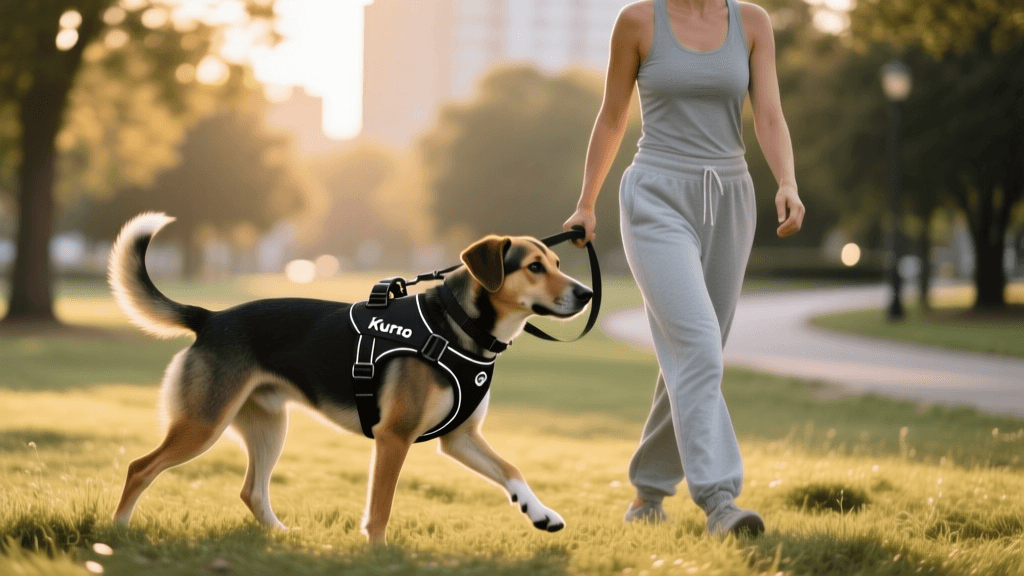
When executing a force-free loose-leash walking protocol, the equipment you use serves as your primary communication line. The Kurgo Tru-Fit Smart Harness remains a top-tier choice for behaviorists in 2026 due to its ergonomic design and dual-clip functionality. Priced at approximately $39.99 to $44.99 depending on the retailer and size, it offers exceptional value for its durability and safety features.
The most critical feature for leash training is the front-clip D-ring located on the dog's chest. When a dog pulls forward while attached to the front clip, the physics of the harness gently redirect the dog's momentum back toward the handler. This naturally breaks the dog's forward drive without causing any choking or tracheal damage. The harness also features a back-clip D-ring, which is excellent for recreational sniffing or hiking once your dog has mastered loose-leash walking.
The 2026 models of the Kurgo Tru-Fit continue to utilize their signature nested steel buckles, which are derived from rock-climbing harness technology, ensuring that even the most powerful breeds cannot break free during a sudden lunge. The padded chest plate distributes pressure evenly, preventing chafing during longer training sessions.
Harness Configuration Comparison Chart
Understanding how different attachment points affect your dog's biomechanics is crucial for successful training. Below is a comparison of common walking configurations for dogs prone to pulling.
| Equipment Type | Attachment Point | Mechanism of Action | Force-Free Rating | Best Use Case |
|---|---|---|---|---|
| Kurgo Tru-Fit Harness | Front Chest D-Ring | Redirects forward momentum laterally toward the handler. | Excellent | Active training, street walking, pullers. |
| Kurgo Tru-Fit Harness | Back D-Ring | Allows full forward extension; does not discourage pulling. | Excellent | Hiking, sniffaris, dogs with perfect leash manners. |
| Flat Nylon Collar | Top D-Ring | Places pressure directly on the trachea and cervical spine. | Poor | Holding ID tags only; never for walking pullers. |
| Martingale Collar | Top D-Ring | Constricts slightly to prevent slipping; still pressures neck. | Fair | Sighthounds or escape artists in secure areas. |
Selecting High-Value Treats for 2026
In force-free training, your treats are your currency. If the currency is worthless, the dog will not 'buy' the behavior you are selling. For outdoor environments filled with distractions (squirrels, other dogs, traffic smells), standard dry kibble will rarely suffice. You need high-value, aromatic treats that can be consumed in under one second.
In 2026, some of the most effective training treats include:
- Northwest Naturals Freeze-Dried Liver: Highly aromatic, easily broken into pea-sized pieces, and single-ingredient. (Approx. $12 for a 5oz bag).
- Zuke's Mini Naturals: Soft, moist, and low in calories, allowing for high repetition without causing digestive upset. (Approx. $8 for a 6oz bag).
- Boiled Chicken Breast: The ultimate gold standard for high-distraction environments. Dice into tiny cubes and keep in a silicone treat pouch.
Step-by-Step Treat-Pacing Protocol
'Treat-pacing' is a proactive force-free technique where you reward the dog for maintaining proximity to your leg before they have the opportunity to hit the end of the leash. Here is how to execute it flawlessly.
Step 1: Establish the Marker and Reward Zone
Before stepping outside, establish a verbal marker such as 'Yes!' or use a clicker. The marker tells the dog exactly which behavior earned the reward. The 'Reward Zone' is the area right next to your outer thigh, aligned with the side of your body where the dog is walking. If your dog walks on your left, your treat pouch should be on your left hip, and you will deliver treats with your left hand directly to their mouth at your knee level.
Step 2: The First Three Steps
Clip your leash to the front D-ring of the Kurgo Tru-Fit. Take one step forward. The moment your dog moves with you and their shoulder is aligned with your leg, say 'Yes!' and deliver a treat directly into the Reward Zone. Repeat this for the second and third steps. You are essentially paying the dog for every single step they take in the correct position.
Step 3: Fading the Lure and Increasing Criteria
Once your dog understands that staying by your leg produces a treat, begin to delay the marker. Take three steps, then mark and reward. Then five steps, then ten. If the dog surges ahead and hits the end of the leash, do not jerk the leash back. Simply stop walking like a tree. Wait for the dog to look back at you or take one step back to relieve the tension on the front clip. The moment the leash goes slack, mark 'Yes!', reward in the zone, and begin walking again.
The 4-Week Force-Free Walking Schedule
Consistency is the bedrock of behavioral conditioning. Follow this structured schedule to build lasting loose-leash habits.
- Week 1: Indoor Foundation. Practice treat-pacing inside your home with zero distractions. Walk in straight lines down hallways and practice 180-degree turns. Reward heavily for eye contact and proximity. Keep sessions to 5 minutes, three times a day.
- Week 2: The Driveway and Sidewalk. Move to your driveway or a very quiet cul-de-sac. The outdoor smells will be a massive distraction. Revert to rewarding every single step for the first few sessions. Use high-value treats like boiled chicken.
- Week 3: The 'Sniffari' Integration. Introduce the concept of 'Let's Go' (structured walking) versus 'Go Sniff' (free time). Walk on the front-clip with treat-pacing for 2 minutes, then unclip to the back-clip or drop the leash in a safe area and say 'Go Sniff.' This teaches the dog that structured walking earns them access to environmental rewards.
- Week 4: Real-World Distractions. Walk in moderately busy areas. If your dog pulls toward a distraction (like a fire hydrant or another person at a distance), stop immediately. Wait for slack in the leash, mark, and reward. Do not move forward until the leash is loose. Forward motion is the ultimate reward for a pulling dog; never let them pull you toward their goal.
Troubleshooting Common Setbacks
Even with the best force-free methods, you will encounter setbacks. If your dog begins 'binge-sniffing' the ground and ignoring your treats, it means the environment is currently more reinforcing than your food. In 2026, modern behaviorists recommend the 'Premack Principle' in these scenarios. Instead of fighting the dog's desire to sniff, use the sniffing as the reward. Ask for a 'Sit' or a 'Look at Me.' The moment the dog complies, release them with a 'Go Sniff' cue, allowing them to drag you gently to the bush on a long line.
Another common issue is the 'extinction burst.' When you first stop moving every time the dog pulls, the dog may pull harder, bark, or jump in frustration because the old tactic (pulling = moving forward) is no longer working. This is normal. Stay completely still, remain silent, and wait out the burst. The second the dog gives up and relaxes the leash, mark and reward. Giving in during an extinction burst will only teach the dog that they need to pull harder and longer to get what they want.
By committing to the Kurgo Tru-Fit front-clip system and the treat-pacing protocol, you are investing in a lifetime of safe, joyful, and force-free adventures with your canine companion. The patience you show in 2026 will yield a perfectly mannered walking partner for years to come.
jonas-cole
All our authors care for dogs every day — read more of their work on the authors page.