Best Puppy Teething Toys 2026: Soothing Canine Chewing Urges
Discover the best puppy teething toys in 2026. Learn the canine psychology behind chewing and how to soothe your dog's developmental urges safely.
Welcome to the challenging yet rewarding journey of raising a puppy. If you are reading this in 2026, you likely have a furry companion who seems determined to chew through your baseboards, favorite sneakers, and furniture legs. While it is easy to view destructive chewing as a behavioral problem, veterinary behaviorists urge us to look deeper. Teething is a profound developmental milestone. Understanding the canine psychology behind why puppies chew is the first step toward saving your belongings and soothing your dog's discomfort. In this comprehensive guide, we explore the science of puppy teething and review the best teething toys available in 2026 to support your dog's natural instincts.
The Canine Psychology Behind Teething and Chewing
To effectively manage puppy chewing, we must first understand it from a behavioral and neurological perspective. Chewing is not merely a physical act; it is a complex sensory and psychological experience. According to the ASPCA, chewing serves multiple vital functions for a developing dog. First, it is a primary method of environmental exploration. Puppies do not have hands to manipulate objects, so they use their mouths to gather tactile and olfactory data about the world around them.
Second, chewing is a powerful self-soothing mechanism. When a puppy's adult teeth begin to push through their gums, the process causes significant inflammation, pressure, and pain. The physical act of gnawing on a textured surface stimulates blood flow to the gums and triggers the release of endorphins in the brain. These endorphins act as natural painkillers and stress relievers. When a puppy chews on your wooden coffee table, they are not acting out of spite; they are instinctively seeking relief from oral discomfort and engaging in a self-regulating behavioral loop.
The Developmental Stages of Puppy Teething
Providing the correct teething toy requires matching the toy's texture and resistance to your puppy's specific developmental stage. The VCA Animal Hospitals outline the following critical teething phases:
- Weeks 3 to 6 (Deciduous Teeth): Baby teeth erupt. Puppies begin exploring soft textures and require very gentle, pliable toys to avoid damaging delicate new teeth.
- Weeks 12 to 16 (The Transition Phase): Adult teeth begin pushing out the baby teeth. This is the peak of oral discomfort. Puppies will seek out cold items to numb the inflammation and medium-firm textures to help dislodge stubborn baby teeth.
- Months 6 to 8 (Adult Dentition): The full set of 42 adult teeth is established. The urge to chew transitions from pain relief to jaw strengthening and boredom alleviation.
Best Teething Toys in 2026 for Behavioral Enrichment
The pet care market in 2026 has evolved significantly, moving away from simple plastic bones toward toys that offer multi-sensory enrichment and cater to specific canine behavioral drives. Based on veterinary recommendations and behavioral efficacy, here are the top teething toys for puppies this year.
1. KONG Puppy Classic (Best for Foraging and Soothing)
The KONG Puppy Classic remains a gold standard in canine behavioral enrichment. Made from a proprietary, ultra-soft natural rubber formula designed specifically for developing teeth, this toy addresses the psychological need to forage. By stuffing the hollow center with puppy-safe peanut butter, plain yogurt, or soaked kibble and freezing it, you transform a simple chew toy into a long-lasting puzzle. The freezing process provides essential cryotherapy for inflamed gums, while the unpredictable bounce engages the puppy's prey drive. In 2026, the KONG Puppy retails between $12 and $18, making it an invaluable investment for separation anxiety prevention and crate training.
2. Petstages Cool Teething Stick (Best for Temperature-Seeking Behavior)
Puppies instinctively seek out cold surfaces when their gums are swollen. The Petstages Cool Teething Stick is designed to be soaked in water and frozen. The unique mesh material creates a satisfying, slightly abrasive texture that gently massages the gums and helps sweep away plaque as the puppy gnaws. From a behavioral standpoint, the crinkling sound embedded in the toy provides immediate auditory feedback, reinforcing the chewing behavior and keeping the puppy engaged longer than a static rubber toy. Priced around $10 in 2026, it is an excellent rotational toy to maintain your puppy's interest.
3. Benebone Puppy Wishbone (Best for Aggressive Gnawers)
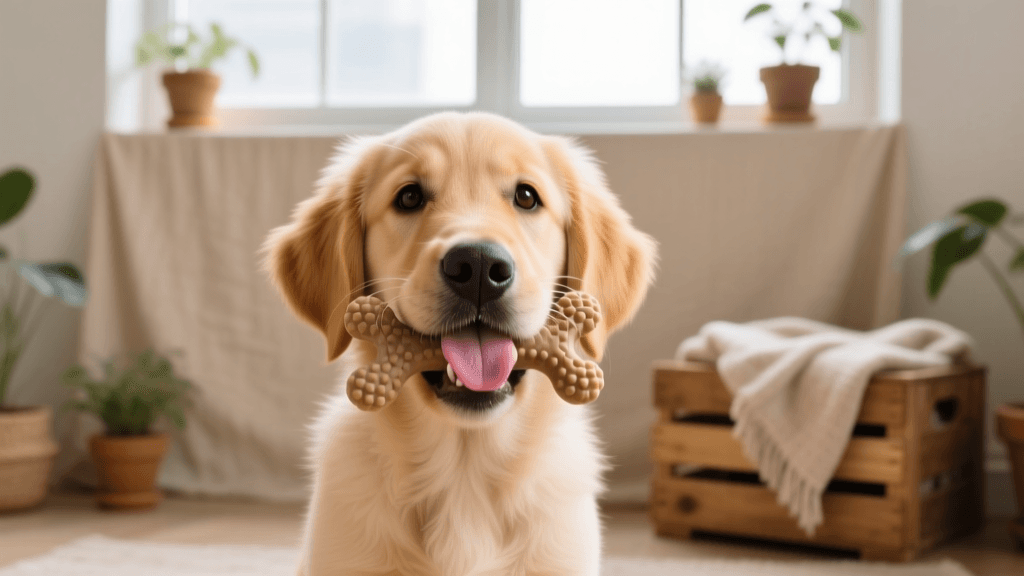
For puppies with a high drive to gnaw and strong jaw pressure, the Benebone Puppy Wishbone offers an ergonomic solution. Infused with 100% real bacon, this toy appeals to the dog's highly developed olfactory senses. The wishbone shape is specifically designed to allow the puppy to use their paws to hold the toy steady, satisfying their natural instinct to brace and tear. It is crucial to select the 'Puppy' line, which uses a softer nylon compound that will not fracture developing adult teeth. Expect to pay approximately $15 for this durable behavioral tool.
Comparative Analysis: Matching Toy to Behavior
| Teething Toy (2026) | Primary Behavioral Benefit | Best Developmental Stage | Estimated Price |
|---|---|---|---|
| KONG Puppy Classic | Foraging enrichment, anxiety reduction | Weeks 12-16 (Transition) | $12 - $18 |
| Petstages Cool Teething Stick | Cryotherapy, auditory feedback | Weeks 12-20 (Peak Pain) | $9 - $12 |
| Benebone Puppy Wishbone | Olfactory stimulation, bracing instinct | Months 5-8 (Jaw Strengthening) | $14 - $16 |
| Nylabone Puppy Chew Rings | Tactile exploration, plaque removal | Weeks 8-12 (Early Exploration) | $8 - $11 |
Behavioral Redirection: Teaching Your Puppy What to Chew
Providing the best teething toys in 2026 is only half the equation; the other half is active behavioral redirection. The American Kennel Club (AKC) emphasizes that puppies do not inherently know the difference between a $50 dog toy and a $500 pair of designer shoes. To them, both are simply objects that provide relief and sensory feedback.
To shape your puppy's chewing habits, employ the 'Trade-Up' method. When you catch your puppy chewing on an inappropriate item, do not yell or chase them, as this can trigger a game of keep-away or induce fear. Instead, calmly approach them with a high-value teething toy, such as a frozen KONG. Offer the toy, and the moment they drop the forbidden item to investigate the new toy, offer verbal praise and let them enjoy the appropriate chew. Over time, this builds a positive association with their designated toys.
Additionally, environmental management is critical during the teething phase. Keep your home 'puppy-proofed' by removing temptations from the floor and utilizing baby gates to restrict access to carpeted areas or rooms with heavy electrical wiring. By controlling the environment and offering highly engaging, psychologically satisfying alternatives, you set your puppy up for success.
Another effective technique is the 'Leave It' command, which should be introduced early in 2026 puppy training curriculums. Start with low-value items and reward compliance with high-value teething chews. This impulse control exercise not only saves your belongings but also mentally exhausts your puppy, reducing the overall drive to engage in destructive chewing out of boredom.
Recognizing Abnormal Teething Behaviors
While chewing is normal, certain signs indicate that your puppy may be experiencing complications that require veterinary intervention. If you notice excessive bleeding, a foul odor emanating from the mouth, refusal to eat, or pawing frantically at the face, these are not typical teething symptoms. Retained deciduous teeth, commonly seen in small and brachycephalic breeds, can cause severe misalignment and pain. In 2026, veterinary dentists strongly advise against attempting to extract stubborn baby teeth at home. Always consult your veterinarian if you suspect an oral abnormality, as early intervention prevents long-term periodontal disease and chronic discomfort.
Conclusion: Patience and Understanding
Navigating the teething phase requires patience, empathy, and a solid understanding of canine psychology. By recognizing that chewing is a natural, pain-relieving, and exploratory behavior, you can shift your perspective from frustration to proactive management. Equipping your home with the best teething toys of 2026 ensures that your puppy's developmental needs are met safely and enrichingly. Remember, this intense chewing phase is temporary, but the trust and positive habits you build through gentle redirection will last a lifetime.
aaron-whyte
All our authors care for dogs every day — read more of their work on the authors page.