Top 5 Best Puppy Breeds for Remote Workers in 2026
Discover the best puppy breeds for remote workers in 2026. Learn how canine attachment styles and breed psychology impact your home office productivity.
The Psychology of the Home Office Dog in 2026
As the remote and hybrid work landscape continues to evolve in 2026, the home office has permanently transformed into a shared living and working space. For professionals considering adding a puppy to their household, the decision goes far beyond picking a cute face. It requires a deep understanding of canine psychology, breed instincts, and attachment styles. A remote worker's lifestyle is unique: you are physically present but mentally occupied. This dynamic can be incredibly confusing for certain dog breeds, leading to attention-seeking behaviors, vocalization during video calls, or even separation anxiety when you eventually leave the house.
According to the Centers for Disease Control and Prevention (CDC), pet ownership significantly reduces stress and lowers blood pressure, making dogs excellent companions for high-pressure remote jobs. However, the key to reaping these benefits lies in selecting a breed whose natural energy levels and independence align with your daily schedule. In this guide, we will explore the behavioral science behind the best puppy breeds for remote workers, helping you build a harmonious and productive home office environment.
Understanding Canine Attachment Styles
Dogs generally fall into two behavioral categories regarding human attachment: "velcro dogs" and "independent thinkers." While it might seem ideal to have a velcro dog when working from home, these breeds often lack the ability to self-soothe. They rely on constant physical proximity and active engagement to regulate their nervous systems. When you are deep in focus or on a critical Zoom call, a velcro dog may interpret your lack of interaction as a disruption in the pack dynamic, leading to whining or pawing.
Conversely, independent breeds or those with a lower arousal threshold are capable of "parallel play." They are content simply sharing the same room with you without demanding direct interaction. For remote workers, the ideal puppy is one that exhibits secure attachment—meaning they feel safe enough to sleep or chew a toy nearby without needing to monitor your every keystroke. The ASPCA emphasizes that fostering independence early on is crucial, even if you are home all day, to prevent severe separation anxiety when your routine eventually changes.
Top 5 Puppy Breeds for Remote Workers
Based on behavioral stability, trainability, and low-to-moderate arousal thresholds, here are the top five breeds uniquely suited for the 2026 remote work lifestyle.
1. Cavalier King Charles Spaniel (The Empathetic Shadow)
Bred specifically for companionship, the Cavalier is the quintessential lap dog. Psychologically, they are highly empathetic and tend to mirror their owner's energy levels. If you are sitting quietly at your desk, a Cavalier will happily snooze at your feet. They possess a low arousal threshold, meaning they are rarely triggered into high-stress states by household noises like doorbells or delivery drivers. In 2026, expect to invest between $2,800 and $4,500 for a puppy from a health-tested, reputable breeder. Their primary need is gentle daily walks and mental enrichment via snuffle mats.
2. Greyhound (The Couch Potato Sprinter)
Many remote workers are surprised to learn that Greyhounds make exceptional home office companions. Despite their racing background, Greyhounds are sprinters, not marathon runners. Once they have had a 20-minute morning run, their psychological drive shifts entirely to resting. They are famously quiet, rarely barking, which is a massive advantage during virtual meetings. They are independent enough to sleep on their orthopedic bed for hours while you work, requiring only occasional affectionate ear scratches.
3. Basset Hound (The Low-Key Companion)
Basset Hounds are scent hounds, meaning their brains are wired to follow their noses rather than seek constant human validation. This makes them wonderfully independent in a home office setting. They are stubborn, which translates to a low desire to perform tricks for attention while you are working. Training a Basset requires patience and high-value rewards, such as Zuke's Mini Naturals (averaging $9 per bag in 2026). Their calm, almost lethargic indoor demeanor makes them perfect for small home offices or apartments.
4. Whippet (The Quiet Observer)
Similar to the Greyhound but more compact, the Whippet is an incredibly sensitive and quiet breed. They are deeply bonded to their owners but express this through quiet proximity rather than demanding play. Whippets are highly sensitive to loud noises and chaotic environments, making them ideal for quiet, structured home offices. They thrive on routine; a predictable schedule of morning walks, desk naps, and evening cuddles will keep a Whippet psychologically balanced and out of your way during deep work sessions.
5. Bernese Mountain Dog (The Gentle Giant)
If you have a larger home office and prefer a substantial dog, the Bernese Mountain Dog is a fantastic choice. Originally bred for draft work, they are accustomed to working calmly alongside humans without needing to herd or control them. They are deeply loyal but generally docile indoors. Because of their large size, investing in a high-quality orthopedic bed, like the 2026 Furhaven Plush Orthopedic Sofa (around $65), is essential for their joint health. They are patient and rarely exhibit the frantic energy that disrupts a focused workday.
Breeds to Avoid for Full-Time Remote Workers
Just as important as knowing which breeds to choose is understanding which breeds to avoid. High-drive herding and working breeds are psychologically wired to seek a "job." If you do not provide one, they will invent one—often by herding your children, barking at the mail carrier, or chewing your desk legs.
- Border Collies: Possess an intense psychological need for continuous mental and physical stimulation. A remote worker cannot provide the 4+ hours of active engagement they require daily.
- Belgian Malinois: Bred for high-stress protection and police work. Their arousal levels are simply too high for a sedentary home office environment.
- Siberian Huskies: Highly vocal and independent in a destructive way. Their tendency to "talk" and howl will ruin professional phone calls, and their high prey drive makes off-leash neighborhood walks difficult.
Setting Up Your Home Office for a Puppy
Selecting the right breed is only half the equation. To maintain productivity in 2026, you must engineer your home office environment to support your puppy's psychological need for security and boundaries.
The 'Place' Command Protocol
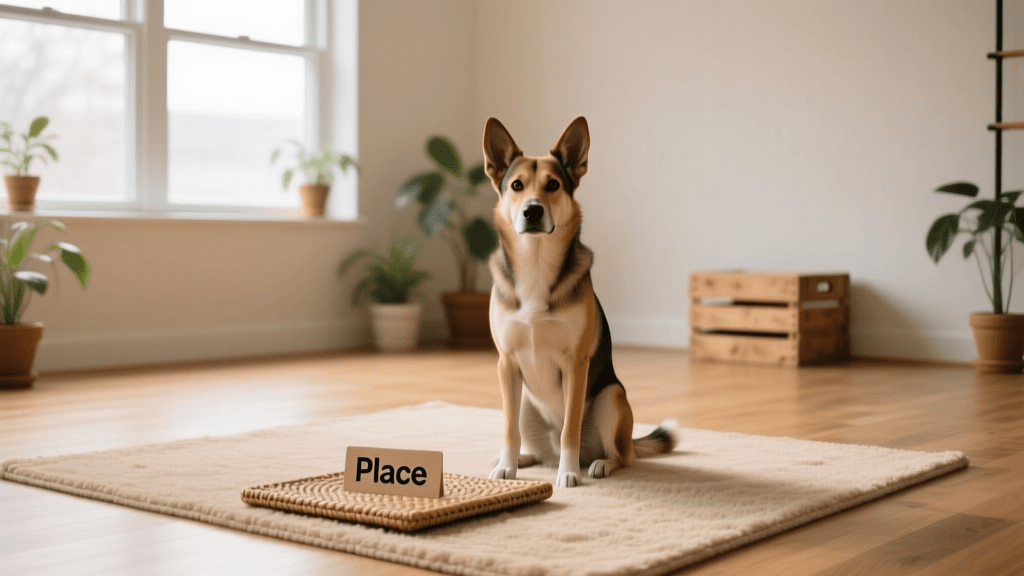
The most critical skill for a remote work dog is the "Place" command. This teaches the dog to go to a specific mat or bed and remain there until released.
- Step 1: Introduce a raised cot (like the Coolaroo Elevated Pet Bed, ~$40) to create a clear physical boundary.
- Step 2: Lure the puppy onto the bed and reward with a treat. Repeat until they offer the behavior voluntarily.
- Step 3: Add the verbal cue "Place" and gradually increase the duration before rewarding.
- Step 4: Practice during low-stakes work tasks, eventually using the command right before you join a video call.
Managing Audio Triggers
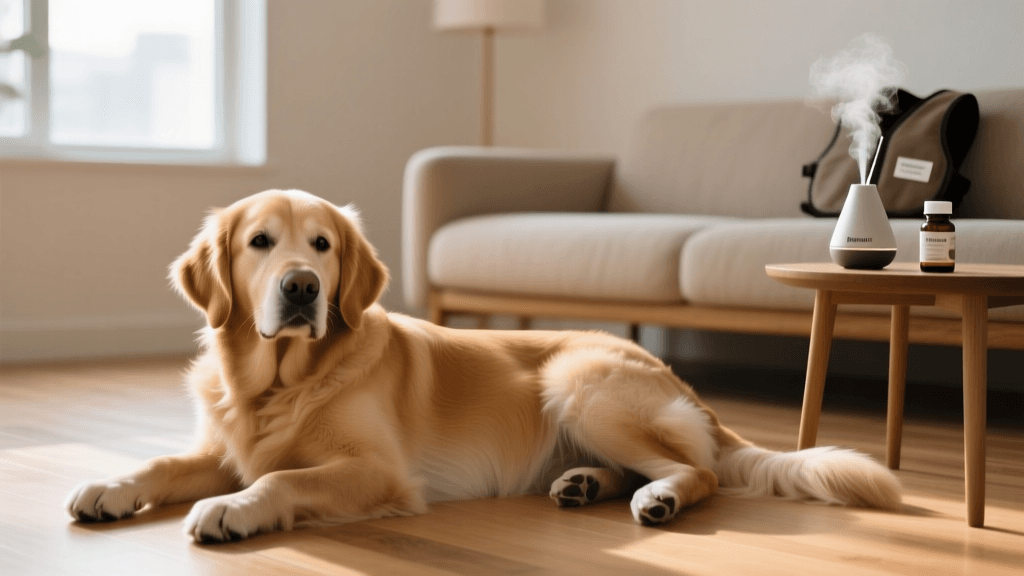
Dogs have highly sensitive hearing, and the sounds of your keyboard typing, virtual meeting chimes, or you speaking to a camera can trigger confusion or alert barking. Utilize a smart white noise machine, such as the Hatch Restore 3 (priced around $130 in 2026), to mask sudden environmental noises. Playing a consistent frequency of brown noise helps soothe the canine nervous system and signals to the dog that it is "quiet time" in the office.
Comparison Chart: Energy vs. Independence
Use the table below to compare the behavioral traits of the recommended breeds against the demands of a remote work schedule.
| Breed | Indoor Energy Level | Independence Score (1-10) | Barking Tendency | Best For... |
|---|---|---|---|---|
| Cavalier King Charles Spaniel | Low | 4 | Low | Workers who want a quiet lap companion during breaks. |
| Greyhound | Very Low | 7 | Very Low | Apartment dwellers who can commit to a morning sprint. |
| Basset Hound | Low | 8 | Moderate (Howling) | Patient owners who appreciate a stubborn, funny personality. |
| Whippet | Low | 7 | Very Low | Quiet home offices with minimal chaotic foot traffic. |
| Bernese Mountain Dog | Low-Moderate | 5 | Low | Workers with large home offices and a yard for potty breaks. |
Fostering Independence to Prevent Separation Anxiety
One of the greatest risks of raising a puppy as a remote worker is inadvertently creating separation anxiety. Because you are always there, the puppy never learns how to cope with your absence. The American Kennel Club (AKC) strongly recommends practicing deliberate absences. Even if you work from home, you must leave the house for at least an hour every day, or use baby gates to separate yourself from the puppy while you are still home. This teaches the puppy that your absence is temporary and normal, building psychological resilience.
Furthermore, utilize puzzle feeders and slow-feed toys during your most intensive work blocks. A Kong Classic stuffed with frozen peanut butter and kibble can occupy a puppy for up to 45 minutes, satisfying their natural foraging instincts and keeping them mentally stimulated without requiring your active participation.
Conclusion
Integrating a puppy into your remote work life in 2026 is a highly rewarding experience, provided you align your choice with canine behavioral science. By selecting a breed with a compatible attachment style and energy level, and by proactively structuring your home office environment, you can enjoy the profound mental health benefits of dog ownership without sacrificing your professional productivity. Remember that a tired, mentally enriched puppy is a quiet puppy—invest in their morning routine, and they will respect your working hours.
anouk-beaumont
All our authors care for dogs every day — read more of their work on the authors page.