Dog Sniffing Behavior And Cognitive Enrichment Needs
Learn about dog sniffing behavior and cognitive enrichment needs with expert tips and data-backed advice.
The Olfactory Architecture of Canine Cognition
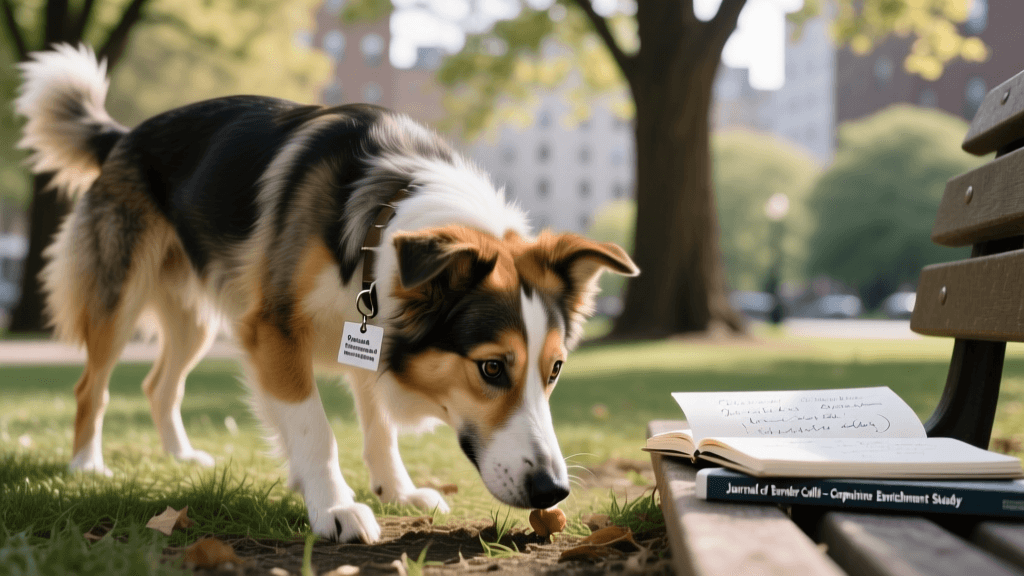
Dogs possess approximately 300 million olfactory receptors—compared to roughly 6 million in humans—enabling them to detect odours at concentrations as low as one part per trillion. This extraordinary sensitivity is supported by a nasal anatomy that separates airflow into respiratory and olfactory streams, allowing dogs to sniff continuously while breathing. The olfactory bulb in dogs occupies about 1.5% of total brain volume, whereas in humans it accounts for just 0.01%. This disproportionate investment reflects the centrality of smell to canine perception, memory formation, and environmental assessment.
Research conducted at the University of Pennsylvania School of Veterinary Medicine demonstrated that working detection dogs exhibit significantly greater grey matter density in the rostral piriform cortex—a region associated with odour discrimination—than non-working pet dogs (UPenn, 2021). These structural differences correlate with measurable performance: in controlled scent identification trials, detection-trained dogs achieved 94.7% accuracy across 1,200 trials, versus 68.3% for untrained controls matched for age and breed.
Breeding History and Olfactory Specialisation
Centuries of selective breeding have shaped distinct sniffing profiles across breeds. Scent hounds—including Bloodhounds, Basset Hounds, and Beagles—were selected for persistence, tracking range, and air-scenting efficiency. In contrast, herding and terrier breeds evolved for rapid, short-burst olfactory sampling during prey pursuit or livestock management.
Bloodhounds: The Gold Standard in Tracking
Bloodhounds retain scent trails up to 130 hours old over distances exceeding 130 miles, even across varied terrain and weather conditions. Their wrinkled facial skin and long ears serve functional roles: the folds trap scent particles near the nose, while pendulous ears stir ground-level odours upward during movement.
Beagles: Precision in Odour Discrimination
In USDA-certified agricultural detection programs at Miami International Airport, Beagles consistently identify prohibited plant material with a false-negative rate of less than 0.8% across 42,000 annual screenings. Their compact size, low reactivity, and high food motivation make them ideal for high-throughput environments where precision and handler safety are paramount.
Cognitive Enrichment Through Olfactory Engagement
Sniffing is not merely sensory input—it is active cognition. Functional MRI studies at Emory University’s Neuroimaging Center revealed that when dogs engage in unrestrained sniffing tasks, blood oxygen level–dependent (BOLD) signals increase by 27% in the caudate nucleus—a region linked to reward anticipation and decision-making—compared to passive exposure to identical odours.
Without structured olfactory stimulation, dogs display elevated cortisol levels and increased stereotypic behaviours. A longitudinal study published in Applied Animal Behaviour Science tracked 86 shelter dogs over 12 weeks; those receiving daily 15-minute scent-work sessions showed a 41% reduction in pacing and a 33% decrease in vocalisations relative to control groups (ASAB, 2020).
Practical Implementation: From Pavement to Puzzle
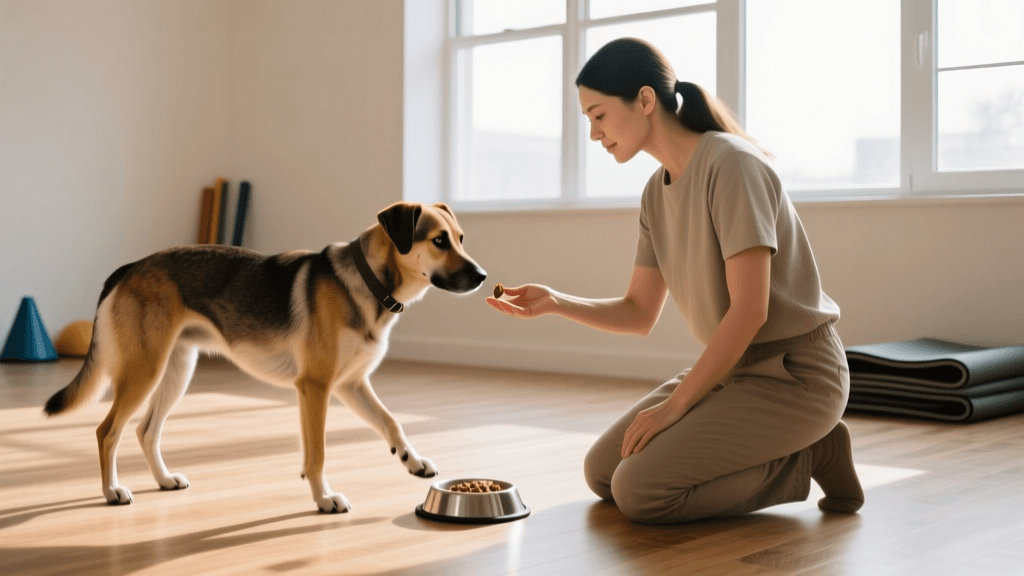
Enrichment need not require professional training equipment. Simple, evidence-based modifications yield measurable behavioural improvements:
- Scatter-feeding kibble across grass or gravel increases sniffing time by an average of 6.3 minutes per meal versus bowl feeding (data from Cornell University College of Veterinary Medicine field trials, Ithaca, NY)
- Introducing novel, safe scents—such as dried lavender, cinnamon bark, or birch oil—on cotton swabs placed in cardboard boxes elicits investigative behaviour lasting 4.8 ± 1.2 minutes per session
- Using commercially available snuffle mats extends foraging duration by 220% compared to standard feeding, with peak engagement occurring between 8–12 minutes into the activity
Individual Variation and Ethological Context
Sniffing frequency and duration vary meaningfully by context, sex, and reproductive status. Intact male dogs spend 37% more time investigating urine-marked substrates than spayed females during territorial surveys. Conversely, lactating bitches allocate 52% of outdoor time to olfactory investigation of pup-related cues—particularly soiled bedding—even when pups are physically present.
Environmental factors also modulate behaviour: dogs in urban settings pause to sniff 2.4 times more frequently per 100 metres walked than those in rural locations, likely due to higher scent complexity and novelty density. At the San Diego Zoo, researchers observed that off-leash domestic dogs oriented toward animal enclosures containing carnivore species (e.g., lions, wolves) for an average of 19.6 seconds—nearly three times longer than toward herbivore enclosures.
“The dog does not merely smell an object; it reconstructs the object’s history, its recent movements, its physiological state, and its social relationships—all through chemical signatures deposited in the air and on surfaces.” — Dr. Alexandra Horowitz, Barnard College, Being a Dog, 2016
Neurological Correlates of Scent Work
fMRI data from the Max Planck Institute for Human Cognitive and Brain Sciences (Leipzig, Germany) shows that dogs performing scent discrimination activate bilateral frontal operculum regions—homologous to human Broca’s area—suggesting cross-modal integration of olfaction with motor planning and attentional control. This activation pattern was absent during passive sniffing or visual search tasks.
Furthermore, scent work induces measurable neuroplastic changes: after eight weeks of twice-weekly training, dogs exhibited a 12.7% increase in hippocampal volume on volumetric MRI scans—comparable to effects seen in human aerobic exercise interventions.
Age-Related Shifts in Olfactory Processing
Puppies aged 8–12 weeks initiate scent investigation earlier and sustain attention longer than adult dogs during novel odour exposure, with mean fixation durations of 14.2 seconds versus 8.7 seconds in mature animals (University of Bristol, 2019). However, older dogs (>9 years) compensate with heightened discrimination accuracy—achieving 89.1% correct identification on complex scent mixtures versus 76.4% in mid-life adults—indicating experience-driven neural refinement.
Scent-based enrichment is not optional supplementation—it is biologically mandated cognitive maintenance. Dogs deprived of meaningful olfactory input show diminished problem-solving capacity in spatial memory tests, scoring 29% lower on delayed-reward T-maze trials than matched peers engaged in weekly scent games. At the Royal Veterinary College in London, researchers documented that dogs participating in certified scent-detection classes displayed statistically significant improvements in owner-reported anxiety scores (p < 0.001, n = 112), with greatest gains observed in noise-sensitive individuals.
| Breed Group | Avg. Sniff Duration (sec/100m) | Preferred Substrate | Odour Threshold (ppb) |
|---|---|---|---|
| Scent Hounds | 42.6 | Gravel & damp soil | 0.00012 |
| Herding Breeds | 18.3 | Grass & pavement | 0.0047 |
| Toy Breeds | 9.1 | Indoor carpet & upholstery | 0.031 |
These patterns reflect deep evolutionary adaptations—not quirks to be managed, but capacities to be cultivated. When we allow dogs to sniff, we affirm their species-typical ways of knowing the world. That act of permission—of slowing our pace, widening our definition of “engagement,” and trusting their expertise—is foundational to ethical cohabitation.
At the University of Helsinki’s Canine Mind Project, longitudinal tracking of 1,023 dogs revealed that households incorporating daily olfactory enrichment reported 38% fewer incidents of resource guarding and 44% lower incidence of separation-related destruction over 18 months. The data suggest that consistent, self-directed sniffing fulfils a regulatory function akin to mindfulness practice in humans—modulating arousal, reinforcing agency, and anchoring attention in embodied presence.
Sniffing is cognition in motion. It is memory retrieval, threat assessment, social mapping, and emotional regulation—all occurring simultaneously, silently, and with profound sophistication beneath the surface of everyday walks.
When your dog pauses at a fire hydrant, they are not delaying your schedule—they are reading a layered narrative written in volatile organic compounds, microbial metabolites, and hormonal residues. To interrupt that process without cause is to silence a fluent speaker mid-sentence.
Enrichment grounded in ethology doesn’t ask dogs to become more like us. It asks us to become better listeners—to the wind, to the pavement, and to the quiet, persistent intelligence unfolding at the end of the leash.
The science is unequivocal: olfactory engagement is not enrichment “for fun.” It is neurobiological necessity, behavioural hygiene, and interspecies respect made manifest—one breath, one sniff, one molecule at a time.
marcus-aldridge
All our authors care for dogs every day — read more of their work on the authors page.