A Parent's Guide to Kids Safely Training the Family Dog
Discover how kids can safely train the family dog. Learn actionable tips, boundary setting, and fun tricks to foster a lifelong bond built on respect.

Why Involve Children in Dog Training?
Bringing a dog into a household with children is a wonderful opportunity to teach empathy, responsibility, and teamwork. However, dog training is not just about teaching the canine companion new behaviors; it is equally about teaching children how to interact safely and respectfully with animals. When kids are actively involved in the training process, they learn to read canine body language, establish healthy boundaries, and build a profound bond based on mutual trust. This guide provides parents with actionable, age-appropriate strategies to safely integrate children into the family dog's obedience and behavioral conditioning routines.
Essential Safety Rules Before You Begin
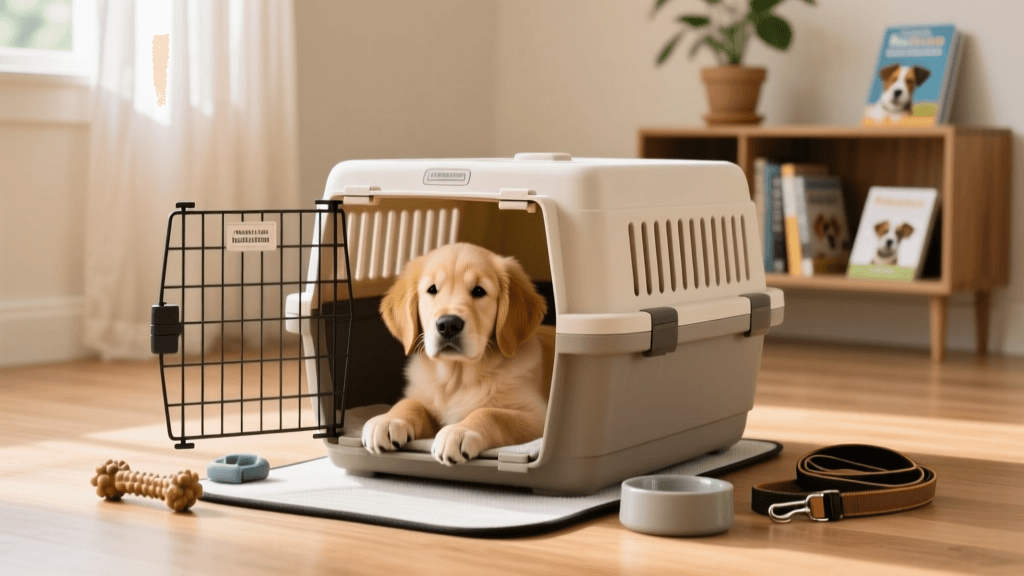
Safety must always be the primary concern when mixing children and dogs. According to the Centers for Disease Control and Prevention (CDC), children are the most common victims of dog bites, and many of these incidents occur during everyday interactions that could have been prevented with proper supervision and education. Before any training begins, establish strict ground rules: never leave a child and a dog together unsupervised, do not allow children to approach the dog while it is eating or sleeping, and teach kids that the dog's crate or bed is a designated 'safe zone' where the animal must never be disturbed. All training sessions should be framed as cooperative games rather than disciplinary actions, ensuring the dog views the child as a source of positive reinforcement rather than a threat.
Age-Appropriate Training Tasks for Children
Children develop motor skills and cognitive empathy at different rates. Assigning tasks that align with your child's developmental stage ensures both the child and the dog remain safe and engaged. Below is a structured breakdown of appropriate training activities based on age groups.
| Child's Age | Developmental Stage | Appropriate Training Tasks | Supervision Level |
|---|---|---|---|
| 2-4 Years | Developing motor skills, limited impulse control | Dropping treats into a bowl, gentle petting (hand-over-hand), tossing a toy | Constant physical contact and guidance |
| 5-8 Years | Improved coordination, basic empathy | Luring 'sit' and 'down', fetching toys, basic grooming with a soft brush | Direct visual supervision in the same room |
| 9-12 Years | Logical thinking, better timing | Clicker training, teaching 'shake' or 'spin', short leash walks in fenced areas | Indirect supervision (adult nearby and checking in) |
| 13+ Years | Advanced comprehension, physical strength | Full obedience routines, agility basics, solo neighborhood walking | Periodic check-ins and remote oversight |
The 'Be a Tree' and 'Be a Rock' Techniques
One of the most critical behavioral conditioning exercises for children is teaching them how to react when the family dog becomes overexcited, jumpy, or mouthy. When a dog exhibits hyperactive behavior, children naturally tend to run, scream, or push the dog away. This reaction triggers the dog's prey drive and encourages more jumping or nipping. Teach your kids the 'Be a Tree' method: if the dog jumps on them, they must stand completely still, fold their arms across their chest, and look up at the sky or ceiling. By removing all movement and eye contact, the dog quickly learns that jumping yields zero attention. If a child is knocked to the ground, teach them to 'Be a Rock' by curling into a fetal position, tucking their knees to their chest, and covering their ears with their hands. Practicing these techniques as a fun family game when the dog is calm ensures children will remember what to do during a chaotic moment.
Step-by-Step: Teaching Your Child to Lure a 'Sit'
Luring is the safest and most effective way for young children to teach basic obedience without needing to physically manipulate the dog. To begin, equip your child with a dedicated treat pouch, such as the PetSafe Treat Pouch (approximately $15), which clips easily to a belt or waistband, keeping hands free. Fill it with high-value, low-calorie training treats like Zuke's Mini Naturals (around $6 per bag). These small, soft treats are easy for little hands to grab and safe for the dog to consume in high volumes during a session.
Execution Steps:
- Step 1: Have your child stand in front of the dog, holding a single treat between their thumb and index finger.
- Step 2: Instruct the child to place the treat directly against the dog's nose so the dog can smell it.
- Step 3: Slowly move the treat up and slightly back over the dog's head. As the dog's nose follows the treat upward, its hindquarters will naturally lower to the ground.
- Step 4: The exact second the dog's bottom touches the floor, the child should say a marker word like 'Yes!' and immediately open their hand to let the dog eat the treat.
Keep these sessions brief—no more than 5 minutes at a time, twice a day—to prevent frustration for both the child and the dog.
Reading Canine Body Language and Stress Signals
A vital component of family dog training is teaching children to recognize when the dog is tired, stressed, or wants to be left alone. The ASPCA emphasizes that many dog bites occur because well-meaning children misinterpret a dog's warning signs as an invitation to play. Teach your kids to look for 'calming signals' or stress indicators. These include the dog licking its lips repeatedly when no food is present, yawning when not tired, turning its head away, or showing the whites of its eyes (whale eye). If the dog exhibits any of these behaviors, or if it moves away from the child, the training session must end immediately. Respecting the dog's boundaries teaches children consent and empathy, while simultaneously preventing negative behavioral conditioning in the dog.
Managing the Environment and Setting Up for Success
The environment plays a massive role in how well a child and dog can work together. The American Veterinary Medical Association (AVMA) notes that chaotic environments increase the likelihood of unpredictable animal behavior. Set your child up for success by conducting training sessions in a quiet, familiar room with minimal distractions. Turn off the television, ask other siblings to wait in another room, and remove high-value toys that might cause resource guarding. Use a non-slip surface, like a carpeted living room or a rubber-backed rug, so the dog feels secure when moving into positions like 'down'. Always end the session on a positive note, even if it means asking the dog to perform a simple trick it already knows perfectly, followed by a jackpot reward and enthusiastic praise from the child.
Creating a Lifelong Bond Through Positive Reinforcement
Integrating children into the family dog's training regimen is an investment in the emotional well-being of both the pet and the child. By focusing on positive reinforcement, utilizing age-appropriate tasks, and prioritizing safety and body language education, parents can foster a harmonious household. The dog learns to view the children as reliable, rewarding leaders, and the children develop a profound sense of empathy and responsibility that will stay with them for a lifetime. Remember that patience, consistency, and active adult supervision are the true keys to unlocking a beautiful, lifelong friendship between your kids and your canine companion.
robin-maitland
All our authors care for dogs every day — read more of their work on the authors page.