Top Cooling Vests for Working Dogs in 2026: K9 Heat Safety
Discover the best cooling vests for working dogs in 2026. Compare Ruffwear and Hurtta models to prevent heat stress in active K9s and service dogs.
The Critical Need for Heat Management in Working Dogs
Working and service dogs are the unsung heroes of our society. From search and rescue (SAR) canines navigating disaster zones to guide dogs assisting visually impaired handlers in urban heat islands, these animals perform demanding physical labor regardless of the weather. As global temperature anomalies continue to break records in 2026, managing canine core body temperature has transitioned from a seasonal precaution to a year-round operational necessity for K9 handlers and service dog organizations.
Unlike humans, dogs lack widespread eccrine sweat glands. They rely primarily on panting and vasodilation in their ears and paw pads to dissipate heat. When a working dog is engaged in high-intensity tasks—such as tracking scents over rough terrain or pulling a wheelchair—their metabolic heat production can outpace their ability to cool down. This is where advanced evaporative cooling vests become a vital piece of personal protective equipment (PPE) for working dogs.
Recognizing the 3 Stages of Canine Hyperthermia
Before deploying any cooling gear, handlers must understand the physiological warning signs of overheating. According to the American Kennel Club, canine hyperthermia progresses in three distinct stages, each requiring immediate intervention.
Stage 1: Heat Stress (103°F - 104°F)
At this stage, the dog will exhibit excessive panting, drooling, and restlessness. The mucous membranes (gums) may turn a darker pink or red. Working dogs may show a slight decrease in task focus or obedience response times. Immediate removal from the heat source and application of a cooling vest is required.
Stage 2: Heat Exhaustion (104°F - 105°F)
Heart rate elevates significantly. The dog may experience vomiting, diarrhea, or stumbling. The panting becomes loud and labored. At this point, the dog must be entirely removed from work, cooled with ambient temperature water (never ice water, which constricts blood vessels and traps heat), and evaluated by a veterinarian.
Stage 3: Heat Stroke (105°F+)
This is a life-threatening medical emergency. Symptoms include collapse, seizures, coma, and bleeding disorders. The ASPCA emphasizes that immediate veterinary transport is mandatory, as organ failure can occur within minutes at these core temperatures.
How Evaporative Cooling Vests Work
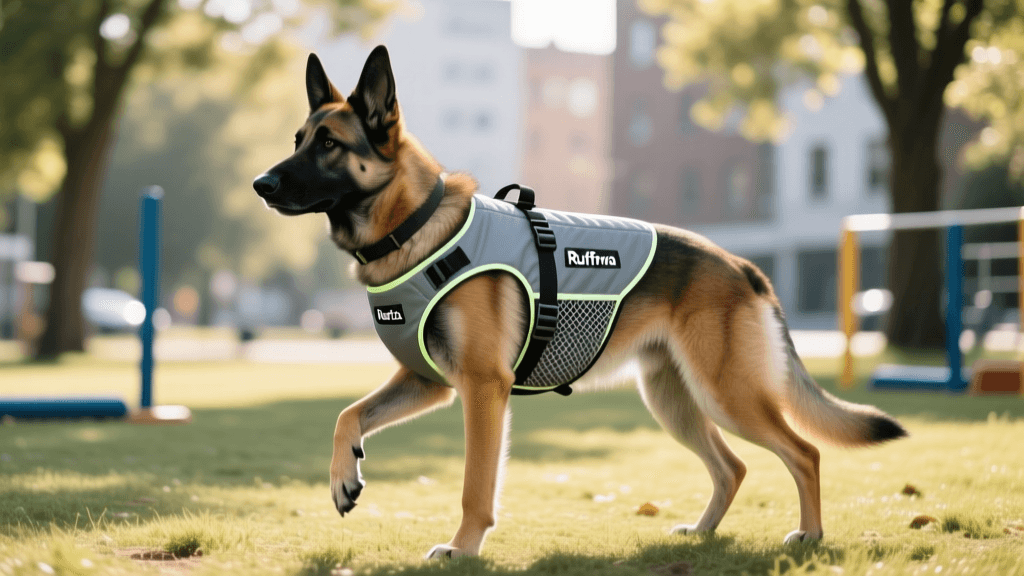
The top cooling vests of 2026 utilize a three-layer construction system. The inner layer absorbs and retains water, the middle layer acts as a heat exchanger to draw warmth away from the dog's core, and the outer layer is typically made of a specialized mesh or reflective material that allows for airflow while blocking harmful UV rays. As the water slowly evaporates from the inner layer, it pulls thermal energy away from the dog's body, effectively mimicking the human sweating process.
2026 Cooling Vest Comparison Chart
Below is a comparison of the top three evaporative cooling vests utilized by professional K9 units and service dog handlers in 2026.
| Brand & Model | 2026 Est. Price | Cooling Technology | Harness Compatibility | Avg. Cooling Duration |
|---|---|---|---|---|
| Ruffwear Swamp Cooler Zip | $59.95 | Evaporative + Shade | Excellent (Layering) | 1.5 - 2 Hours |
| Hurtta Cooling Vest | $75.00 | Evaporative + Head Hood | Good (Over/Under) | 2 - 3 Hours |
| Kurgo Core Cooling Coat | $45.99 | Evaporative | Excellent (Adjustable) | 1 - 1.5 Hours |
Deep Dive: Top Picks for Working Dogs
Ruffwear Swamp Cooler Zip (Best for Harness Layering)
The 2026 iteration of the Ruffwear Swamp Cooler Zip remains the gold standard for service dogs that must wear rigid harnesses, such as guide dogs or mobility assistance dogs. The zip-up spandex blend fits snugly against the dog's torso like a compression shirt. Because it lacks bulky buckles and velcro straps, a primary service dog harness (like a Ruffwear Web Master or Julius-K9 IDC) can be worn directly over it without causing chafing or compromising the fit of the working gear. To activate, simply soak the vest in water, wring it out, and zip it on.
Hurtta Cooling Vest (Best for Extreme Heat & SAR)
For search and rescue dogs working in open, sun-baked environments, the Hurtta Cooling Vest offers superior coverage. Its standout feature is the integrated hood, which protects the dog's head and neck from direct solar radiation—a critical factor since the brain is highly susceptible to heat damage. The Hurtta vest requires a more thorough soaking (it is designed to be dripping wet when applied) and provides the longest evaporative cooling duration of the group. However, its bulkier strap system means it is best used as an outer layer during transit or rest breaks, rather than underneath a tight-fitting tactical harness.
Kurgo Core Cooling Coat (Best for Deep-Chested Breeds)
German Shepherds, Malinois, and Dobermans are staples in police and detection work, but their deep chests can make fitting standard cooling vests difficult. The Kurgo Core Cooling Coat features a highly adjustable, multi-point strap system that accommodates deep-chested and barrel-chested anatomies without riding up during high-speed pursuits or agility work. Its lightweight mesh outer layer provides excellent airflow, though it holds slightly less water than the Hurtta, resulting in a shorter cooling duration.
Best Practices for Hydration and Work/Rest Cycles
A cooling vest is only one component of a comprehensive heat safety protocol. Working dog handlers in 2026 are adopting strict, data-driven hydration and rest cycles to prevent heat stress before it begins.
The 15/15 Rule
When ambient temperatures exceed 80°F (26°C) with moderate humidity, K9 units should implement the 15/15 rule: 15 minutes of active work followed by 15 minutes of mandatory shaded rest. During the rest period, the dog should be offered water and allowed to stand on cool surfaces like grass or tile, avoiding hot asphalt which can rapidly transfer heat through the paw pads.
Hydration Metrics
A working dog requires approximately 1 ounce of water per pound of body weight per day under normal conditions. During active deployment in the heat, this requirement can easily double. Handlers should carry collapsible silicone bowls and offer water every 20 minutes.
Pro Tip: To prevent water intoxication (hyponatremia), which can occur if a dog gulps massive amounts of plain water too quickly, offer water in small, frequent sips. For prolonged deployments, consult your veterinarian about adding canine-specific electrolyte powders to the water supply to replace sodium and potassium lost through excessive panting and exertion.
Conclusion
Protecting working and service dogs from heat stress requires a proactive approach combining physiological awareness, strict work/rest protocols, and high-quality gear. By investing in a specialized cooling vest like the Ruffwear Swamp Cooler Zip or the Hurtta Cooling Vest, handlers can ensure their canine partners remain safe, focused, and healthy while performing their vital duties in the challenging climate conditions of 2026.
hannah-wickes
All our authors care for dogs every day — read more of their work on the authors page.