Tellington TTouch Massage for Dog Anxiety and Bonding in 2026
Discover how Tellington TTouch massage reduces canine anxiety and deepens your bond. Learn 2026 techniques, HRV tracking, and step-by-step routines.
The Neurological Science of Canine Touch
As we navigate the evolving landscape of canine wellness in 2026, the veterinary and behavioral communities increasingly recognize that mental health is inseparable from physical health. For dog owners seeking to deepen their relationship with their pets while simultaneously addressing anxiety, hyperactivity, or fear-based behaviors, the Tellington TTouch method has emerged as a gold standard. Unlike traditional petting, which is often rhythmic and stimulating, TTouch utilizes specific, mindful, and non-habitual circular touches to activate the parasympathetic nervous system.
When you engage in deliberate, conscious touch, both you and your dog experience a synchronized release of oxytocin, commonly known as the bonding hormone. Simultaneously, cortisol levels drop. According to the Fear Free Pets initiative, reducing fear and anxiety through tactile and environmental enrichment is one of the most effective ways to prevent behavioral deterioration in aging or stressed dogs. By incorporating TTouch into your daily routine, you are not merely grooming or petting your dog; you are engaging in a profound neurological co-regulation exercise that builds unbreakable trust.
Core Tellington TTouch Techniques for Trust Building
Developed by Linda Tellington-Jones, this methodology relies on moving the skin in specific patterns to stimulate cellular intelligence and nerve pathways. The Tellington TTouch official methodology categorizes touches by the animal kingdom or descriptive actions to help practitioners remember the hand shapes and pressures. Here are the foundational techniques you need to master for anxiety relief and bonding.
1. The Clouded Leopard
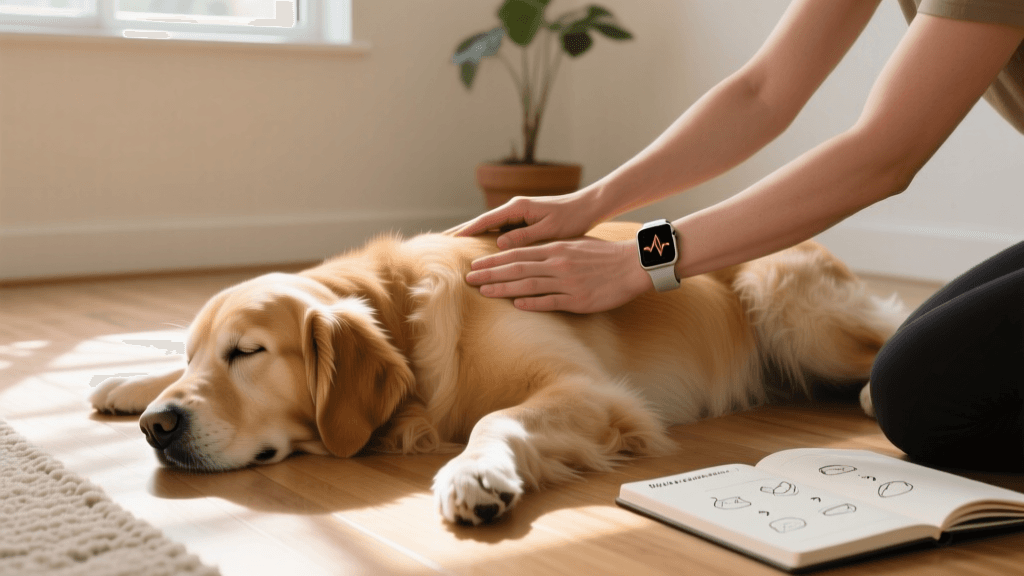
This is the foundational TTouch technique. You curve your fingers slightly so that the pads of your fingers, not the tips, rest on the dog's skin. You then move the skin in a one-and-a-quarter clockwise circle. The pressure should be light to medium, depending on the area of the body. The Clouded Leopard is excellent for general relaxation, reducing muscle tension along the spine, and introducing your dog to mindful touch. It teaches the dog to focus on the sensation, grounding them in the present moment and pulling them out of an anxious mental loop.
2. The Lying Leopard
Using the same hand position as the Clouded Leopard, the Lying Leopard involves resting your hand flat against the dog's body for several seconds without moving in a circle. This technique is particularly effective for highly sensitive areas, such as the abdomen, the base of the tail, or over old surgical scars. The sustained, warm pressure provides a deep sense of security and is incredibly effective for dogs that exhibit touch sensitivity or defensive behaviors.
3. The Raccoon Touch
For this technique, you use the pads of your fingers to gently lift the skin away from the body and release it, moving systematically across the coat. The Raccoon Touch is highly stimulating to the circulatory and lymphatic systems. It is best used on the chest, neck, and legs to invigorate a lethargic dog or to help a dog become more aware of their extremities, which is crucial for senior dogs experiencing cognitive decline or proprioceptive deficits.
4. The Python Pull
This technique is used primarily on the legs and tail. You wrap your hand loosely around the limb and gently lift the skin and tissue, holding for a moment before releasing and moving slightly down the limb. The Python Pull helps dogs that are tense, stiff, or hesitant to bear weight on a specific limb. It builds immense trust because you are handling vulnerable areas with profound gentleness and respect.
Technique Comparison Chart
| Technique Name | Hand Position | Pressure Level | Primary Benefit | Ideal Body Region |
|---|---|---|---|---|
| Clouded Leopard | Curved fingers, 1.25 circles | Light to Medium | General relaxation, nervous system reset | Back, shoulders, flanks |
| Lying Leopard | Flat hand, sustained rest | Very Light | Desensitization, deep security | Abdomen, scars, sensitive joints |
| Raccoon Touch | Finger pads, gentle lifting | Light | Circulation, body awareness | Chest, neck, legs |
| Python Pull | Full hand wrap, lift/release | Medium (Supportive) | Joint mobility, limb trust | Legs, tail |
Integrating 2026 Biometric Collars for Real-Time Feedback
One of the most exciting advancements in canine wellness this year is the widespread integration of Heart Rate Variability (HRV) tracking in everyday smart collars. In 2026, devices like the Whistle Health and Fi Series 4 biometric collars offer real-time HRV monitoring via their companion apps. HRV is a primary indicator of autonomic nervous system balance; a higher HRV indicates a relaxed, parasympathetic state, while a lower HRV suggests stress or sympathetic arousal.
You can use this technology to gamify and validate your bonding sessions. Before beginning your TTouch routine, check your dog's baseline HRV. As you transition from the Clouded Leopard to the Lying Leopard, watch the app. Many owners report seeing their dog's HRV spike into the optimal relaxation zone within just five minutes of mindful touch. This data removes the guesswork, allowing you to identify exactly which techniques your dog responds to best, tailoring your approach to their unique physiological needs.
Your 15-Minute Evening Bonding Routine
Consistency is the bedrock of relationship building. Dedicating just 15 minutes each evening to a structured TTouch session can drastically improve your dog's sleep quality and your mutual bond. Follow this step-by-step protocol:
- Minutes 1-3: The Grounding Phase. Sit on the floor with your dog. Do not touch them yet. Practice synchronized breathing. Inhale deeply for four seconds, exhale for six. Dogs are highly attuned to human respiratory rates; slowing your breath signals to their nervous system that the environment is safe.
- Minutes 4-8: The Clouded Leopard Sweep. Begin at the base of the neck, moving slowly down the spine to the base of the tail. Perform three circles in each spot. Keep your movements fluid and unhurried.
- Minutes 9-12: Targeted Lying Leopard. Move to the chest and abdomen. Rest your hands gently over the heart and diaphragm. Close your eyes and visualize tension leaving your dog's body.
- Minutes 13-15: The Integration Rest. Remove your hands slowly. Allow your dog to shake off (a natural canine stress-release mechanism) or settle into sleep. Offer a soft verbal affirmation, but avoid high-pitched, exciting praise.
Reading Canine Calming Signals
To truly bond with your dog, you must speak their language. During TTouch sessions, your dog will communicate their comfort levels through subtle body language. The ASPCA dog care guidelines emphasize the importance of understanding these signals to prevent behavioral fallout. Watch for 'calming signals' such as slow blinking, soft yawning, lip licking, or turning the head slightly away. These are not signs of disobedience or boredom; they are your dog's way of processing the deep relaxation and communicating that they are pacifying themselves. If you see a 'whale eye' (showing the whites of the eyes) or stiffening, you are applying too much pressure or working on an area that causes pain. Immediately stop, revert to the Lying Leopard on a neutral area like the shoulder, and give your dog space.
Common Mistakes to Avoid
Even well-intentioned owners can inadvertently sabotage a bonding session. Avoid these common pitfalls:
- Confusing Petting with TTouch: Vigorous chest scratching or rhythmic patting is stimulating and can actually increase arousal in an anxious dog. TTouch must be slow, deliberate, and mindful.
- Forcing the Interaction: If your dog gets up and walks away, let them. Trust is built on consent. Forcing a dog to endure touch, even therapeutic touch, damages the relationship and reinforces anxiety.
- Ignoring Your Own Energy: If you are stressed, checking your phone, or watching television while performing TTouch, your dog will feel the disconnect. Your focused, calm presence is 50 percent of the therapy.
Conclusion
In 2026, we have the tools, the science, and the understanding to elevate our relationships with our dogs beyond basic obedience and play. Tellington TTouch offers a bridge between physical therapy and emotional bonding, providing a sanctuary of calm in a chaotic world. By mastering these techniques, utilizing modern biometric feedback, and respecting your dog's communicative signals, you are investing in a profound, lifelong partnership rooted in mutual trust, health, and unwavering wellbeing.
hannah-wickes
All our authors care for dogs every day — read more of their work on the authors page.