Top 5 Healthiest Puppy Breeds For Remote Workers In 2026
Discover the best puppy breeds for remote workers in 2026. We compare exercise needs, mental health traits, and wellness tips for WFH dog owners.
The WFH Dog: Balancing Mental Health and Productivity
As remote work solidifies its place as the standard for millions of professionals in 2026, the dynamic of the home office has fundamentally shifted. For many, the isolation of working from home is mitigated by the presence of a canine companion. However, bringing a puppy into a remote work environment requires careful consideration of both the owner's productivity and the dog's physical and mental wellbeing. Not every breed thrives in a home where their owner is physically present but mentally occupied for eight hours a day.
According to the CDC's Healthy Pets initiative, pet ownership significantly decreases stress levels, lowers blood pressure, and combats loneliness. Yet, the wrong breed match can lead to a stressed owner and an under-stimulated, anxious puppy. The ideal work-from-home (WFH) puppy must possess the independence to nap quietly during video calls, the adaptability to handle brief periods of solitude when you step out, and a health profile that aligns with a mostly indoor, flexible lifestyle.
Top 5 Puppy Breeds for the Remote Work Lifestyle (2026 Wellness Guide)
When selecting a puppy for a remote work household, veterinary professionals emphasize looking at breed-specific health predispositions and mental stimulation requirements. Here are the top five breeds that excel in WFH environments, prioritizing longevity, temperament, and manageable care routines.
1. Cavalier King Charles Spaniel
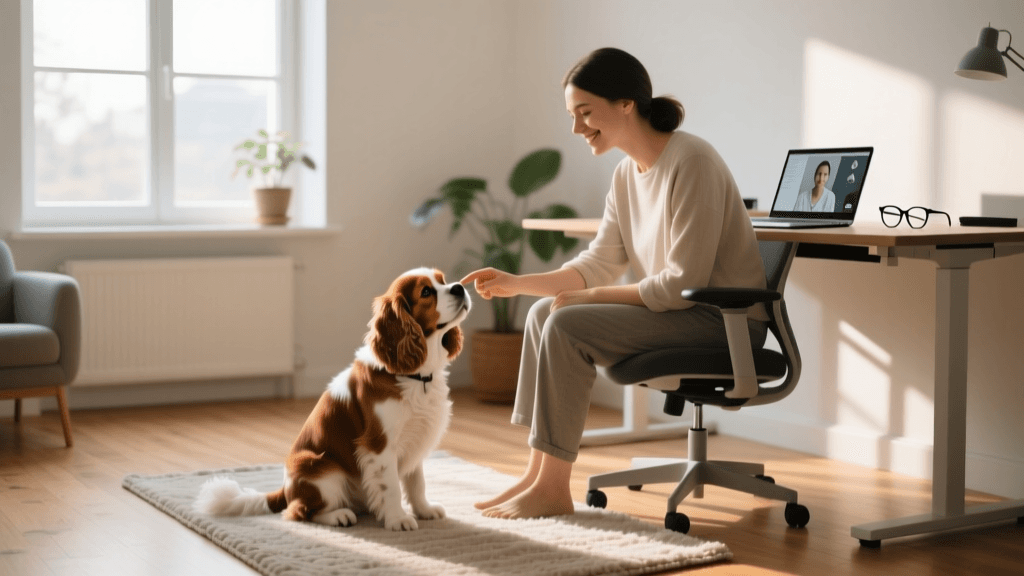
The Cavalier King Charles Spaniel is the quintessential lap dog, perfectly content to snooze on a dog bed beneath your standing desk while you tackle spreadsheets. They require moderate exercise—roughly 30 to 45 minutes of walking daily—making them ideal for owners who prefer a midday stroll rather than an intense morning run. From a health perspective, prospective owners in 2026 must prioritize breeders who conduct rigorous cardiac screenings. Cavaliers are predisposed to Mitral Valve Disease (MVD), so securing a puppy from parents with certified cardiac clearances is non-negotiable for ensuring a long, healthy life.
2. Standard Poodle
Often misunderstood as merely show dogs, Standard Poodles are highly intelligent, athletic, and boast a low-shedding coat that keeps home office air quality pristine. For remote workers who can dedicate 60 minutes a day to active play and utilize advanced puzzle toys like the Outward Hound Nina Ottosson series, the Poodle is a phenomenal match. Their mental health relies heavily on cognitive engagement; without it, they can develop destructive habits. Health-wise, they are generally robust, though responsible breeders will screen for hip dysplasia and Addison's disease.
3. Greyhound
It may seem counterintuitive to recommend a racing breed for a home office, but retired racing Greyhounds and well-bred puppies from calm lines are notorious 'couch potatoes.' They operate on a 'sprint and snooze' energy model. A 20-minute morning run in a fenced area followed by a 10-minute evening walk is usually sufficient. They are exceptionally quiet, rarely barking during your virtual meetings. Health screenings should focus on bone density and osteosarcoma awareness, though their overall genetic health profile remains remarkably strong compared to heavily overbred toy breeds.
4. Bichon Frise
If your home office is a small apartment or you suffer from mild pet dander allergies, the Bichon Frise is an exceptional choice. Their cheerful disposition provides excellent emotional support during high-stress workdays. They require about 30 minutes of daily exercise and regular professional grooming to prevent matting. The Bichon's primary health vulnerabilities include patellar luxation (knee issues) and bladder stones. Feeding a high-quality, hydration-focused diet and maintaining a lean body weight are critical preventative measures for this breed.
5. Papillon
Do not let their diminutive size fool you; the Papillon is a high-energy, highly trainable toy breed that excels in indoor agility and trick training. They are perfect for remote workers who want to spend their 15-minute screen breaks teaching their puppy new commands. Because of their fragile bone structure, particularly in puppyhood, they require a puppy-proofed home office free of high chairs they might jump from. Health screenings should include checks for open fontanels and progressive retinal atrophy (PRA).
Comparative Wellness Chart: WFH Breeds at a Glance
Use the table below to quickly compare the health and lifestyle needs of these top WFH breeds.
| Breed | Daily Exercise | Mental Needs | WFH Compatibility | Key 2026 Health Screenings |
|---|---|---|---|---|
| Cavalier King Charles | 30-45 mins | Moderate | Excellent (Quiet, clingy) | Cardiac (MVD), Patellas, Eyes |
| Standard Poodle | 60+ mins | Very High | High (Needs active breaks) | Hips, Sebaceous Adenitis, Addison's |
| Greyhound | 30 mins (sprint) | Low-Moderate | Excellent (Sleeps all day) | Bone density, Heart, Thyroid |
| Bichon Frise | 30 mins | Moderate | High (Cheerful, alert) | Patellas, Bladder health, Allergies |
| Papillon | 45 mins | High | High (Trainable, portable) | Patellas, PRA, Fontanel check |
Health & Wellbeing Tips for WFH Dog Owners
Choosing the right breed is only the first step. Maintaining the physical and mental health of your puppy while managing a full-time remote job requires intentional routines and modern preventative care strategies.
Preventing Separation Anxiety in the Home Office
The most significant behavioral health risk for WFH puppies is separation anxiety. Because you are home 24/7, the puppy learns to expect your constant presence. When you eventually leave for an errand or close your office door for a confidential meeting, the puppy can panic. The ASPCA recommends proactively training puppies to be comfortable alone from day one. Implement 'closed door' protocols: place your puppy in a safe playpen with a long-lasting chew (like a stuffed Kong frozen with low-sodium bone broth) while you work behind a closed door for 30-minute intervals. Gradually increase this duration to build their emotional resilience and prevent stress-induced behavioral issues.
Leveraging 2026 Biometric Health Tech
Remote workers often lose track of time, forgetting to take their puppies out for necessary potty and movement breaks. In 2026, advanced biometric smart collars are invaluable tools for WFH owners. Devices equipped with Heart Rate Variability (HRV) tracking and rest-phase monitoring can send push notifications to your smartwatch when your puppy has been inactive for too long or is exhibiting signs of stress. Pairing this technology with automated indoor potty systems or scheduled smart-door access ensures your puppy's physical needs are met even during your most demanding project sprints.
Ergonomic Walks and Posture Breaks
Your physical health is just as important as your puppy's. Remote work often leads to prolonged sitting and poor posture. Align your puppy's exercise schedule with your own ergonomic needs. Adopt the 50/10 rule: for every 50 minutes of deep work, take a 10-minute break. Use this time to engage in active play with your puppy, practice leash walking around the block, or do light stretching. This not only fulfills your puppy's need for physical exertion and bonding but also reduces your risk of musculoskeletal strain and digital eye fatigue.
Nutritional Management for Indoor Lifestyles
WFH puppies are prone to accidental overfeeding. It is incredibly easy to drop a piece of cheese from your lunch or offer an extra treat when your puppy gives you 'puppy eyes' during a stressful email. To prevent early-onset obesity—which exacerbates joint issues like hip dysplasia and patellar luxation—use a digital kitchen scale to measure their daily kibble allowance precisely. Factor in the calories of any training treats used during your work breaks, and adjust their main meals accordingly. Consult with a veterinary nutritionist via telehealth to formulate a diet that supports cognitive development and maintains a lean body condition score.
Conclusion
Integrating a puppy into your remote work life in 2026 is a deeply rewarding endeavor that vastly improves your daily mental health and lifestyle. By selecting a breed that aligns with your work schedule, prioritizing rigorous health screenings, and implementing proactive behavioral training, you set the foundation for a thriving partnership. Remember that a healthy, well-adjusted puppy requires just as much intentionality as your career, but the unconditional companionship they provide makes every scheduled potty break and training session entirely worthwhile.
For further reading on canine genetic health and preventative care, the Cornell University College of Veterinary Medicine offers extensive, up-to-date resources on breed-specific wellness and the latest advancements in canine medicine.
aaron-whyte
All our authors care for dogs every day — read more of their work on the authors page.