Decoding Canine Stress Signals & HRV Wearables 2026
Learn to decode canine stress signals and use 2026 HRV wearables like Inupathy to monitor your dog's mental wellbeing and prevent anxiety-related issues.
Understanding Canine Mental Wellbeing in 2026
As we navigate 2026, the veterinary community has fully embraced a holistic approach to canine health. We now understand that a dog's mental wellbeing is inextricably linked to their physical health. Chronic stress and unmanaged anxiety in dogs do not just result in behavioral quirks; they trigger systemic inflammation, compromise the gut-brain axis, and weaken the immune system. According to the American College of Veterinary Behaviorists, proactive mental health monitoring is now considered just as vital as annual blood panels or dental cleanings.
For decades, dog owners have relied solely on visual cues to understand their pets. While reading body language remains a foundational skill, the 2026 landscape of canine wellness has introduced advanced biometric technology that allows us to see the invisible physiological markers of stress. By combining traditional canine calming signals with Heart Rate Variability (HRV) wearables, owners can now decode their dog's emotional state with unprecedented accuracy.
What Are Canine Calming Signals?
Originally popularized by canine behaviorist Turid Rugaas, 'calming signals' are subtle body language cues dogs use to self-soothe, de-escalate tension, and communicate discomfort. Recognizing these signals is critical for preventing anxiety from escalating into fear-based reactivity or physical illness. Research highlighted by VCA Hospitals shows that ignoring these early warning signs forces dogs to bypass subtle communication and jump straight to 'fight or flight' responses.
Key Visual Stress Signals to Watch For
- Whale Eye: When a dog turns their head away but keeps their eyes fixed on a perceived threat, exposing the whites of their eyes (the sclera). This is a high-level indicator of anxiety and potential defensive aggression.
- Out-of-Context Yawning: If your dog is not tired but repeatedly yawns during a vet visit, a grooming session, or when being hugged, they are using yawning as a physiological mechanism to lower their heart rate and calm their nervous system.
- Lip Licking and Tongue Flicks: Quick, repetitive flicks of the tongue over the nose or lips when no food is present. This is an appeasement gesture signaling internal conflict or stress.
- The 'Shake Off': Similar to a dog shaking off water after a bath, but performed when completely dry. This 'shake off' is a deliberate neurological reset used to discharge built-up adrenaline after a stressful encounter.
- Displacement Sniffing: A sudden, intense interest in the ground during a social interaction. The dog is attempting to avoid direct confrontation by pretending to be occupied.
The 2026 Tech Revolution: HRV Wearables
While visual signals are invaluable, they require human observation and interpretation, which is prone to error. This is where 2026's biometric wearables bridge the gap. The most prominent tool in the modern behaviorist's arsenal is the measurement of Heart Rate Variability (HRV).
HRV measures the variation in time between consecutive heartbeats. A high HRV indicates a dominant parasympathetic nervous system (rest, digest, and recover), meaning the dog is relaxed and resilient. A low HRV indicates sympathetic nervous system dominance (fight or flight), signaling stress, fatigue, or impending illness.
Spotlight: The Inupathy Biometric Harness
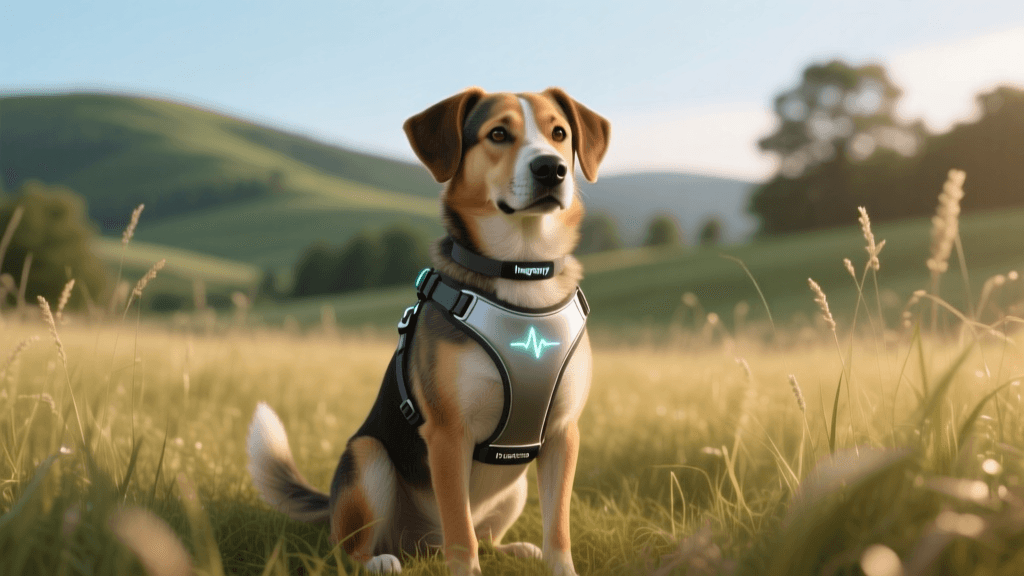
One of the most effective tools for real-time HRV monitoring is the Inupathy harness. Unlike standard GPS trackers, Inupathy utilizes embedded ECG sensors to analyze your dog's HRV continuously. It translates complex biometric data into an easy-to-read LED light system on the back of the harness:
- Blue Light: High HRV. The dog is calm, relaxed, and in a restorative state.
- Green Light: Moderate HRV. The dog is alert, active, and engaged in a positive, healthy manner (e.g., playing fetch or exploring).
- Red Light: Low HRV. The dog is experiencing high arousal, which could mean extreme excitement, but very often indicates acute stress, fear, or anxiety.
By pairing the Inupathy's red light alerts with visual calming signals, owners can identify hidden environmental triggers that they might have otherwise missed.
Physical Signals vs. Biometric Data: A Comparison
To effectively manage your dog's mental health in 2026, it is best to use both biological observation and technological data. The table below outlines how to cross-reference visual cues with HRV wearable data.
| Indicator | Manifestation | Nervous System State | Recommended 2026 Intervention |
|---|---|---|---|
| Whale Eye | Showing whites of eyes, stiff posture | Acute Sympathetic Arousal (Fear) | Immediately increase distance from the trigger; do not force interaction. |
| Yawning / Lip Licking | Repetitive flicks, wide yawns without fatigue | Mild to Moderate Stress (Attempt to self-soothe) | Offer a familiar cue, scatter treats on the ground to encourage sniffing. |
| Inupathy Red Light | LED harness glows red during a walk | Low HRV (High physiological arousal/stress) | Check for visual signals. If stress is confirmed, initiate a 'decompression' route change. |
| Inupathy Blue Light | LED harness glows blue at home | High HRV (Parasympathetic dominance) | Allow the dog to rest undisturbed; this is crucial for memory consolidation and healing. |
| The 'Shake Off' | Vigorous full-body shake when dry | Transitioning from Sympathetic to Parasympathetic | Praise softly; the dog is successfully processing and releasing tension. |
Actionable Steps to Reduce Canine Stress
The Fear Free Pets initiative emphasizes that reducing fear, anxiety, and stress (FAS) should be the primary goal of every interaction you have with your dog. Here is a practical protocol for integrating signal reading and HRV tech into your daily routine:
1. Establish a Biometric Baseline
Before you can identify stress, you must understand your dog's baseline. Have your dog wear their HRV harness for 7 to 10 days during normal, low-stress routines. Review the companion app's 2026 AI-generated reports to see what time of day your dog naturally experiences the highest HRV (blue states) and when their HRV naturally dips.
2. Map Hidden Triggers
Many dogs suffer from 'silent stressors'—triggers that don't result in barking or lunging, but cause internal physiological damage. If your dog's harness consistently flashes red when walking past a specific neighbor's fence, or when a certain appliance turns on, you have identified a hidden trigger. Use this data to alter your walking routes or desensitize your dog to the household noise using high-value treats and classical counter-conditioning.
3. Implement Decompression Walks (Sniffaris)
When you notice a cluster of calming signals (lip licking, yawning) or a prolonged red light on the HRV harness, abort the structured walk. Switch to a 'decompression walk' using a long line (15-30 feet) in a quiet, natural area. Allow the dog to sniff extensively. Sniffing lowers the dog's heart rate and engages the parasympathetic nervous system, rapidly improving HRV scores.
4. Create a 'Fear-Free' Safe Zone
Designate a specific room or crate as a stress-free sanctuary. Use acoustic bio-music (specifically designed for canine auditory ranges) and pheromone diffusers. When your dog retreats to this zone and their HRV monitor shows a blue/calm state, ensure that no family members, children, or other pets disturb them. Protecting their restorative rest is vital for long-term emotional resilience.
When to Seek Professional Help
While HRV wearables and body language literacy are powerful tools, they are not a replacement for professional veterinary intervention. If your dog's HRV data shows chronic low variability (prolonged sympathetic dominance) over several weeks, or if their visual stress signals are escalating to freezing, growling, or snapping, it is time to consult a professional. Seek out a board-certified veterinary behaviorist or a Fear Free Certified Professional who can design a comprehensive behavioral modification plan, which may include a combination of environmental management, positive reinforcement training, and anti-anxiety medications.
Conclusion
The year 2026 has given us the extraordinary ability to merge empathetic observation with hard biometric data. By learning to read your dog's subtle calming signals and leveraging the power of HRV wearables like the Inupathy harness, you can protect your dog's mental health just as fiercely as their physical health. A truly healthy dog is not just free of disease; they are emotionally balanced, environmentally secure, and deeply understood by the humans they love.
marcus-aldridge
All our authors care for dogs every day — read more of their work on the authors page.