A Guide to Introducing a New Puppy to Resident Pets
Learn how to safely introduce your new puppy to resident dogs and cats. Discover step-by-step multi-pet integration tips, timelines, and gear.

The Multi-Pet Household Challenge
Bringing a new puppy home is a joyous milestone, but when you already have resident dogs or cats, the first year of your puppy's life requires careful orchestration. Puppies are naturally boisterous, lack boundaries, and are driven by an intense desire to play and chew. For an older dog with aging joints or a cat that values quiet observation, a new puppy can feel like an invasive force. According to the ASPCA's Dog Care guidelines, improper introductions are a leading cause of multi-pet household stress and behavioral regression. This comprehensive guide will walk you through the first 30 days of puppy integration, focusing on early socialization, resource management, teething safety, and potty training in a multi-pet environment.
Pre-Arrival Preparation: Setting Up Safe Zones
Before your puppy's paws touch your floor, you must establish physical boundaries. Relying solely on verbal corrections will fail with an 8-week-old puppy. You need environmental management.
Essential Gear and Costs
- Hardware-Mounted Baby Gates: Avoid pressure-mounted gates for stairs or rooms with aggressive chewers. Invest in hardware-mounted gates like the Carlson Extra Tall Walk-Thru Gate (approx. $60-$80). You will need at least two: one for the puppy's main pen area and one to protect the cat's litter box or the older dog's resting space.
- Pheromone Diffusers: Plug in Adaptil diffusers for dogs and Feliway for cats in shared common areas. These synthetic pheromones cost about $30 each and significantly reduce baseline anxiety during the transition.
- Enzymatic Cleaners: Potty accidents will happen. Stock up on Nature's Miracle or Rocco & Roxie enzymatic cleaners ($12-$18 per bottle) to completely eliminate urine markers that might confuse your resident dog's potty habits.
Creating Vertical and Horizontal Escape Routes
For multi-pet homes with cats, vertical space is non-negotiable. The Cornell Feline Health Center emphasizes that cats need secure, elevated retreats to observe their environment without feeling trapped. Install cat shelves, clear off the tops of bookcases, and provide sturdy cat trees so your feline can navigate rooms without crossing the puppy's floor space.
Phase 1: Scent Swapping and Separation (Days 1-3)
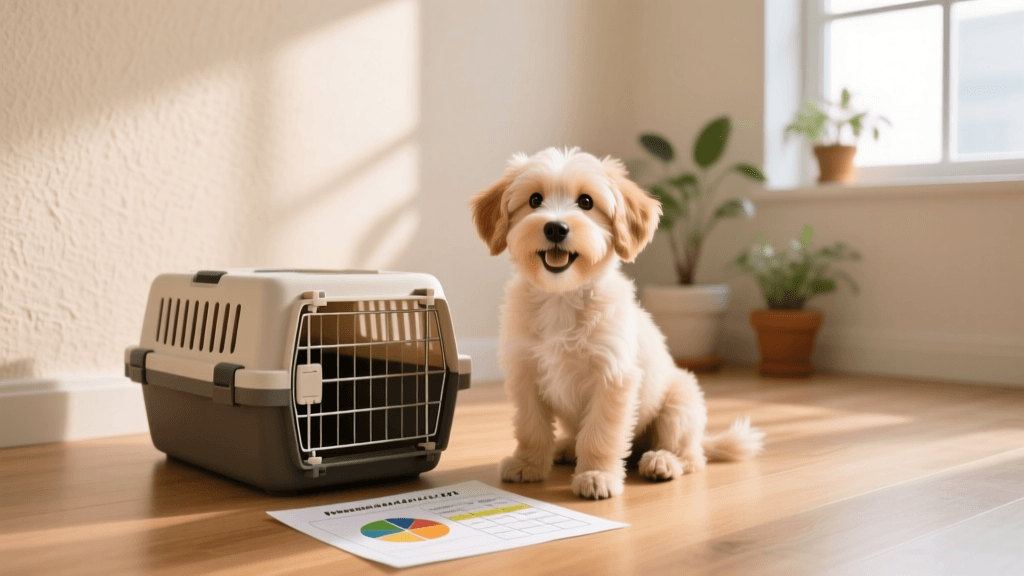
For the first 72 hours, the puppy and resident pets should not meet face-to-face. Keep the puppy confined to a designated 'puppy zone' using an exercise pen and a crate. During this time, focus entirely on scent introduction.
- The Towel Swap: Rub a clean microfiber towel on the puppy's cheeks and back, then place it under your resident dog's food bowl or near your cat's favorite sleeping spot. Do the same with the resident pets' scents and place those towels in the puppy's crate.
- Positive Association: Whenever the resident pets investigate the puppy's scent, offer high-value treats like freeze-dried chicken or low-sodium chicken broth. This builds a positive Pavlovian response to the puppy's smell.
Phase 2: Visual Introduction (Days 4-7)
Once both the puppy and resident pets are eating and using the bathroom normally in their separate zones, move to visual introductions. Use a baby gate or a cracked door secured with a door stopper.
Keep these sessions short—no more than 5 to 10 minutes. Have the puppy on a leash, and allow the resident dog or cat to approach the gate on their own terms. If the puppy lunges, barks, or whines, calmly increase the distance. Reward calm behavior, such as a resident dog offering a 'sit' or a cat blinking slowly, with treats. According to the American Kennel Club's training resources, allowing the older dog to set the pace of the interaction is critical for preventing resource guarding and fear-based aggression.
Phase 3: Controlled Physical Meetings (Weeks 2-4)
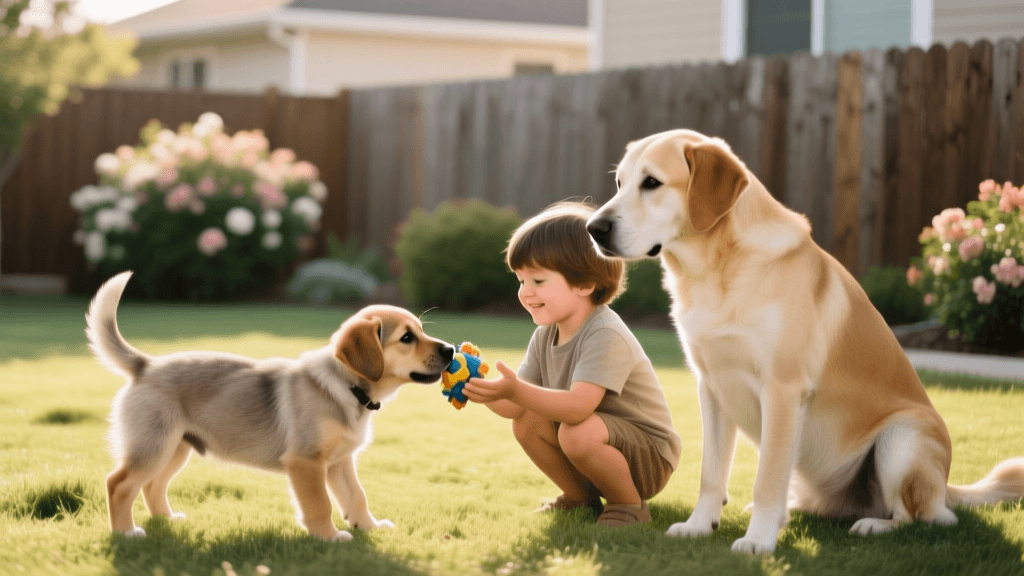
When visual meetings are boring and calm, you can allow physical interaction in a neutral, spacious area like a fenced backyard or a large living room with all toys removed.
Managing the Leash and Body Language
Keep the puppy on a 6-foot leash, but allow it to drag loosely so you can step on it if the puppy rushes the older dog. Watch closely for stress signals in your resident pets:
- Resident Dog Stress Signals: Whale eye (showing the whites of the eyes), stiff body posture, lip licking, yawning, or a rigid, high tail.
- Cat Stress Signals: Twitching tail, flattened ears, dilated pupils, or hissing.
If you see these signs, immediately redirect the puppy with a toy or a treat and end the session on a positive note. Never force the resident pets to tolerate puppy behavior; always provide them with an escape route.
Managing Resources: Food, Toys, and Potty Areas
Resource guarding is a major risk in multi-dog households. Puppies are notorious for stealing kibble and hoarding toys. To prevent conflict, you must strictly manage resources. Below is a structured chart for managing daily resources across species.
| Resource | Puppy Setup | Resident Dog Setup | Cat Setup |
|---|---|---|---|
| Meals | Fed inside the crate or pen, 3x daily. Removed after 15 mins. | Fed in a separate room or behind a gate, 2x daily. | Fed on an elevated surface (counter or cat tree) to prevent puppy theft. |
| Water | Heavy stainless steel bowl inside the pen to prevent tipping. | Standard bowl in the kitchen or living area. | Multiple stations placed on high shelves or behind cat-only gates. |
| Chews & Toys | Only given inside the crate. Size-appropriate to prevent choking. | Given only when separated from the puppy to avoid guarding. | Small cat toys (mice, balls) must be locked away to prevent puppy ingestion. |
| Potty Area | Taken outside every 2 hours on a leash to a specific spot. | Free access to the yard or regular scheduled walks. | Litter box placed behind a gate with a cat-sized opening, or use a top-entry box. |
The Litter Box Hazard
Puppies are naturally drawn to the smell of cat feces, a behavior known as coprophagia. Not only is this unhygienic, but clumping cat litter can cause severe intestinal blockages if ingested by a teething puppy. You must block access to the litter box using a baby gate with a small cat door, or switch to a top-entry litter box that a puppy cannot fit inside.
Navigating Puppy Teething in a Multi-Pet Home
Between 3 and 6 months of age, your puppy will begin teething. Their desire to chew will be insatiable, which poses a unique threat to multi-pet households. Resident cats often leave small toys, feather wands, or hair ties on the floor. If a puppy swallows a cat toy, it can result in an emergency veterinary surgery costing upwards of $3,000.
Actionable Teething Strategy:
- Implement a strict 'floor sweep' rule in your home twice a day to ensure no small cat toys or dog bones are left unattended.
- Provide appropriate outlets for the puppy's chewing needs. Stuff a Kong Classic ($15) with plain pumpkin puree and xylitol-free peanut butter, then freeze it for 4 hours. The cold soothes inflamed gums and keeps the puppy occupied for up to 45 minutes, giving your older pets a much-needed break.
- Apply bitter apple spray to the baseboards and any furniture that the older dog likes to rest near, ensuring the puppy does not invade the older dog's personal space out of boredom.
Potty Training with a Resident Dog Role Model
One of the distinct advantages of a multi-dog home is that resident dogs can act as potty training mentors. Dogs are den animals and naturally prefer to eliminate where other dogs have gone. When you take the puppy outside, bring the resident dog along. Allow the puppy to sniff the areas where the older dog has urinated. This scent marking stimulates the puppy's instinct to eliminate in the correct outdoor zone rather than inside the house.
However, you must still maintain a strict schedule. An 8-week-old puppy can only hold its bladder for about 2 hours. Take the puppy out immediately after waking up, after every meal, and after vigorous play sessions. Praise heavily and offer a training treat the second the puppy finishes eliminating outdoors.
'Patience is the ultimate currency in a multi-pet household. You are not just training a puppy; you are negotiating a peace treaty between species. Let the resident pets dictate the speed of the relationship.'
Conclusion: Building a Lifelong Bond
Introducing a new puppy to resident dogs and cats is a marathon, not a sprint. By utilizing hardware-mounted gates, managing resources meticulously, and respecting the body language of your older pets, you lay the foundation for a harmonious household. Remember that the first year of your puppy's life is entirely about building positive associations. With consistent routines, safe zones, and plenty of high-value treats, your multi-pet family will soon transition from cautious roommates to lifelong companions.
marcus-aldridge
All our authors care for dogs every day — read more of their work on the authors page.