Getting a Dog During an Interstate Move: 2026 Guide
Planning an interstate move and getting a dog? Discover our 2026 guide on travel logistics, state health laws, and acclimating your new pet.
The Dual Transition: Why Timing and Strategy Matter
Moving across state lines is consistently ranked among life's most stressful events. Now, imagine combining an interstate relocation with the decision to adopt a new dog. In 2026, remote work flexibility and shifting housing markets have led to a massive surge in cross-country relocations, and many individuals are using this life transition as the perfect excuse to finally bring a furry companion into their lives. However, merging these two massive life events requires meticulous planning, an understanding of modern pet transport logistics, and a deep commitment to your new dog's emotional well-being.
Whether you are moving from a bustling apartment in New York to a sprawling suburban home in Texas, or transitioning from the Midwest to the Pacific Northwest, the way you manage the adoption timeline and the physical move will dictate your dog's long-term behavioral health. This comprehensive guide breaks down exactly how to navigate getting a dog during an interstate move in 2026, ensuring a safe, legal, and stress-free journey for both you and your new best friend.
Strategic Timing: Before, During, or After the Move?
The most critical decision you will make is when to bring the dog home. Animal behaviorists generally advise against adopting a pet during the exact week of a move. The chaos of packing, loading trucks, and saying goodbyes creates an environment of high anxiety, which can severely impact a newly adopted dog's decompression process.
Option A: Adopting 4 to 6 Weeks Before the Move
Adopting well before the move allows your new dog to establish a baseline of trust and learn your daily routines. By the time the moving boxes appear, your dog views you as a secure attachment figure. The downside? You will need to manage the dog's confusion as their familiar environment is dismantled. To mitigate this, keep the dog's primary sleeping area and feeding station completely untouched until the final 48 hours before departure.
Option B: Adopting 2 to 3 Weeks After the Move
For many busy professionals, adopting after the move is the safest route. You can focus entirely on the logistical nightmare of transferring utilities, unpacking, and deep-cleaning your new residence. Once the home is safe, quiet, and fully set up, you can bring your new dog directly into a stable, permanent environment. This eliminates the double transition trauma and allows the dog to map their new territory without the lingering scents and stress of moving crews.
Navigating Interstate Health Laws and Documentation
Crossing state lines with a dog is not as simple as tossing them in the back seat. According to the USDA APHIS Pet Travel regulations, nearly every state requires a Certificate of Veterinary Inspection (CVI), commonly known as a health certificate, for dogs entering their borders. In 2026, digital health portals have streamlined this process, but the legal requirements remain strict.
- Microchipping: Ensure your dog is implanted with an ISO-compliant 15-digit microchip before crossing state lines. Register the chip with your new address and phone number before you depart.
- Rabies Vaccination: Most states mandate a valid rabies certificate. Some states, like Hawaii, have rigorous quarantine laws that require months of advance preparation and specific rabies titer tests.
- The 10-Day Rule: Many states require the CVI to be issued by a licensed veterinarian within 10 to 30 days prior to entry. Schedule your adoption vet visit immediately to align with your moving timeline.
Always check the specific import requirements of your destination state's Department of Agriculture website at least 30 days before your move. Failing to produce a valid CVI at an agricultural checkpoint can result in fines or forced quarantine.
Essential 2026 Travel Gear and Safety Tech
The pet tech industry has evolved significantly, making interstate travel safer than ever. The American Veterinary Medical Association (AVMA) strongly recommends restraining pets during vehicular travel to prevent distraction and protect the animal in the event of a collision.
For car travel, invest in a crash-tested kennel such as the Gunner G1 or a certified harness like the Sleepypod Clickit Terrain. These devices have been rigorously tested to withstand the G-forces of a highway accident. Furthermore, GPS tracking is non-negotiable during a move. The stress of travel can cause even the most well-adjusted rescue dogs to bolt at a rest stop. In 2026, advanced GPS collars like the Fi Series 4 or the Tractive 6 offer real-time location tracking, virtual geofencing alerts, and activity monitoring, ensuring that if your dog slips their leash in an unfamiliar state, you can track them down within minutes.
Transport Options: 2026 Comparison Chart
Depending on your budget, the size of your dog, and your personal moving logistics, you have several transport methods available. Below is a comparison of the most common interstate transport options for new dogs in 2026.
| Transport Method | Estimated 2026 Cost | Stress Level | Best Suited For |
|---|---|---|---|
| Personal Vehicle | $400 - $800 (Gas, Pet-Friendly Hotels) | Medium | Distances under 1,500 miles; owners wanting full control. |
| Professional Ground Transport | $1,200 - $2,800 | Low to Medium | Long distances; owners flying separately or driving a packed U-Haul. |
| Airline Cabin (In-Flight) | $150 - $250 (Airline Pet Fee) | High | Small dogs (usually under 20 lbs) in soft-sided carriers. |
| Airline Cargo | $500 - $1,500+ | Very High | Large dogs when no other option exists (Requires climate-controlled booking). |
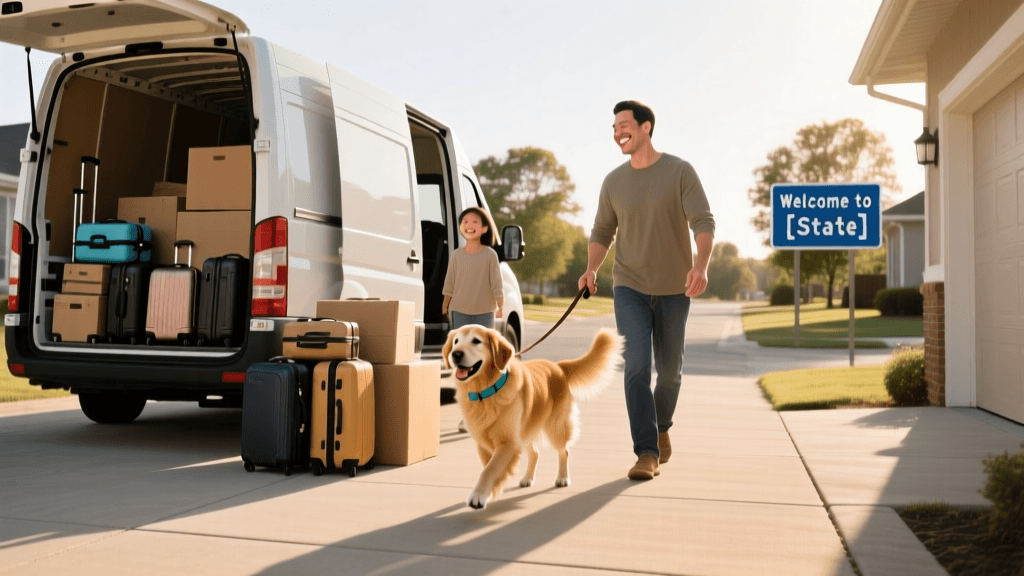
If you are driving a moving truck where the dog cannot safely ride in the cab, hiring a professional, USDA-licensed pet ground transport service is the safest alternative. These specialized drivers operate climate-controlled vans and provide webcam access so you can monitor your new dog's journey in real-time.
The First 30 Days: Acclimating to the New Environment
Once you arrive at your new home, the physical move is over, but the psychological transition has just begun. The ASPCA emphasizes the importance of establishing a predictable routine immediately upon arrival to help pets cope with environmental changes.
Implement the widely recommended 3-3-3 Rule for rescue dogs, which is especially vital during a relocation:
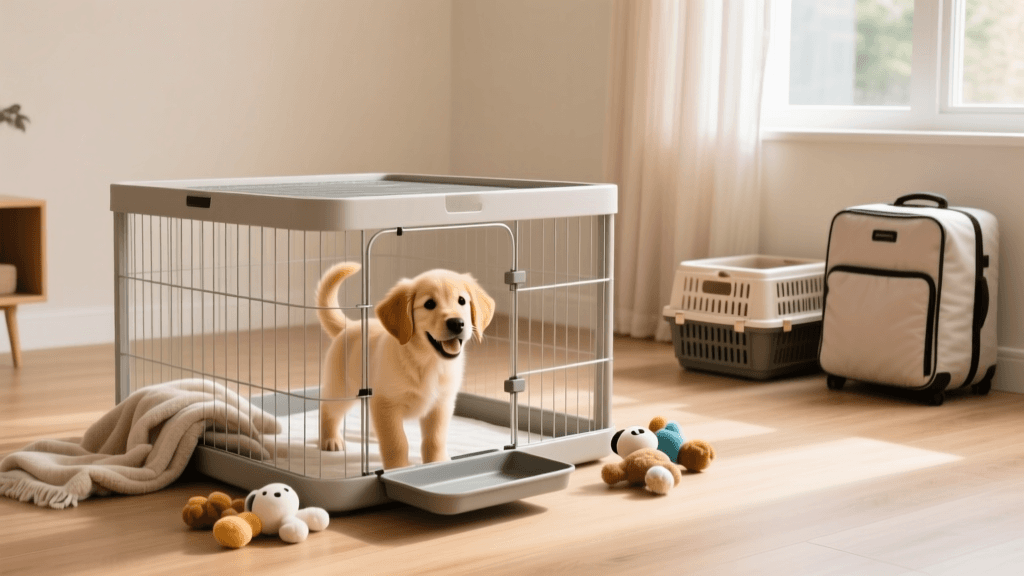
- 3 Days of Decompression: Your dog may refuse to eat, hide under furniture, or sleep excessively. Set up a single safe room (like a quiet bedroom or bathroom) equipped with their bed, water, and familiar toys. Do not force them to explore the entire house.
- 3 Weeks of Routine Building: Your dog begins to learn your schedule, figure out where the potty area is, and show their true personality. Start short, leashed walks around the new neighborhood to build positive associations with the new sights and smells.
- 3 Months of Bonding: By this point, your dog should feel secure, understand the household rules, and have formed a strong attachment to you.
Pheromone Therapy and Calming Aids
To ease the anxiety of the new space, utilize adaptive pheromone diffusers like Adaptil or Calming Collars. Plug these into the walls of your new home a few days before the dog arrives (if possible) or immediately upon unpacking. The synthetic pheromones mimic the comforting scents produced by nursing mother dogs, signaling to your dog's brain that the new environment is safe.
Budgeting for a Relocation and a New Dog
Combining a move with a new adoption requires a dedicated financial buffer. Beyond the standard moving costs and adoption fees, you must budget for transition-specific expenses. Expect to spend between $800 and $1,500 in the first month alone on essentials like a crash-tested travel crate, premium GPS collar, initial veterinary exams, state health certificates, and emergency boarding just in case your moving timeline gets delayed.
When booking accommodations along your route, prioritize pet-friendly hotel chains that have updated their 2026 policies to waive restrictive breed bans and excessive nightly pet fees. Brands like Kimpton Hotels and La Quinta remain industry leaders in this space, though you should always call ahead to confirm their current weight limits and designated relief areas.
Ultimately, getting a dog during an interstate move is a profound commitment. It requires patience, financial foresight, and a deep empathy for the sensory overload your new companion is experiencing. By prioritizing safety protocols, adhering to state laws, and giving your dog the grace and time they need to decompress, you will lay the foundation for a beautiful, lifelong bond in your brand-new home.
hannah-wickes
All our authors care for dogs every day — read more of their work on the authors page.