HPP vs Non-HPP Raw Dog Food: The 2026 Safety Guide
Discover the differences between HPP and non-HPP raw dog food in 2026. Learn about pathogen risks, nutrient retention, and how to choose safely.
The Evolution of Raw Feeding in 2026
As we navigate the pet nutrition landscape in 2026, raw feeding remains one of the most passionate and heavily debated topics among dog owners and veterinary professionals alike. The desire to feed dogs a biologically appropriate, species-specific diet has driven massive innovation in the pet food industry. However, alongside the growing popularity of fresh and alternative diets, concerns regarding foodborne pathogens and zoonotic risks have also intensified. This has led to a significant bifurcation in the raw food market: High-Pressure Processing (HPP) raw diets versus traditional, non-HPP raw diets.
Understanding the distinction between these two approaches is critical for any pet owner looking to optimize their dog's health while maintaining a safe household environment. In this comprehensive 2026 guide, we will break down the science, nutritional profiles, safety protocols, and veterinary consensus surrounding HPP and non-HPP raw dog foods, empowering you to make the most informed decision for your canine companion.
Understanding High-Pressure Processing (HPP)
High-Pressure Processing, often referred to as cold pasteurization, is a non-thermal food safety technology that has become a cornerstone of the commercial raw pet food industry. Instead of using heat—which fundamentally alters the protein structure and destroys heat-sensitive nutrients—HPP utilizes immense hydrostatic pressure to neutralize harmful bacteria.
The process involves packaging the raw dog food in a flexible, watertight container and submerging it in a high-pressure water chamber. The pressure applied typically reaches around 87,000 pounds per square inch (psi). At this extreme pressure, the cellular membranes of pathogenic bacteria such as Salmonella, Listeria monocytogenes, and E. coli are compromised and destroyed, rendering the food safe for consumption without the need for cooking or chemical preservatives.
Because HPP does not rely on heat, the raw meat retains its physical appearance, texture, and much of its original nutritional profile. For many commercial raw food manufacturers in 2026, HPP is the gold standard for ensuring product safety while complying with stringent federal and international food safety regulations.
The Case for Non-HPP Raw Diets
Non-HPP raw diets represent the traditional approach to raw feeding. Often associated with the Prey Model Raw (PMR) or Biologically Appropriate Raw Food (BARF) philosophies, these diets consist of raw muscle meat, organs, and bone that have not undergone any sterilization or pressure treatment. Proponents of non-HPP diets argue that any intervention, even cold pasteurization, alters the natural state of the food.
The primary argument for non-HPP raw food centers on the preservation of the food's natural microbiome and delicate enzymatic structures. Raw meat naturally contains beneficial bacteria and active enzymes that aid in digestion and support the canine immune system. By avoiding HPP, these diets maintain the highest possible level of natural probiotic viability, which many holistic veterinarians believe is essential for optimal gut health and systemic immunity in dogs.
However, the trade-off for this untouched biological state is a significantly higher risk of pathogen contamination. Because the meat is entirely raw and untreated, any bacteria present on the surface of the meat at the time of processing will remain active in the final product.
Nutritional Retention: What Survives the Pressure?
A common concern among dog owners in 2026 is whether the immense pressure of HPP destroys the nutritional value of the raw ingredients. The short answer is that macronutrients (proteins, fats, and carbohydrates) and minerals are entirely unaffected by HPP. The amino acid profiles remain intact, and the bioavailability of essential minerals like calcium, phosphorus, and zinc is unchanged.
However, the impact on micronutrients and biological compounds is more nuanced. While most vitamins survive the HPP process, some pressure-sensitive vitamins, particularly certain B-complex vitamins and vitamin C, may experience marginal degradation. More notably, HPP significantly reduces the load of naturally occurring probiotics. While it selectively targets pathogenic bacteria, it also neutralizes many of the beneficial lactic acid bacteria naturally present in raw meat. To counteract this, many premium HPP raw food brands in 2026 now incorporate post-processing probiotic sprays or freeze-dried probiotic toppers to restore the gut-friendly microbiome.
Enzyme activity is another point of contention. While HPP does not completely denature all natural enzymes, it can alter the structural conformation of some, potentially reducing their catalytic efficiency. For dogs with severe digestive sensitivities, this slight alteration may be noticeable, though the vast majority of canines digest HPP raw food without any issues.
Pathogen Risks and Household Safety
The most significant differentiator between HPP and non-HPP raw diets is the risk of foodborne illness. According to the FDA's guidelines on raw pet food, raw meat diets carry an inherent risk of contamination with dangerous pathogens. While dogs have highly acidic stomachs and shorter digestive tracts that make them more resilient to bacteria like Salmonella than humans, they are not immune. Furthermore, the primary risk is often zoonotic—meaning the bacteria can spread from the dog's saliva, feces, or the food preparation surfaces to the humans in the household.
For households with young children, elderly individuals, or immunocompromised family members, the Cornell University College of Veterinary Medicine strongly advises against feeding non-HPP raw diets due to the severe health risks posed by cross-contamination. HPP effectively mitigates this risk, making commercial raw feeding a viable and safe option for almost every household.
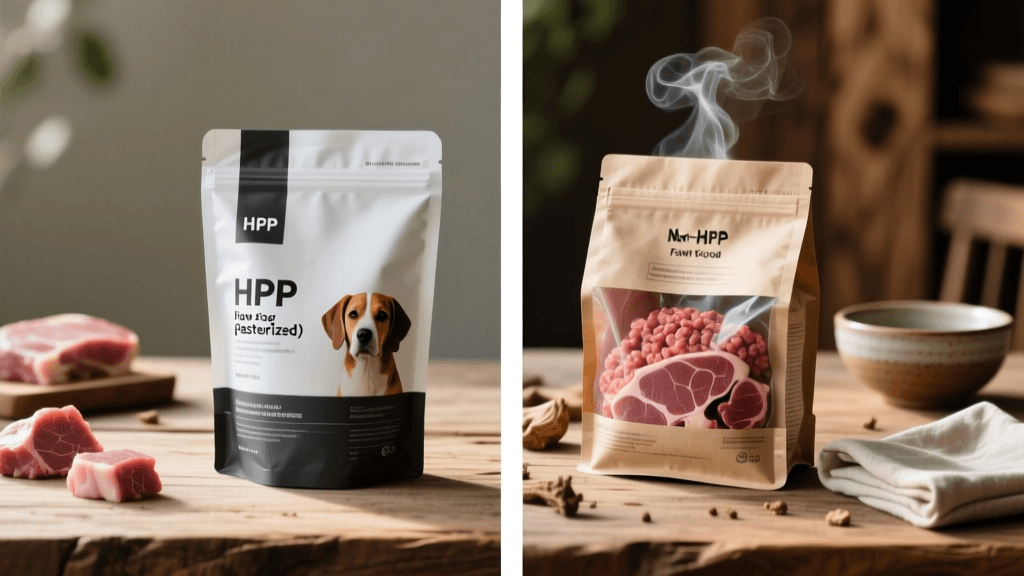
HPP vs. Non-HPP Raw Diets: 2026 Comparison Chart
To help you visualize the differences, here is a comprehensive comparison of HPP and non-HPP raw dog food based on current 2026 industry standards and veterinary data.
| Feature | HPP Raw Food | Non-HPP Raw Food |
|---|---|---|
| Pathogen Risk | Extremely Low (Cold Pasteurized) | Moderate to High (Untreated) |
| Probiotic Viability | Reduced (Often supplemented post-HPP) | High (Naturally Occurring) |
| Enzyme Activity | Partially Retained | Fully Intact |
| Macronutrient Profile | Unchanged | Unchanged |
| Average Cost (2026) | $6.00 - $9.50 per lb | $4.50 - $7.50 per lb |
| Zoonotic Risk to Humans | Minimal | Significant |
| Shelf Life (Frozen) | 12 - 18 Months | 6 - 9 Months |
Veterinary Perspectives and Global Guidelines
The veterinary community remains cautiously optimistic about raw feeding, provided that stringent safety measures are in place. The WSAVA Global Nutrition Guidelines emphasize that any diet fed to companion animals must be nutritionally complete, balanced, and safe. While WSAVA does not explicitly ban raw feeding, they heavily advocate for diets that undergo rigorous pathogen-reduction treatments, which places HPP raw foods in a much more favorable light compared to their non-HPP counterparts.
Board-certified veterinary nutritionists frequently point out that the source of the ingredients and the manufacturing facility's hygiene standards are just as important as the HPP treatment itself. In 2026, the most reputable raw food brands utilize human-grade facilities, conduct extensive batch testing for heavy metals and pathogens, and employ HPP as a final kill-step to ensure absolute safety.
How to Choose the Right Raw Diet for Your Dog
Selecting between HPP and non-HPP raw diets depends largely on your dog's specific health profile and your household's risk tolerance.
When to Choose HPP Raw Food:
- Puppies and Senior Dogs: Young puppies with developing immune systems and senior dogs with waning immunity are highly susceptible to bacterial infections. HPP is strongly recommended.
- Immunocompromised Dogs: Dogs undergoing chemotherapy, suffering from autoimmune diseases, or taking immunosuppressive medications should only consume HPP-treated or lightly cooked fresh diets.
- Multi-Pet or Multi-Generational Households: If you have cats, young children, or elderly relatives living in the home, HPP minimizes the risk of cross-contamination.
- First-Time Raw Feeders: The peace of mind provided by HPP makes the transition to raw feeding much less stressful for beginners.
When Non-HPP Might Be Considered:
- Working and Performance Dogs: Some handlers of high-drive working dogs believe the intact enzymes and natural microbiome in non-HPP diets provide superior digestive efficiency and recovery rates.
- Dogs with Severe Food Sensitivities: In rare cases where a dog reacts to the supplemental probiotics or minor structural changes in HPP foods, a meticulously sourced, non-HPP diet from a trusted local farm may be explored under strict veterinary supervision.
Safe Handling and Transitioning Protocols
Regardless of whether you choose HPP or non-HPP, proper handling is non-negotiable. Always thaw raw food in the refrigerator on a dedicated bottom shelf to prevent cross-contamination with human foods. Never thaw raw meat on the counter at room temperature, as this encourages rapid bacterial proliferation, even in HPP-treated foods once the package is opened.
When transitioning your dog to a raw diet in 2026, adopt a gradual approach over 10 to 14 days. Start by mixing 25% raw food with 75% of their current kibble or cooked diet, slowly increasing the raw proportion every three days. Monitor your dog's stool quality, energy levels, and appetite. If you notice loose stools, consider adding a canine-specific probiotic supplement or a spoonful of canned pumpkin to help firm up their digestion.
Always wash your hands, your dog's bowls, and all preparation surfaces with hot, soapy water immediately after handling raw meat. Using a diluted bleach solution or a food-safe sanitizing spray on countertops once a week is an excellent practice for non-HPP feeders.
Final Thoughts on Alternative Diets
The raw food movement has matured significantly, offering dog owners more choices than ever before. HPP technology has successfully bridged the gap between the desire for a natural, species-appropriate diet and the imperative need for household food safety. While non-HPP diets hold a special place in the hearts of purists seeking untouched enzymatic and probiotic benefits, the undeniable safety profile of HPP makes it the most practical and responsible choice for the vast majority of modern dog owners.
As always, before making any drastic changes to your dog's diet, consult with your primary veterinarian or a board-certified veterinary nutritionist to ensure the specific raw formulation meets your dog's unique caloric and micronutrient requirements for their life stage.
tom-renshaw
All our authors care for dogs every day — read more of their work on the authors page.