Holistic Dog Arthritis Relief 2026: Curcumin and Boswellia
Discover how curcumin and Boswellia serrata naturally reduce canine osteoarthritis pain in 2026. Learn holistic dosages, benefits, and vet-approved tips.
The Rise of Holistic Osteoarthritis Management in 2026
Osteoarthritis (OA) is a progressive, degenerative joint disease that impacts an estimated 80% of dogs over the age of eight. As we navigate veterinary care in 2026, pet parents and integrative veterinarians are increasingly moving away from exclusive reliance on traditional Non-Steroidal Anti-Inflammatory Drugs (NSAIDs). While NSAIDs provide rapid pain relief, their long-term use is often associated with gastrointestinal, renal, and hepatic complications. Today, the gold standard for managing canine OA emphasizes a multimodal, disease-modifying approach that targets inflammation at the cellular level without compromising organ health.
According to the Cornell University College of Veterinary Medicine, comprehensive OA management must include weight control, physical rehabilitation, and targeted nutritional supplements. At the forefront of this natural revolution in 2026 is the synergistic combination of Curcumin (the active compound in turmeric) and Boswellia Serrata (Indian Frankincense). Together, these two botanical powerhouses offer a compelling, holistic alternative for senior dogs suffering from joint stiffness, mobility loss, and chronic pain.
The Science of Curcumin: Beyond the Golden Spice
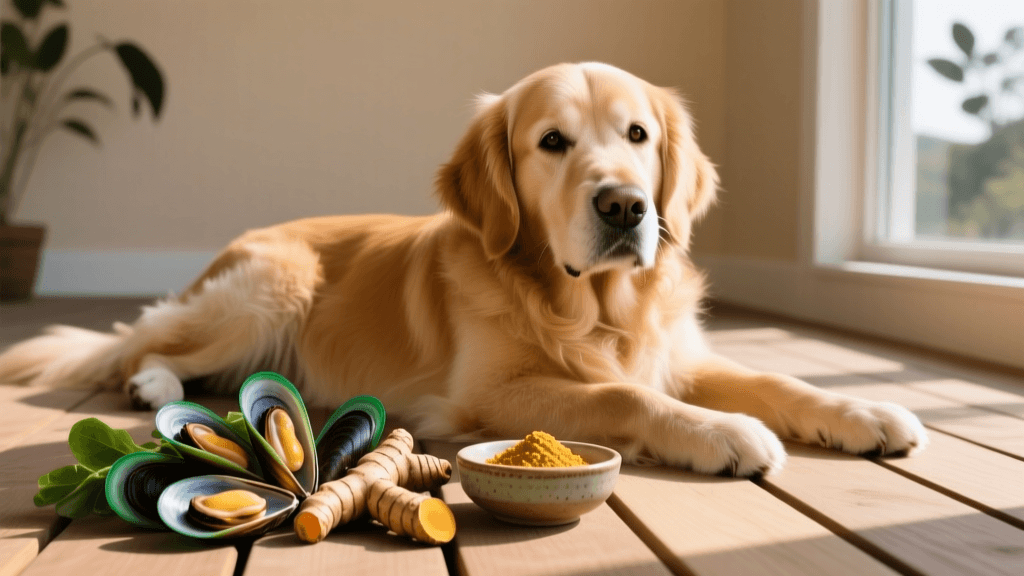
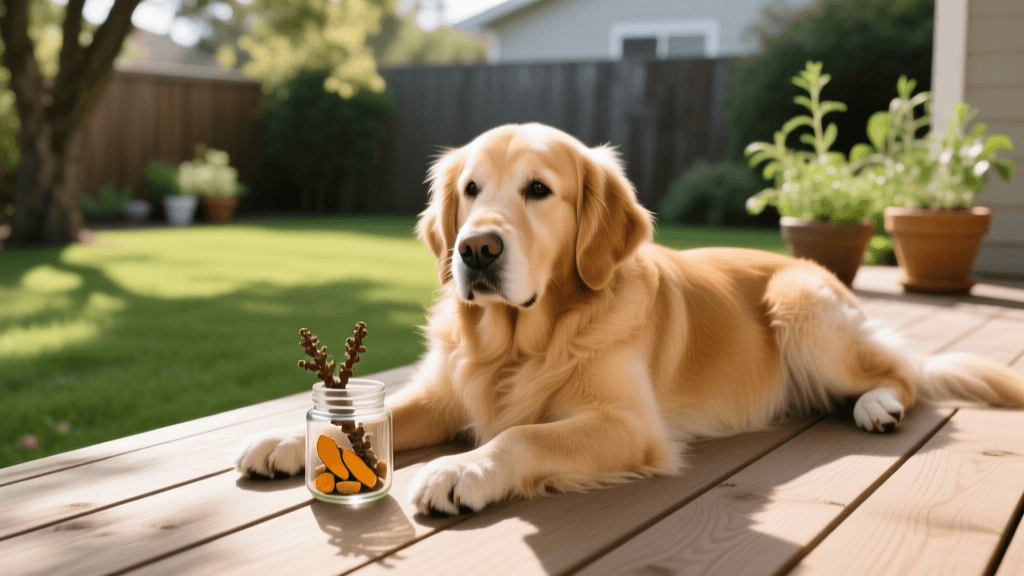
Curcumin is a potent polyphenol derived from the Curcuma longa plant. Historically, its use in veterinary medicine was limited by notoriously poor bioavailability; when fed in its raw powdered form, curcumin is rapidly metabolized and excreted by the canine liver before it can reach systemic circulation. However, the 2026 supplement market has largely solved this issue through advanced delivery systems.
Modern holistic formulations now utilize liposomal encapsulation or micellar water-soluble technologies. These methods wrap the curcumin molecules in a lipid bilayer, allowing them to bypass first-pass liver metabolism and absorb directly through the intestinal lymphatic system. Once in the bloodstream, curcumin acts as a powerful modulator of the inflammatory cascade. It specifically down-regulates the Cyclooxygenase-2 (COX-2) enzyme and inhibits the production of pro-inflammatory cytokines such as TNF-alpha and Interleukin-1 beta. Unlike traditional NSAIDs, which block both COX-1 (protective stomach lining) and COX-2 enzymes, curcumin selectively targets the inflammatory pathways, preserving the dog's gastrointestinal integrity.
Boswellia Serrata: The 5-LOX Inhibitor
While curcumin manages the COX-2 pathway, Boswellia Serrata addresses a completely different inflammatory route. The resin of the Boswellia tree contains active terpenes known as boswellic acids. The most critical of these for canine joint health is AKBA (3-O-acetyl-11-keto-beta-boswellic acid).
AKBA is a highly specific inhibitor of the 5-Lipoxygenase (5-LOX) enzyme. The 5-LOX pathway produces leukotrienes, which are aggressive inflammatory mediators that degrade cartilage and attract destructive white blood cells to the joint space. By inhibiting 5-LOX, Boswellia halts the enzymatic destruction of the joint matrix. When sourcing Boswellia in 2026, holistic veterinarians recommend looking for extracts standardized to contain at least 30% to 40% AKBA, as raw, unstandardized resin lacks the therapeutic concentration required for medium to large breed dogs.
The Synergy: Dual Pathway Inhibition
The true magic of combining these two herbs lies in their synergistic effect. Inflammation in an arthritic joint is not a single-lane road; it is a complex web of overlapping chemical signals. By simultaneously inhibiting COX-2 (via Curcumin) and 5-LOX (via Boswellia), you effectively shut down the dual pathways of joint degradation. This dual-inhibition strategy mimics the efficacy of prescription medications but utilizes naturally occurring botanical compounds that the canine body can process safely over the long term.
2026 Dosing Guidelines and Bioavailability
Dosing botanical medicines requires precision. Under-dosing is the most common reason pet parents report failure with natural joint supplements. The following table outlines the recommended maintenance dosages for high-quality, bioavailable extracts. Note that during the first 10 to 14 days, a "loading dose" (double the maintenance amount) is often recommended to saturate the tissues and provide rapid relief.
| Dog Weight Category | Curcumin (Liposomal/Micellar) | Boswellia (Std. to 30%+ AKBA) | Frequency |
|---|---|---|---|
| Small (10 - 25 lbs) | 100 - 150 mg | 75 - 100 mg | Twice Daily |
| Medium (26 - 50 lbs) | 200 - 300 mg | 150 - 200 mg | Twice Daily |
| Large (51 - 80 lbs) | 400 - 500 mg | 250 - 350 mg | Twice Daily |
| Giant (81+ lbs) | 600 - 800 mg | 400 - 500 mg | Twice Daily |
Pro-Tip for Absorption: Even with liposomal curcumin, administering these supplements alongside a source of healthy dietary fat—such as wild-caught Alaskan salmon oil or sardines—can further enhance cellular uptake and provide complementary Omega-3 fatty acids for joint lubrication.
Navigating the 2026 Supplement Market
The holistic supplement market is saturated, and not all products are created equal. When shopping for a Curcumin and Boswellia blend in 2026, look for the following quality indicators:
- Third-Party Testing: Ensure the brand carries the National Animal Supplement Council (NASC) Quality Seal, which guarantees that the product contains the active ingredients listed on the label and is free from heavy metals and microbial contaminants.
- Standardized Extracts: The label must explicitly state the percentage of curcuminoids (aim for 95%) and boswellic acids/AKBA. Avoid products that simply list "Turmeric Root Powder" or "Boswellia Resin Powder," as these are largely inactive fiber.
- Pricing Expectations: High-quality, bioavailable botanical blends require advanced manufacturing. Expect to pay between $45 and $75 for a 60-day supply for a medium-sized dog. Bargain-priced supplements typically utilize raw powders with less than 5% absorption rates.
Complementary Holistic Therapies
Supplements work best when integrated into a broader holistic wellness plan. The American Holistic Veterinary Medical Association (AHVMA) advocates for combining nutraceuticals with physical modalities to maximize mobility and comfort. Consider integrating the following therapies:
1. Canine Acupuncture
Acupuncture stimulates the central nervous system to release endogenous opioids (endorphins) and increases local blood flow to arthritic joints. In 2026, veterinary acupuncture is widely recognized for its ability to reduce muscle spasms that develop secondary to joint pain. Sessions typically last 20 to 30 minutes and are performed weekly during the initial rehabilitation phase.
2. Hydrotherapy and Underwater Treadmills
Water buoyancy unloads the stress from degenerating joints while providing uniform resistance to rebuild atrophied muscle mass. Muscle acts as a shock absorber for the joints; therefore, maintaining hindquarter muscle mass in senior dogs with hip OA is critical.
3. Photobiomodulation (Cold Laser Therapy)
Class IV cold lasers use specific wavelengths of light to penetrate deep into the joint capsule, stimulating mitochondrial ATP production. This accelerates tissue repair and reduces localized swelling without the use of any pharmaceuticals.
For more information on integrating these modalities safely, refer to the American Veterinary Medical Association (AVMA) guidelines on complementary and alternative veterinary medicine, which outline the standards of care for integrative practices.
Potential Side Effects and Contraindications
While Curcumin and Boswellia are exceptionally safe for the vast majority of dogs, holistic does not mean risk-free. Pet parents must be aware of specific contraindications:
- Bleeding Disorders and Surgery: Both herbs possess mild anti-platelet (blood-thinning) properties. They must be discontinued at least two weeks prior to any scheduled surgical procedure or dental extraction to prevent excessive bleeding.
- Gallbladder Disease: Curcumin stimulates bile production and gallbladder contraction. Dogs with a history of biliary obstruction, gallstones, or severe liver disease should not receive curcumin without direct veterinary supervision.
- Gastrointestinal Upset: Though rare with modern liposomal formulas, some dogs may experience soft stools or mild nausea when first introduced to Boswellia. Always start with half the recommended dose and gradually titrate up over a week.
Monitoring Your Dog's Progress
Unlike NSAIDs, which can mask pain within hours, botanical disease-modifiers take time to alter the inflammatory environment of the joint. It typically takes 3 to 6 weeks of consistent, daily administration to observe significant changes in your dog's mobility.
To track progress objectively, holistic veterinarians recommend using the Liverpool Osteoarthritis in Dogs (LOAD) questionnaire. This simple, owner-assessed metric tracks your dog's willingness to exercise, stiffness after rest, and ability to navigate stairs. By keeping a weekly journal of your dog's LOAD scores, you can accurately determine if the current dosage is effective or if adjustments are needed.
Conclusion
Managing canine osteoarthritis in 2026 is no longer about simply masking pain until the joints fail. It is about preserving cartilage, modulating the immune response, and enhancing the overall quality of life for our aging companions. The synergistic combination of liposomal Curcumin and AKBA-standardized Boswellia Serrata represents the pinnacle of natural, evidence-based joint care. By pairing these potent botanicals with targeted physical therapies and a species-appropriate diet, you can help your senior dog reclaim their mobility, comfort, and joy for years to come.
marcus-aldridge
All our authors care for dogs every day — read more of their work on the authors page.