French Bulldog Respiratory Health: Managing BOAS Effectively
Discover how to manage Brachycephalic Obstructive Airway Syndrome (BOAS) in French Bulldogs. Learn symptoms, treatments, and daily care tips.

The Reality of the Frenchie Smile: Understanding BOAS
French Bulldogs have skyrocketed in popularity, consistently ranking among the most beloved dog breeds in the United States and the UK. Their bat-like ears, compact bodies, and smushed faces are undeniably charming. However, behind this adorable exterior lies a significant veterinary concern that every Frenchie owner must understand: Brachycephalic Obstructive Airway Syndrome (BOAS). According to the Cambridge University BOAS Research Group, over 50% of French Bulldogs suffer from some degree of BOAS, a condition that fundamentally compromises their ability to breathe, exercise, and even sleep comfortably.
BOAS is not a single disease but rather a collection of upper airway abnormalities that occur in brachycephalic (short-headed) breeds. Because these dogs have been selectively bred for extremely short skulls, the soft tissues of their airways have not proportionally shortened. This results in a crowded, obstructed respiratory tract that requires immense effort to pull air through. Recognizing that your Frenchie's snoring is not just a 'cute breed quirk' but a sign of respiratory distress is the first and most crucial step in safeguarding their long-term health and wellbeing.
The Anatomy of a Frenchie's Airway
To effectively manage BOAS, it is essential to understand the specific anatomical defects that contribute to the syndrome. The American College of Veterinary Surgeons (ACVS) identifies four primary anatomical abnormalities associated with BOAS:
- Stenotic Nares: These are abnormally narrow or pinched nostrils. In many French Bulldogs, the cartilage of the nose is so tight that it acts like a collapsed straw, severely restricting the volume of air that can enter the nasal passages.
- Elongated Soft Palate: The soft palate is the tissue at the back of the roof of the mouth. In brachycephalic breeds, this tissue is often too long for the shortened skull, causing it to drape over the entrance to the trachea (windpipe) and physically block airflow.
- Everted Laryngeal Saccules: These are small pockets of tissue located just inside the larynx (voice box). Due to the chronic, increased negative pressure required to pull air through the obstructed upper airway, these saccules can be sucked outward, further narrowing the airway.
- Hypoplastic Trachea: This is a congenital condition where the trachea itself is narrower in diameter than normal. Unlike the first three issues, a hypoplastic trachea cannot be surgically corrected, but it significantly compounds the overall respiratory effort required by the dog.
Recognizing the Signs: Beyond 'Cute' Snoring
Many owners mistakenly believe that loud snoring, snorting, and wheezing are normal traits of the French Bulldog breed. In reality, these are clinical signs of respiratory compromise. A healthy dog should breathe quietly and effortlessly at rest. If your Frenchie exhibits any of the following symptoms, they are likely struggling with BOAS:
- Loud, persistent snoring or stertor (noisy breathing) while awake or asleep.
- Sleep apnea, where the dog stops breathing momentarily during sleep and wakes up gasping.
- Exercise intolerance, characterized by lagging behind on walks, sitting down frequently, or refusing to walk in mild weather.
- Cyanosis, a bluish or purplish tint to the gums and tongue indicating a severe lack of oxygen.
- Frequent regurgitation, gagging, or vomiting.
The Hidden Gastrointestinal Connection
One of the most overlooked aspects of BOAS is its direct link to gastrointestinal (GI) issues. The immense negative pressure a Frenchie generates to inhale through an obstructed airway acts like a vacuum on the stomach. This can lead to gastroesophageal reflux, hiatal hernias, and frequent regurgitation. If your French Bulldog frequently throws up undigested food or burps excessively, treating their airway obstruction often resolves these GI symptoms simultaneously.
BOAS Severity Grading Chart
Veterinarians use a standardized grading system to assess the severity of BOAS and determine the appropriate intervention. Below is a general guide to help you understand where your dog might fall on the spectrum:
| Grade | Clinical Signs | Recommended Action |
|---|---|---|
| Grade 0 | Normal, quiet breathing; no snoring; excellent exercise tolerance. | Routine veterinary care; maintain optimal weight. |
| Grade I | Mild snoring; occasional exercise intolerance in heat; normal sleep. | Strict weight management; environmental temperature control. |
| Grade II | Loud snoring; sleep apnea; frequent regurgitation; severe exercise limitation. | Comprehensive surgical evaluation strongly recommended. |
| Grade III | Respiratory distress; cyanosis; frequent collapse; high heat stroke risk. | Emergency medical stabilization and immediate surgical intervention. |
Daily Management and Environmental Controls
For French Bulldogs with mild BOAS (Grade I), or those awaiting surgical correction, rigorous daily management is non-negotiable. Implementing the following protocols can drastically improve your dog's quality of life and reduce the risk of a respiratory crisis.
1. Strict Weight Management
Excess body fat is the enemy of the brachycephalic airway. Fat deposits around the neck and chest physically compress the trachea, while abdominal fat pushes against the diaphragm, limiting lung expansion. Your Frenchie should maintain a Body Condition Score (BCS) of 4 out of 9. You should be able to easily feel their ribs without pressing hard, and they should have a visible waist when viewed from above. Measure their food using a digital kitchen scale rather than a scoop, and limit high-calorie treats.
2. Harnesses Over Collars
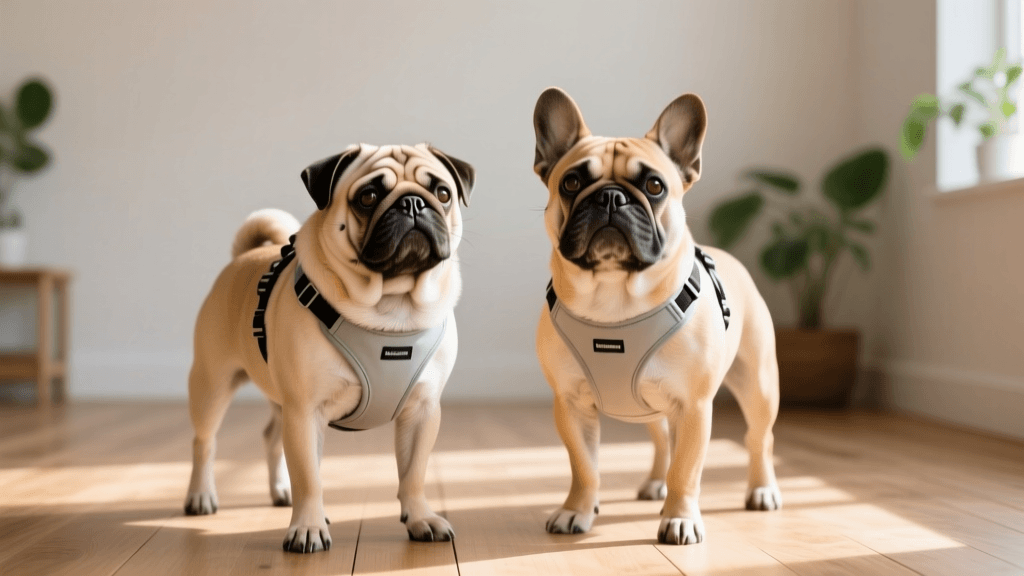
Never attach a leash to a neck collar on a French Bulldog. Pulling against a collar places direct pressure on the trachea and larynx, exacerbating airway collapse and potentially causing permanent cartilage damage. Invest in a high-quality, front-clip harness that distributes pressure across the sternum and shoulders. Products like the Ruffwear Front Range Harness or the Kurgo Tru-Fit Smart Harness are excellent choices that provide control without compromising the airway.
3. Climate and Temperature Control
Brachycephalic dogs are notoriously inefficient at panting, which is a dog's primary method of thermoregulation. Because they cannot move enough air over their tongues to cool down, they are at an exponentially higher risk of fatal heat stroke. Keep your home's indoor temperature between 68°F and 72°F (20°C - 22°C). When traveling or spending time outdoors, use cooling gear such as the Green Pet Shop Dog Cooling Mat or a wet cooling vest, and strictly avoid walks during the hottest parts of the day.
4. Dietary Adjustments for GI Health
To minimize the vacuum effect on the stomach, feed your Frenchie three to four small meals a day rather than one or two large ones. Utilize a slow-feeder bowl to prevent them from gulping air (aerophagia) while eating, and avoid vigorous exercise for at least 45 minutes after meals to reduce the risk of regurgitation and bloat.
Surgical Interventions: Timing, Procedures, and Costs
For French Bulldogs diagnosed with Grade II or Grade III BOAS, surgical intervention is often the only way to provide lasting relief. The American Kennel Club (AKC) and leading veterinary surgeons advocate for proactive, rather than reactive, surgery. Performing corrective surgery on a young, healthy dog (typically between 6 and 12 months of age) yields a vastly superior prognosis compared to waiting until the dog is older and secondary changes, like laryngeal collapse, have occurred.
Common Corrective Procedures
- Alar Fold Resection (Rhinoplasty): The surgeon removes a wedge of tissue from the nostrils to widen the nasal openings, significantly reducing resistance to incoming air.
- Soft Palate Resection: Using a surgical scalpel or a CO2 laser, the excess length of the soft palate is trimmed so that it no longer obstructs the glottis (the opening to the trachea). CO2 lasers are often preferred as they minimize bleeding and reduce post-operative swelling.
- Sacculectomy: If the laryngeal saccules have everted, they are surgically removed to clear the airway immediately below the vocal cords.
Understanding the Costs
The cost of BOAS corrective surgery varies widely based on your geographic location, the specific procedures required, and whether a board-certified veterinary surgeon performs the operation. On average, owners can expect to pay between $1,500 and $4,000. This estimate typically includes pre-operative bloodwork, general anesthesia, the surgical procedures, and post-operative hospitalization. While the upfront cost is significant, it is a vital investment that can prevent costly emergency visits for respiratory distress and heat stroke later in the dog's life.
Post-Operative Care and Long-Term Prognosis
Recovery from airway surgery requires meticulous care. Post-operative swelling is the most significant risk, as inflammation in the already narrow airway can cause acute obstruction. Your veterinarian will prescribe a course of corticosteroids to reduce swelling, alongside pain management and sometimes sedatives to keep the dog calm. For the first 10 to 14 days, your Frenchie must be strictly confined to a crate or a small room, with no running, jumping, or excitement. Feeding soft, easily digestible food and using a raised bowl can also help minimize throat irritation.
When performed early in life, the prognosis for French Bulldogs undergoing BOAS surgery is excellent. Most owners report a dramatic transformation in their dog's personality; dogs that were previously lethargic and exercise-intolerant often become playful, active, and capable of enjoying longer, more fulfilling lives. By understanding the mechanics of BOAS, recognizing the early warning signs, and partnering with a skilled veterinary team, you can ensure your French Bulldog breathes easier and thrives for years to come.
tom-renshaw
All our authors care for dogs every day — read more of their work on the authors page.