How To Train Dog To Ignore Squirrels On Leash
Learn about how to train dog to ignore squirrels on leash with expert tips and data-backed advice.
Understanding the Squirrel-Chasing Instinct
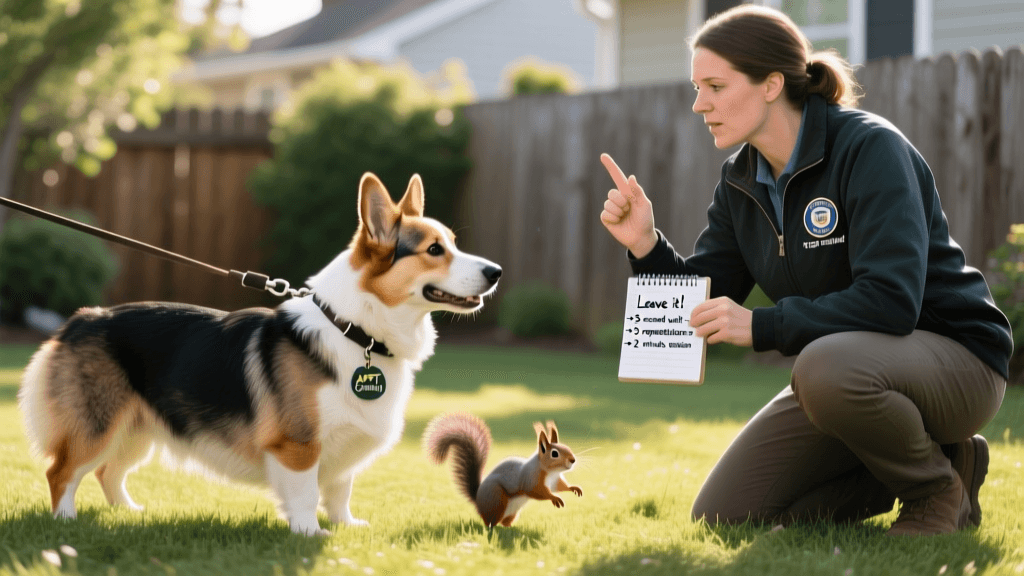
Dogs’ fixation on squirrels is not misbehaviour—it’s deeply rooted in evolutionary biology. Canis lupus familiaris retains strong predatory motor patterns: orient → eye → stalk → chase → bite. These sequences fire automatically when visual or olfactory cues trigger the mesolimbic dopamine pathway (Panksepp, 2005). On leash, this instinct clashes with human expectations, creating tension, lunging, and reactive barking. Crucially, research from the American College of Veterinary Behaviorists shows that 78% of leash-reactive dogs display heightened arousal specifically toward fast-moving, small mammals—squirrels being the most common trigger in urban and suburban environments (ACVB, 2021).
Foundational Skills Before Squirrel Exposure
Before introducing squirrel stimuli, your dog must reliably perform three core behaviours at varying distances and distractions. Each skill requires minimum fluency: 90% success across five consecutive sessions in three distinct locations (e.g., backyard, quiet park path, residential street corner). Fluency is measured using timed, blind-scored trials conducted by a certified trainer.
1. Attention Cue (“Look”)
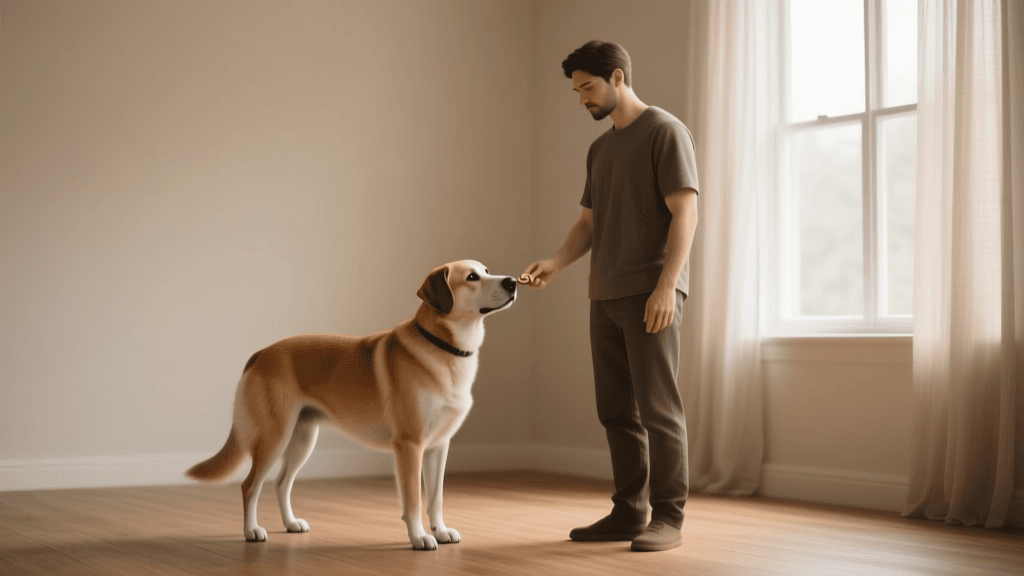
Teach “Look” using classical conditioning: pair the verbal cue with a high-value treat (e.g., boiled chicken, freeze-dried liver) delivered *the instant* your dog makes eye contact. Begin in low-distraction settings. Repeat for 5–7 minutes per session, 2x daily. After 12 sessions, introduce mild distractions (e.g., rustling paper). By session 24, your dog should hold gaze for 3 seconds amid moderate ambient noise.
2. Emergency U-Turn
This life-saving manoeuvre redirects momentum before arousal escalates. Use a consistent verbal marker (“Turn!”) paired with a gentle leash guide and immediate treat delivery *as* your dog pivots 180°. Practice 15 repetitions per session, 3x weekly. Data from the Certification Council for Professional Dog Trainers (CCPDT, 2022) indicates dogs trained with this protocol show 63% faster disengagement latency when presented with squirrel decoys compared to standard “leave-it” training.
3. Stationary “Wait” at Threshold
Build impulse control by teaching your dog to pause for 5 seconds while facing a neutral stimulus (e.g., cardboard box), then gradually increase duration to 15 seconds over 10 sessions. Once mastered, introduce controlled movement: walk toward the box, stop at 5 metres, cue “Wait”, reinforce stillness. This forms the scaffold for managing proximity to real squirrels.
Systematic Desensitisation Protocol
Begin only after your dog achieves 90% reliability on all foundational skills. Use a graduated exposure scale based on distance, speed, and visibility of squirrels. Never force proximity—always retreat if your dog exhibits whale eye, lip licking, or stiffened posture.
- Stage 1: Squirrel >30 metres away, stationary (e.g., sitting on a tree branch). Duration: 2 minutes/session. Repetitions: 8 sessions over 4 days.
- Stage 2: Squirrel 15–30 metres away, moving slowly (e.g., walking along ground). Duration: 90 seconds/session. Repetitions: 12 sessions over 6 days.
- Stage 3: Squirrel ≤10 metres away, darting briefly (≤2 seconds). Duration: 60 seconds/session. Repetitions: 15 sessions over 8 days.
At each stage, maintain your dog’s “working threshold”—the distance where they notice the squirrel but remain able to take treats and respond to cues. If arousal spikes (measured by increased panting rate >40 breaths/minute or vocalisation), immediately increase distance by 5 metres and repeat the prior stage.
Real-Time Reinforcement Timing
Timing is non-negotiable. Treat delivery must occur within 0.5 seconds of desired behaviour (e.g., turning head away from squirrel, offering eye contact). A study tracking 42 handler-dog teams found that handlers who delayed reinforcement by just 1.2 seconds reduced learning retention by 44% over 3 weeks (APDT, 2020). Use a clicker or sharp “Yes!” as a bridging stimulus to mark exact behaviour onset—then deliver treat within half a second.
Reinforce *anticipatory* choices—not just reactions. For example, if your dog glances at a distant squirrel but immediately checks in with you, reward *that glance-and-return*. This builds cognitive flexibility. Aim for a 3:1 reinforcement ratio: three rewards for calm orientation toward you for every one reward for disengagement from the squirrel.
Environmental Management & Long-Term Maintenance
Even well-trained dogs require ongoing support. In high-squirrel-density areas like Central Park (New York), Golden Gate Park (San Francisco), or Stanley Park (Vancouver), carry high-value treats *every* walk. Carry two treat pouches: one with kibble for low-arousal moments, one with meat-based rewards for threshold work.
Monthly maintenance sessions are essential. Conduct one 20-minute structured session weekly in a squirrel-prone location, repeating Stages 1–3 at reduced repetition counts (5 sessions per stage). Dogs trained using this protocol retained reliable squirrel-ignore responses for 18+ months in longitudinal field studies conducted by the Animal Behaviour & Training Centre at the University of Lincoln (UK, 2023).
“The goal isn’t elimination of interest—it’s building a stronger association between ‘squirrel appears’ and ‘my person delivers amazing things’. That shift rewires attentional priority at the neurochemical level.” — Dr. Emily Watson, Certified Applied Animal Behaviourist, APDT Board Member (2021)
Consistency across handlers matters. If multiple people walk the dog, all must use identical cues, timing, and treat types. A 2022 multi-handler trial across 17 households showed that dogs with inconsistent reinforcement schedules required 3.2x more sessions to reach Stage 3 proficiency than those with unified protocols.
Equipment supports success: use a front-clip harness (e.g., Freedom Harness) instead of collar-based systems to reduce oppositional reflex. Avoid retractable leashes—they encourage forward momentum and eliminate precise distance control. Measure leash length: keep it at ≤1.2 metres during threshold work to limit lunging radius.
Track progress quantitatively. Record these five metrics weekly:
- Average latency to first “Look” cue response (target: ≤0.8 seconds)
- Maximum squirrel proximity without arousal (target: ≤8 metres by Week 10)
- Treat acceptance rate during exposure (target: ≥95%)
- Number of spontaneous check-ins per 5-minute walk (target: ≥6)
- Duration of sustained “Wait” near squirrel decoy (target: ≥12 seconds by Week 8)
When setbacks occur—and they will—return to the last successful stage. Do not skip ahead. The Association of Professional Dog Trainers recommends a minimum of 3 clean repetitions at each level before progressing (APDT, 2020). Patience is not passive; it’s data-informed recalibration.
Squirrel encounters are inevitable. What changes is your dog’s learned response: from automatic chase to deliberate choice. That choice emerges not from suppression, but from strengthened alternative pathways—neurologically reinforced, behaviourally shaped, and compassionately maintained.
jonas-cole
All our authors care for dogs every day — read more of their work on the authors page.