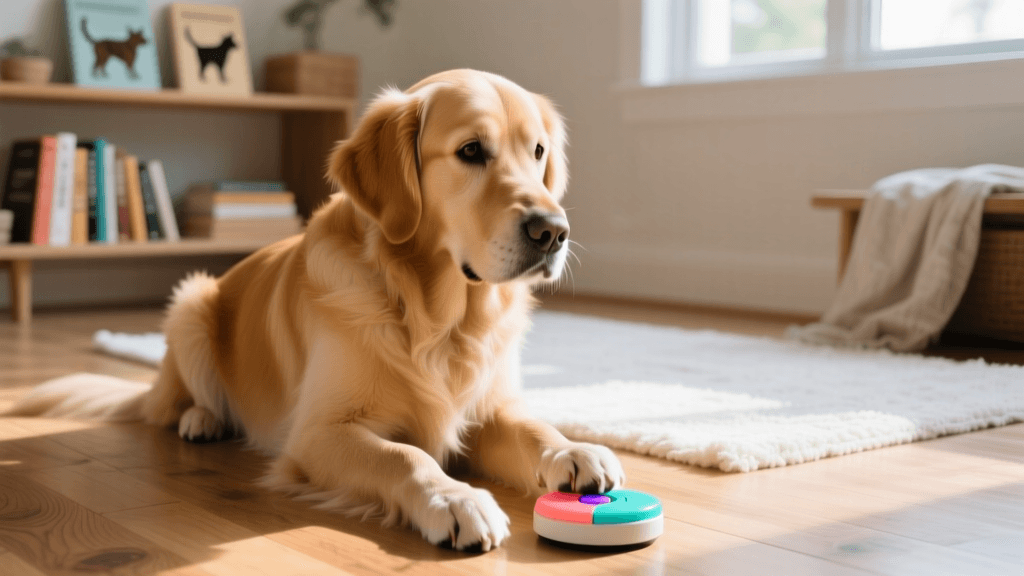
How To Teach Dog To Wait At Doorways
Learn about how to teach dog to wait at doorways with expert tips and data-backed advice.

Foundations of Doorway Waiting: Why It Matters
Teaching a dog to wait at doorways is far more than a polite party trick—it’s a critical safety behaviour rooted in impulse control and environmental awareness. Every year, over 10,000 dogs in the United States are involved in vehicle-related incidents after bolting through open doors (ASPCA, 2022). In urban environments like Chicago or Portland, where foot traffic and cycling lanes intersect with residential sidewalks, a reliable “wait” cue can prevent life-threatening situations. This behaviour also reduces stress for both dog and handler during transitions—whether entering a vet clinic in Boston or stepping into an elevator at the University of Pennsylvania Veterinary Hospital.
Scientific Principles Behind the Behaviour
The doorway wait relies on operant conditioning principles established by B.F. Skinner and refined through modern behavioural science. Specifically, it leverages differential reinforcement of other behaviour (DRO)—rewarding the absence of rushing—and stimulus control, where the visual cue of a hand on the doorknob becomes a discriminative stimulus for stillness. According to the Association of Professional Dog Trainers (APDT, 2021), successful impulse control training correlates strongly with increased duration of voluntary eye contact and reduced latency to respond to release cues.
Neurological Timing Windows
Dogs process environmental cues within precise temporal windows. Research from the Cummings School of Veterinary Medicine at Tufts University shows that the optimal interval between presenting a cue (e.g., “Wait”) and delivering reinforcement is 0.8–1.2 seconds. Delay beyond 1.5 seconds significantly weakens the association, especially in adolescent dogs under 18 months. This narrow window underscores why clicker timing must be precise—not just accurate, but consistently sub-second.
Step-by-Step Protocol: From Threshold to Threshold
Begin in a low-distraction indoor space—ideally a hallway with two closed doors, such as those found in the training facility at the San Francisco SPCA. Use only a flat collar or harness; avoid choke chains or prong collars, which contradict APDT’s 2023 Position Statement on humane training tools.
Phase One: Capturing Stillness (Days 1–3)
Stand beside a closed interior door. With your hand on the knob, say “Wait” once—no repetition. If your dog remains still for even 0.5 seconds, mark with a click or verbal “Yes!” and deliver a high-value treat (e.g., chicken slivers) directly in front of their nose. Repeat for 12–15 trials per session, twice daily. Track progress using a simple log: note duration held (in 0.5-second increments), number of treats delivered, and distractions present (e.g., “dog barked outside,” “phone rang”).
Phase Two: Adding Duration and Distance (Days 4–10)
Once your dog holds still for 3 seconds consistently across three sessions, begin incrementally increasing duration by 1 second every two sessions. Introduce distance by stepping back 6 inches after giving “Wait,” then returning to reward. By Day 10, aim for 10 seconds of stillness while you step fully through the doorway and return—without opening it.
- Session length: 5 minutes maximum (to preserve focus)
- Repetition count per day: 2 sessions × 12–15 trials = 24–30 total
- Treat size: ≤ ½ cm³ per reward (to avoid satiation)
- Release cue: Use consistent phrase—“Okay!” or “Go on!”—never “Free!” or “Good!”
- Success criterion before advancing: 90% compliance across 3 consecutive sessions
Common Pitfalls and Corrections
One frequent error is inconsistent release timing. If you release your dog before they’ve completed the full duration—even by half a second—you unintentionally reinforce premature movement. Another issue arises when handlers inadvertently pair “Wait” with reaching for the knob *before* the dog is still. This creates anticipatory arousal rather than calm readiness. To correct this, pause with hand hovering 2 inches from the knob until your dog offers stillness, then proceed.
Environmental variables matter deeply. A study conducted at the Royal Veterinary College in London found that dogs trained exclusively indoors required 42% more repetitions to generalize the “Wait” cue to outdoor metal doors with wind noise, compared to those exposed to varied surfaces (wood, glass, wrought iron) from Day 1. Therefore, introduce new door types gradually: start with sliding glass doors at home, then move to storm doors at local parks like Golden Gate Park’s dog-friendly entrances.
Advanced Generalization and Real-World Application
Once your dog reliably waits at interior doors for 15 seconds, begin proofing in increasingly complex contexts. At the Cornell University College of Veterinary Medicine’s client entrance, trainers use a structured progression: first, waiting while a second person walks past; second, waiting while a treat falls near the threshold; third, waiting while the door opens 6 inches, then 12 inches, then fully—with release only after full opening and your verbal cue.
For public settings, the Certification Council for Professional Dog Trainers (CCPDT, 2022) recommends a minimum of five distinct locations before declaring fluency. These must include at least one location with auditory variability (e.g., coffee shop patio), one with olfactory complexity (e.g., pet store entrance), and one with spatial constraint (e.g., narrow apartment building vestibule).
“The ‘Wait’ behaviour isn’t about obedience—it’s about shared attention and mutual understanding. When a dog chooses stillness at a threshold, they’re demonstrating cognitive flexibility and trust. That choice is worth reinforcing every single time.” — Dr. Emily Judd, Lead Ethologist, ASPCA Behavioral Sciences Team, 2021
Measuring Progress Objectively
Subjective impressions (“He seems better”) hinder consistency. Use these five measurable benchmarks:
- Latency to move after “Wait” cue: Target ≤ 0.3 seconds deviation from baseline (measured via smartphone slow-motion video)
- Duration held at exterior doors: Minimum 8 seconds before release, verified across 5 trials
- Distraction resistance score: ≥ 4/5 on CCPDT’s Environmental Distraction Scale (e.g., tolerates skateboarder passing at 10 feet)
- Consistency across handlers: ≥ 85% success rate with two unfamiliar people using identical protocol
- Spontaneous offering: Dog sits automatically at closed doors in 3+ novel locations without verbal cue, observed over 7 days
Document all metrics in a shared digital log if multiple family members train. The San Francisco SPCA’s free “Doorway Tracker” template includes timed video timestamps, distraction tags, and automatic pass/fail flags based on APDT-recommended thresholds.
Remember: a well-trained “Wait” isn’t static—it evolves. At the University of California, Davis Veterinary Medical Teaching Hospital, service dog candidates must maintain stillness for 20 seconds while a gurney passes within 3 feet. That level of fluency emerges not from intensity, but from fidelity to timing, repetition, and positive reinforcement. Your dog isn’t learning to obey a door—they’re learning to coexist thoughtfully in human spaces. And that begins with one quiet second, marked precisely, rewarded generously, and repeated with patience.
Keep sessions short, keep records meticulous, and keep your hand steady on the knob—not pushing, not pulling, just waiting alongside them.
| Training Phase | Average Duration to Mastery | Key Metric Threshold | Location Diversity Required |
|---|---|---|---|
| Capturing Stillness | 3 days | 3 sec hold × 90% accuracy | 1 interior door type |
| Duration + Distance | 7 days | 10 sec hold with 24-inch retreat | 2 door types (e.g., wood + sliding glass) |
| Real-World Proofing | 14 days | 8 sec hold amid moderate distraction | 5 geographically distinct locations |
Fluency takes time—but not indefinite time. With adherence to evidence-based parameters, most dogs achieve reliable doorway waiting within 25 days. What matters most is not speed, but the integrity of each repetition: clean cues, timely markers, and unwavering positivity.
Every time you pause with your hand on the knob, you’re not just teaching a command. You’re building a language—one syllable, one second, one choice at a time.
hannah-wickes
All our authors care for dogs every day — read more of their work on the authors page.