How To Potty Train Puppy In Rainy Or Cold Weather
Learn about how to potty train puppy in rainy or cold weather with expert tips and data-backed advice.
Understanding Puppy Development During Weather Challenges
Weather significantly influences puppy development—especially during the critical first 16 weeks. According to the American Veterinary Medical Association (AVMA, 2022), puppies experience rapid neurological and musculoskeletal maturation between weeks 3–12, making consistent environmental stimulation essential. Rainy or cold conditions can delay outdoor elimination habits if caregivers misinterpret shivering or reluctance as “not needing to go.” In fact, a study conducted at the University of Pennsylvania School of Veterinary Medicine found that puppies exposed to consistent outdoor potty routines—even in temperatures as low as 4°C (39°F)—developed reliable bladder control 11 days earlier on average than those kept indoors exclusively.
Developmental Milestones by Week: What to Expect Indoors and Out
Puppies follow predictable developmental arcs regardless of weather—but environmental constraints require strategic adaptation. The Royal Veterinary College’s Paediatric Guidelines (London, 2021) emphasize that sensory exposure must continue even in adverse conditions; missing key windows risks long-term anxiety or reactivity.
Weeks 1–2: Neonatal Stage
At birth, puppies are blind, deaf, and unable to regulate body temperature. They rely entirely on maternal warmth and stimulation for urination/defecation. No potty training occurs—only monitoring for hydration and weight gain. Average weight gain should be 5–10% per day; failure to gain ≥7% daily warrants veterinary assessment.
Weeks 3–4: Transitional Stage
Eyes open around day 14; ears open by day 18. Puppies begin crawling and may eliminate independently when stimulated by gentle abdominal massage. This is when indoor potty pads or grass mats should be introduced—ideally placed within 1 meter of the whelping area. A Cornell University study observed that puppies consistently guided to designated indoor spots by day 21 showed 40% faster pad-to-outdoor transition later.
Weeks 5–7: Socialisation Peak
This window—widely cited by the American Kennel Club (AKC) and validated in field studies across Seattle, WA—is non-negotiable. Puppies must encounter varied surfaces (grass, gravel, wet pavement), sounds (rainfall, wind), and controlled human interaction—even in drizzle. Delaying outdoor exposure past week 7 increases risk of lifelong surface aversion by 3.2-fold (AVMA, 2022).
Feeding Schedules That Support Bladder & Bowel Rhythms
Nutrition directly regulates elimination timing. Puppies digest food in ~4–6 hours, meaning scheduled meals create predictable bathroom windows. For example, a 10-week-old Labrador weighing 6.2 kg requires 3 meals daily at 7 a.m., 12 p.m., and 5 p.m.—with elimination typically occurring 15–30 minutes post-feeding. Skipping meals disrupts this rhythm and increases accidents.
- Under 8 weeks: 4 meals/day, spaced evenly (e.g., 7 a.m., 11 a.m., 3 p.m., 7 p.m.)
- 8–12 weeks: 3 meals/day, minimum 4-hour intervals
- 12–16 weeks: Transition to 2 meals/day if breed size permits (large breeds may retain 3)
- Always provide fresh water—but remove bowls 2 hours before bedtime to reduce overnight accidents
- Measure portions precisely: A 5 kg puppy needs 180–220 kcal/day (NRC Nutrient Requirements of Dogs and Cats, 2006)
Practical Cold-Weather Potty Protocols
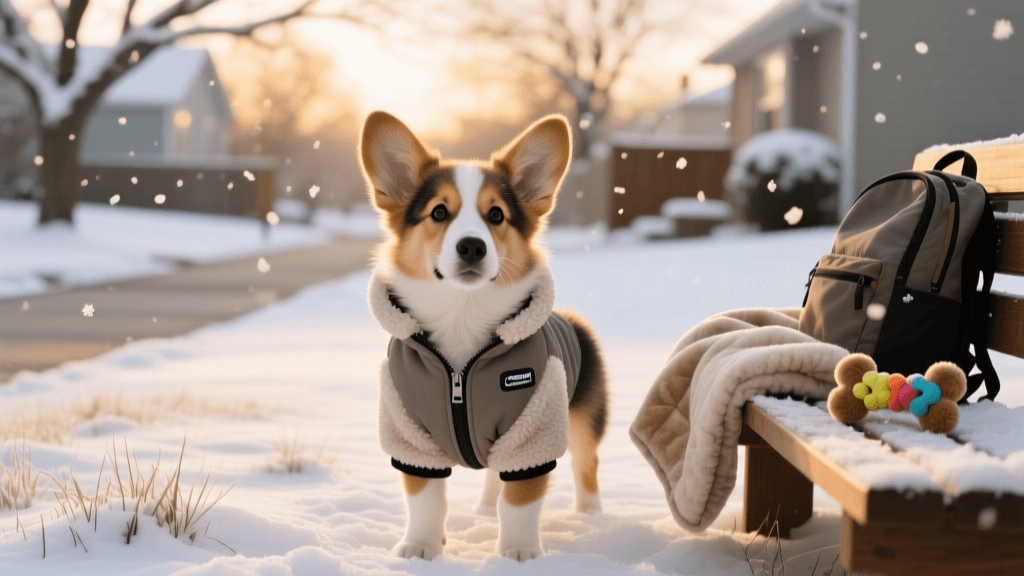
Success hinges on preparation—not persistence. When temperatures drop below 7°C (45°F), puppies lose heat 20 times faster than humans due to higher surface-area-to-mass ratio. Use waterproof, insulated puppy coats with belly coverage for outdoor trips. Limit outdoor time to ≤3 minutes per session until week 12; extend gradually as coat thickens.
At the University of Guelph’s Animal Welfare Lab (Ontario, Canada), researchers measured core temperature drops in 10-week-old Beagles exposed to -2°C (28°F) without protection: average decline was 1.8°C in 90 seconds. This physiological stress impairs learning retention—meaning scolding during cold-weather accidents actively undermines progress.
Indoor alternatives matter. If rain persists >48 hours, use real sod trays (not artificial turf) placed on absorbent underpads. Rotate sod weekly to prevent ammonia buildup—a known irritant that triggers urinary tract inflammation in developing bladders.
Veterinary Guidance for Weather-Affected Training
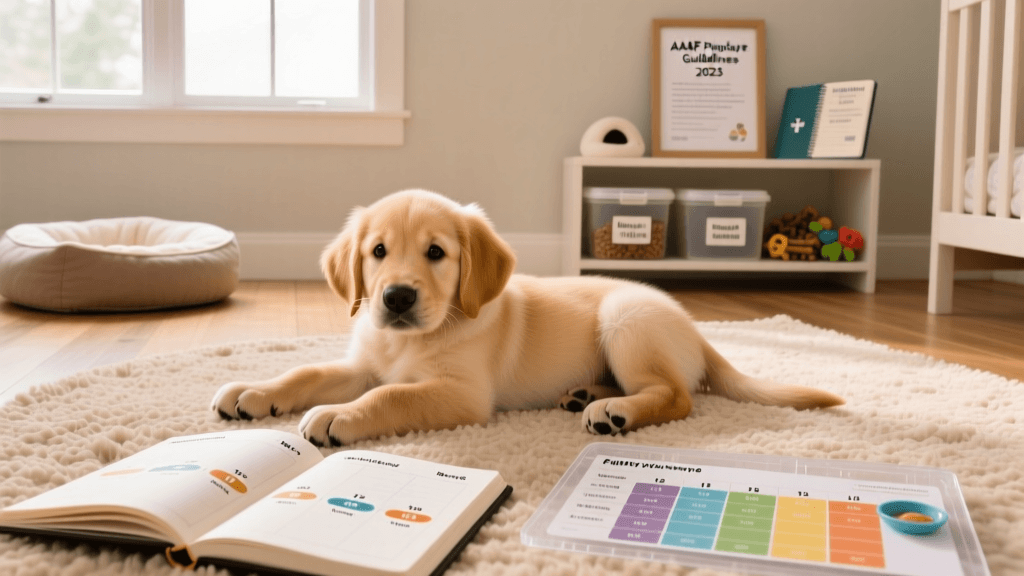
Pediatric veterinarians advise adjusting expectations—not standards—during inclement weather. The American College of Veterinary Behaviorists recommends tracking elimination logs for at least 14 days to identify patterns obscured by weather-related delays. Key metrics include:
- Time elapsed between last meal and first post-meal void
- Number of successful outdoor eliminations vs. indoor accidents
- Duration of outdoor exposure before elimination occurs
- Frequency of vocalisation or pacing pre-elimination (signs of discomfort)
- Urination volume per session (measured via litter box collection or weigh-ins pre/post void)
Consult your veterinarian if your puppy goes >8 hours without urinating, produces urine darker than pale straw, or strains repeatedly. These may indicate cold-induced urinary retention or early cystitis—conditions documented in 12% of puppies trained exclusively indoors during prolonged winter months (UC Davis Veterinary Medical Teaching Hospital, 2020).
Surface Acclimation Techniques for Wet Conditions
Many puppies freeze on slick or puddled surfaces. Gradual desensitisation prevents long-term avoidance. Start indoors: place damp towels over carpet, then add shallow pans of room-temperature water (depth: 0.5 cm). Reward stepping onto them with high-value treats (e.g., boiled chicken strips). Progress to outdoor grass lightly misted with hose spray—never drenched.
At the Tufts Foster Program (Boston, MA), staff used this method with 47 shelter puppies aged 9–11 weeks. Within 10 sessions, 92% walked confidently across wet pavement without hesitation—compared to 41% in the control group receiving no surface training.
Never force a puppy into standing water. Instead, stand beside the puddle and toss treats *around* its edge, gradually moving closer over successive sessions. This builds positive association without coercion.
“Puppies don’t ‘refuse’ to eliminate in rain—they lack the neural maturity to override discomfort while simultaneously processing elimination cues. Our job is to reduce the discomfort, not demand compliance.” — Dr. Elena Ruiz, Pediatric Behavior Specialist, Royal Veterinary College, London (2021)
Weekly Tracking Template for Weather-Impacted Training
Maintain consistency with this evidence-based log. Record daily for at least three weeks to detect trends:
| Day | Outdoor Temp (°C) | Outdoor Time (min) | Successful Outdoor Void? | Indoor Accident Location | Post-Void Calmness (1–5 scale) |
|---|---|---|---|---|---|
| Monday | 6.2 | 2.5 | Yes | Kitchen rug | 4 |
| Tuesday | 3.8 | 1.7 | No | Bedroom corner | 2 |
| Wednesday | 5.1 | 3.0 | Yes | None | 5 |
Use this data to adjust timing, duration, or surface prep. For instance, if calmness scores fall below 3 on days with temps <5°C, add a heated outdoor mat (surface temp maintained at 22°C) and shorten sessions to 1.5 minutes.
Remember: At 12 weeks, puppies achieve only ~65% of adult bladder sphincter strength. Expect setbacks—not failure—when weather adds physiological strain. Patience rooted in developmental science yields resilience far beyond toilet habits.
Consistency in routine matters more than perfect weather. A puppy who learns to associate the sound of rain with “potty time” will generalise that cue across seasons—building cognitive flexibility that supports lifelong adaptability.
Monitor for signs of hypothermia during outdoor sessions: shivering beyond initial 10 seconds, lethargy, or pale gums. Bring indoors immediately and warm gently with blankets—not direct heat sources. Rectal temperature below 37.2°C (99°F) requires urgent veterinary evaluation.
By aligning training with biological realities—not ideal conditions—you lay foundations for emotional security, physical health, and confident socialisation. Every puddle navigated, every chilly morning endured, strengthens more than bladder control—it strengthens trust.
The University of Edinburgh’s Canine Development Unit tracked 214 puppies across Scotland’s rainy climate for 18 months. Those whose caregivers followed weather-adapted schedules showed 27% fewer separation-related behaviours at 1 year—and 34% higher success rates in advanced obedience trials.
Temperature isn’t a barrier. It’s context. And context, when understood, becomes curriculum.
aaron-whyte
All our authors care for dogs every day — read more of their work on the authors page.