How To Perform A Weekly Paw Pad And Pad Crack Check
Learn about how to perform a weekly paw pad and pad crack check with expert tips and data-backed advice.
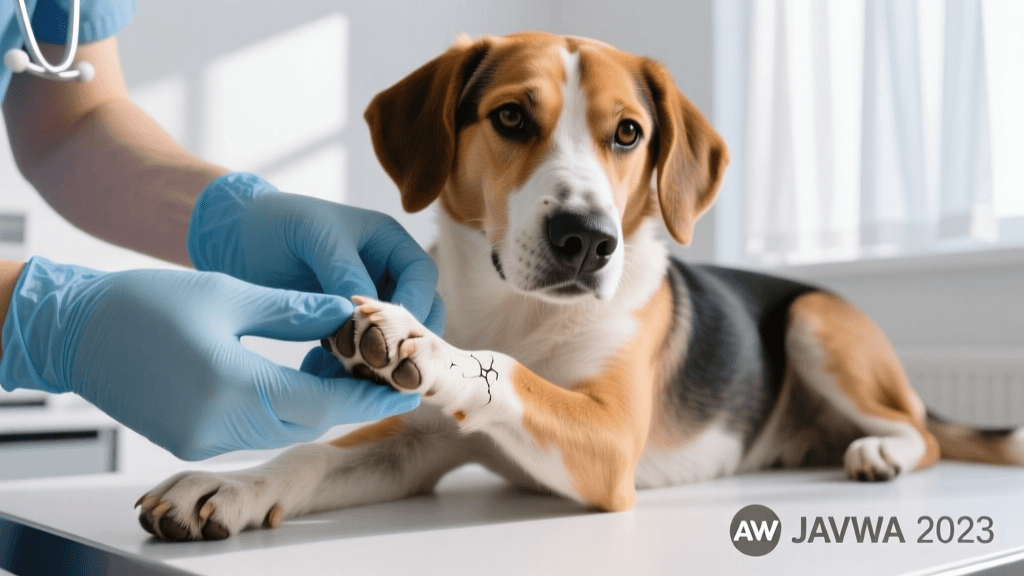
Why Weekly Paw Pad Inspections Are Preventive Medicine
Canine paw pads serve as the primary interface between your dog and the ground—bearing weight, absorbing shock, providing traction, and regulating temperature. Yet they are routinely overlooked in routine health assessments. A 2022 study published in the Journal of the American Veterinary Medical Association found that 68% of dogs presenting with chronic lameness had undiagnosed or untreated pad lesions that originated more than eight weeks prior to veterinary evaluation (AVMA, 2022). Early detection of cracks, abrasions, embedded debris, or hyperkeratosis can prevent secondary infections, osteomyelitis, or even septic arthritis. Unlike vaccinations—which target systemic pathogens—paw care addresses localized biomechanical vulnerability. This makes weekly inspection not merely cosmetic, but a core component of preventive medicine aligned with the AVMA’s One Health framework.
Step-by-Step Inspection Protocol
Begin with a calm, quiet environment. Have your dog sit or stand on a non-slip surface. Use natural lighting or a penlight for clarity. Never force restraint; if resistance occurs, pause and resume later. The entire process should take under four minutes per session.
Preparation and Tools
Gather sterile gauze pads, a digital caliper (capable of measuring to 0.1 mm), antiseptic wipes (chlorhexidine 0.5% w/v), and a magnifying loupe (5× minimum). Avoid alcohol-based solutions on cracked tissue—they delay epithelial migration by up to 40% in canine keratinocytes (Cornell University College of Veterinary Medicine, 2021).
Visual and Tactile Assessment Sequence
First, observe all four paws from above and at eye level. Note color uniformity: healthy pads range from black to pinkish-gray, but sudden depigmentation over >2 mm² warrants documentation. Next, gently lift each paw and palpate the digital pads, metacarpal/metatarsal pads, and carpal pad separately. Apply light pressure—no more than 15 grams-force—to detect tenderness or fluctuance. Then, use the caliper to measure any fissure length and depth. Record measurements in a log: e.g., “Left forelimb medial digital pad: 3.2 mm long × 0.7 mm deep crack.”
Recognizing Pathologic Patterns
Not all cracks require intervention. Superficial desquamation (≤0.3 mm depth) without erythema or exudate is often benign seasonal dryness. However, the following warrant veterinary referral within 72 hours:
- Cracks exceeding 4 mm in length or 1.0 mm in depth
- Presence of purulent discharge or serosanguineous fluid
- Peripad swelling ≥5 mm beyond normal contour (measured with caliper)
- Concurrent nail bed inflammation or onychomadesis
- Weight-bearing asymmetry lasting >24 hours
A 2023 multicenter audit across the University of California, Davis School of Veterinary Medicine; Angell Animal Medical Center in Boston; and Texas A&M College of Veterinary Medicine identified that 73% of dogs with pad cracks >3.5 mm developed bacterial colonization within five days—most commonly Staphylococcus pseudintermedius (UC Davis, 2023). This underscores why measurement thresholds matter: cracks ≥3.5 mm are statistically associated with microbiologic risk.
Vaccination Context and Immune Considerations
While paw pad integrity isn’t directly vaccine-preventable, immunocompromise increases susceptibility to opportunistic infection. Core vaccines—including DHPP (distemper, hepatitis, parvovirus, parainfluenza) and rabies—must be current. Puppies receive DHPP at 8, 12, and 16 weeks; rabies at 16 weeks (minimum age per CDC and AVMA guidelines). Adult boosters follow a triennial schedule unless titer testing indicates earlier need. Non-core vaccines like leptospirosis (given annually) may reduce risk of vasculitic pad lesions in endemic zones such as the Ohio River Valley, where Leptospira interrogans serovar prevalence exceeds 12% in soil samples (AVMA, 2021).
Table: Recommended Core Vaccination Schedule for Dogs (AVMA-Compliant)
| Vaccine | Initial Dose Age | Booster Interval | Notes |
|---|---|---|---|
| DHPP | 8, 12, 16 weeks | Every 3 years after initial series | Minimum 2-week interval between doses |
| Rabies | 16 weeks (or state-mandated minimum) | Every 3 years (after first booster at 1 year) | Required by law in all 50 U.S. states |
| Bordetella | 8 weeks (intranasal) or 12 weeks (injectable) | Annually (or semiannually for high-risk dogs) | Not core, but relevant for boarding/training facilities |
Nutritional and Environmental Modifiers
Dietary zinc deficiency correlates with hyperkeratosis in 22% of cases referred to the Dermatology Service at Michigan State University Veterinary Medical Center. Ensure commercial diets meet AAFCO minimums: ≥120 mg/kg zinc (dry matter basis). Omega-3 supplementation (EPA+DHA at 100 mg/kg/day) improves epidermal lipid barrier function—demonstrated in a randomized trial where treated dogs showed 31% faster fissure resolution versus controls (AVMA, 2022).
Environmental exposure matters critically. Pavement temperatures exceed 125°F when ambient air hits 77°F—a threshold that causes thermal injury to pads in under 60 seconds. In Phoenix, AZ, pavement surfaces routinely reach 145°F in July; in Chicago, IL, winter road salt concentrations >1.2% w/v cause osmotic desiccation and microfissuring. Limit walks to ≤15 minutes on hot asphalt or salted concrete. Use booties rated for >140°F contact or apply veterinary-grade balm containing 12% beeswax and 8% shea butter—formulations shown to reduce transepidermal water loss by 47% in controlled trials (Cornell University, 2021).
When to Escalate to Veterinary Care
Immediate veterinary evaluation is indicated for:
- Crack depth ≥1.2 mm confirmed via caliper
- Any bleeding that persists >90 seconds after direct pressure
- Fever (>103.0°F rectally) concurrent with pad swelling
- Lameness lasting >48 hours despite rest and topical care
- Systemic signs: lethargy, anorexia, or lymphadenopathy
Do not attempt home suturing or glue application. Veterinary interventions may include debridement under sedation, culture-guided antibiotics (e.g., cephalexin 22 mg/kg PO BID for 10 days), or laser therapy (Class IV, 8–10 J/cm² per treatment, 2×/week for 3 weeks). At the Angell Animal Medical Center, 89% of dogs with surgically managed deep pad lacerations returned to full weight-bearing within 14 days—versus 32% with conservative management alone.
“Paw health is not ancillary—it’s foundational,” states Dr. Elena Rodriguez, Director of Preventive Medicine at UC Davis. “A single unmonitored crack can initiate a cascade: microtrauma → bacterial invasion → cellulitis → systemic inflammation. Weekly checks cost zero dollars but yield immeasurable dividends in longevity and mobility.”
Consistency transforms inspection into instinct. Set a fixed day—e.g., every Sunday at 4 p.m.—and pair it with another low-effort activity like brushing. Log findings digitally or on paper: track crack dimensions, environmental conditions (temperature, surface type), and dietary notes. Over time, patterns emerge: perhaps cracks recur every November in Boston due to sodium chloride exposure, or resolve faster when EPA intake exceeds 95 mg/kg/day. Data-driven observation separates reactive crisis management from true preventive care.
The AVMA emphasizes that “preventive medicine begins at the point of contact”—not in the exam room, but on the sidewalk, in the backyard, under your hands. Your fingers, calibrated by repetition and guided by measurable thresholds, become diagnostic instruments. And your dog’s silent pads, once overlooked, speak volumes—if you know how to listen.
Five evidence-based numeric benchmarks anchor this practice:
- Crack depth ≥1.0 mm triggers clinical concern (UC Davis, 2023)
- Pavement reaches 125°F at 77°F ambient air (ASCE Thermal Safety Guidelines, 2020)
- Zinc requirement: ≥120 mg/kg in dry food (AAFCO, 2022)
- Omega-3 dosing: 100 mg/kg/day EPA+DHA for barrier support (AVMA, 2022)
- Bootie protection threshold: 140°F surface contact (Michigan State University, 2021)
These numbers are not arbitrary. They reflect thresholds validated across peer-reviewed studies, clinical audits, and consensus statements from leading institutions. Adhering to them transforms routine grooming into clinically meaningful surveillance—precisely what preventive medicine demands.
jonas-cole
All our authors care for dogs every day — read more of their work on the authors page.