How To Keep Your Dog At A Healthy Weight
Learn about how to keep your dog at a healthy weight with expert tips and data-backed advice.
Understanding Canine Weight and Why It Matters
Obesity is one of the most common preventable health conditions in dogs in the United Kingdom. According to the PDSA Animal Wellbeing (PAW) Report 2023, an estimated 51% of dogs seen by veterinary professionals are overweight or obese. Carrying excess body weight places significant strain on a dog's joints, heart, lungs, and metabolic systems, shortening life expectancy and reducing quality of life. The good news is that with the right knowledge and consistent habits, most dogs can reach and maintain a healthy weight throughout their lives.
Weight management is not simply about feeding less. It involves understanding your dog's individual energy requirements, choosing appropriate food, building an exercise routine, and working closely with your veterinary team. This article walks through each of those areas in practical detail.
How to Assess Your Dog's Current Weight
Before making any changes to your dog's diet or exercise routine, you need an accurate picture of where they currently stand. Your veterinary practice will record your dog's weight at every visit, but you can also monitor it at home between appointments.
Body Condition Scoring
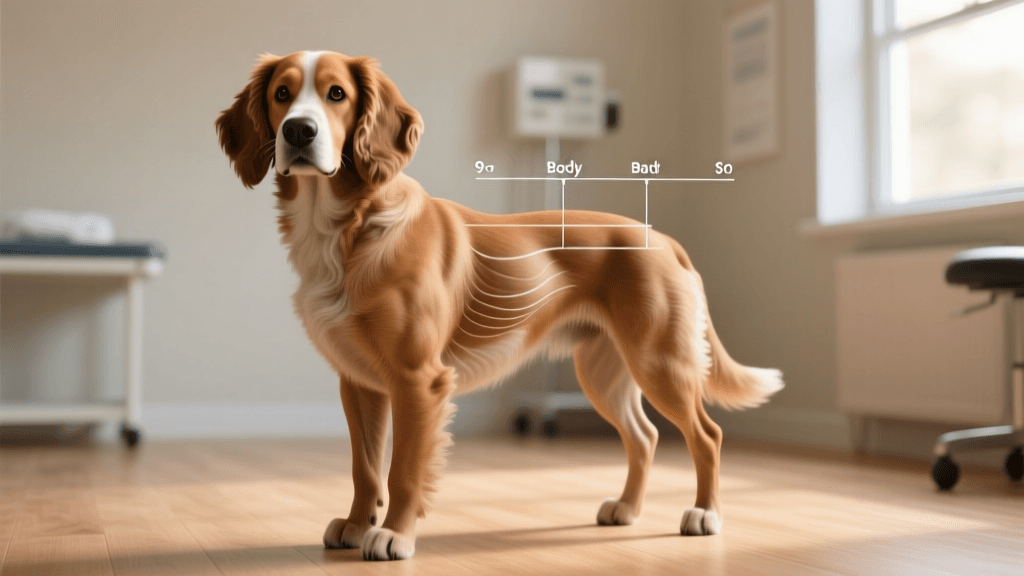
Veterinary professionals use a Body Condition Score (BCS) system to assess whether a dog is underweight, at an ideal weight, or overweight. The most widely used scale runs from 1 to 9, where 1 represents severe emaciation and 9 represents severe obesity. An ideal score sits between 4 and 5. The British Small Animal Veterinary Association (BSAVA) endorses this scoring method as a reliable clinical tool for monitoring weight in practice.
To assess your dog at home, run your hands along their ribcage. You should be able to feel each rib without pressing hard, but the ribs should not be visibly prominent. Looking from above, your dog should have a visible waist behind the ribcage. Viewed from the side, the abdomen should tuck upward behind the chest. If you cannot feel the ribs without firm pressure, or if there is no visible waist, your dog is likely carrying excess weight.
When to Involve Your Vet
If your dog scores 6 or above on the BCS scale, or if you notice sudden unexplained weight gain, a veterinary consultation is essential before starting any weight loss programme. Conditions such as hypothyroidism, hyperadrenocorticism (Cushing's disease), and certain medications can cause weight gain that dietary changes alone will not resolve. Your vet can rule out underlying causes and calculate a safe target weight and calorie intake for your individual dog.
Calculating the Right Calorie Intake
Every dog has a Resting Energy Requirement (RER), which is the number of calories needed to maintain basic bodily functions at rest. This is calculated using the formula: RER (kcal/day) = 70 × (body weight in kg)0.75. From this baseline, a multiplier is applied depending on the dog's life stage and activity level to arrive at the Maintenance Energy Requirement (MER).
For a neutered adult dog of average activity, the MER multiplier is typically 1.6. For an intact adult, it is around 1.8. For weight loss, many veterinary nutritionists recommend feeding to approximately 80% of the MER calculated at the dog's ideal target weight, not their current weight. This creates a controlled calorie deficit without causing nutritional deficiency.
"Feeding to the dog's ideal body weight rather than their current weight is a key principle of safe, effective weight management. Overfeeding during a weight loss programme is the single most common reason dogs fail to lose weight despite owners believing they are restricting intake." — BSAVA Manual of Canine and Feline Rehabilitation, Supportive and Palliative Care, 2012
Calorie counts on commercial pet food packaging are a useful starting point, but they are averages. Treats, chews, table scraps, and dental sticks all contribute to daily calorie intake and are frequently overlooked. A single medium-sized dental chew can contain between 70 and 90 kcal — equivalent to roughly 10% of the daily allowance for a 10 kg dog.
Choosing the Right Food for Weight Management
Not all dog foods are equal when it comes to supporting a healthy weight. The key nutritional factors to consider are calorie density, protein content, fibre content, and the quality of ingredients.
Prescription Weight Management Diets
For dogs that are clinically obese (BCS 7–9), your vet may recommend a prescription weight management diet. These are formulated to be lower in calories and fat while maintaining adequate protein to preserve lean muscle mass during weight loss. They typically contain higher levels of dietary fibre, which increases satiety and helps dogs feel fuller for longer. Royal Canin, Hills, and Purina Pro Plan all produce veterinary-exclusive weight management ranges that are commonly stocked at practices across the UK.
These diets should only be used under veterinary supervision, with regular weigh-ins every two to four weeks to monitor progress and adjust portions as needed. The PDSA recommends that dogs on a weight loss programme lose no more than 1–2% of their body weight per week to avoid muscle loss and nutritional imbalance.
Reading Food Labels
When selecting an over-the-counter food for weight maintenance, look for a product where a named meat source (such as chicken, salmon, or lamb) appears as the first ingredient. Avoid foods where cereals or derivatives make up the majority of the ingredient list. Check the metabolisable energy (ME) value, usually expressed as kcal per 100g. A lower ME value means you can feed a larger volume for the same number of calories, which helps dogs feel more satisfied.
Wet food generally has a lower calorie density than dry kibble due to its higher moisture content, making it a useful option for dogs that are prone to overeating. A typical wet food contains around 80–100 kcal per 100g, compared to 300–400 kcal per 100g for most dry kibbles.
Building an Effective Exercise Routine
Exercise burns calories, builds and maintains lean muscle, and supports cardiovascular health. However, the type and amount of exercise appropriate for your dog depends on their breed, age, current fitness level, and any existing health conditions.
As a general guideline, most adult dogs benefit from at least 30 minutes of moderate exercise per day, though many breeds require considerably more. Labradors, Border Collies, and Springer Spaniels, for example, typically need 60–90 minutes of vigorous activity daily. Brachycephalic breeds such as French Bulldogs and Pugs have reduced exercise tolerance due to their airway anatomy and should not be pushed into prolonged high-intensity activity, particularly in warm weather.
For overweight dogs beginning an exercise programme, start gradually. A 10-minute walk twice daily is a reasonable starting point for a sedentary dog, increasing duration by five minutes each week as fitness improves. Swimming is an excellent low-impact option for dogs with joint problems, as it provides cardiovascular and muscular benefits without loading the joints. Hydrotherapy centres such as those affiliated with the Canine Hydrotherapy Association offer structured programmes under qualified supervision.
Mental stimulation also plays a role in weight management. Puzzle feeders, sniff walks, and training sessions burn energy and reduce boredom-related eating. Replacing a portion of your dog's daily food allowance with puzzle feeder meals is a simple way to slow eating and increase engagement.
Monitoring Progress and Adjusting the Plan
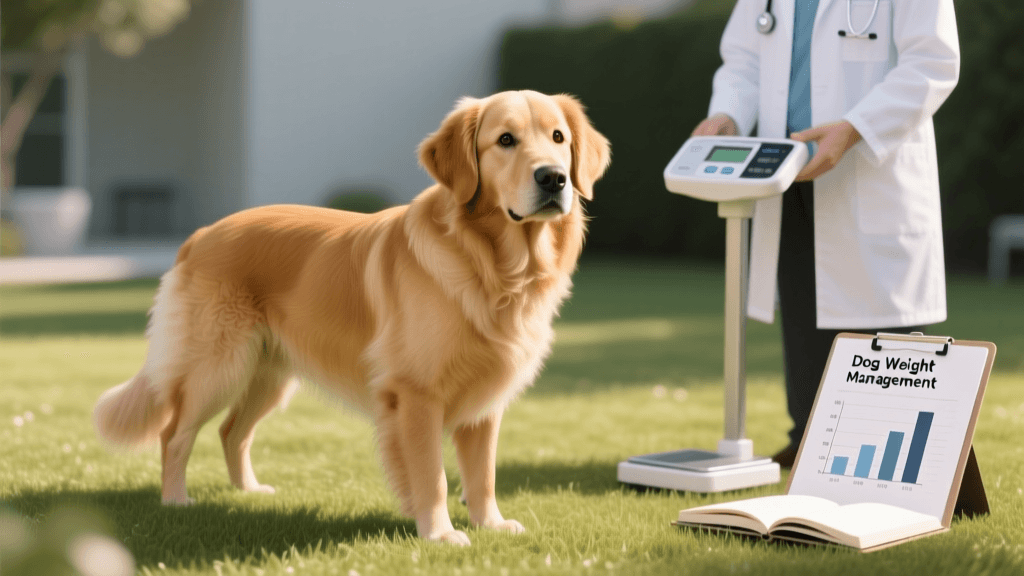
Consistent monitoring is what separates successful weight management from repeated cycles of loss and regain. Weigh your dog at the same time of day, on the same scales, every two weeks. Most veterinary practices will allow you to use their scales free of charge between appointments.
Keep a simple log of weight, food portions, treat intake, and exercise. This makes it easier to identify patterns — for example, whether weight loss stalls during weeks when treat intake increases, or whether a change in food brand affects progress.
| Dog's Current Weight | Target Weekly Loss | Approximate Daily Calorie Reduction |
|---|---|---|
| 5 kg | 50–100 g | 50–80 kcal |
| 10 kg | 100–200 g | 100–150 kcal |
| 20 kg | 200–400 g | 180–250 kcal |
| 30 kg | 300–600 g | 250–350 kcal |
| 40 kg | 400–800 g | 320–450 kcal |
If your dog is not losing weight despite following the plan, do not simply reduce food further without veterinary input. There may be a medical reason for the plateau, or the calorie content of the food may differ from what is stated on the label. Your vet can reassess the plan and make evidence-based adjustments.
Common Mistakes That Undermine Weight Management
Even well-intentioned owners frequently make errors that slow or prevent weight loss in their dogs. Being aware of these pitfalls makes it easier to avoid them.
- Measuring by eye rather than by weight: Cup measurements are notoriously inaccurate. Studies have shown that owners using cups can overfeed by 20–80% compared to the recommended portion. Use a digital kitchen scale to weigh every meal.
- Underestimating treat calories: Treats should make up no more than 10% of a dog's daily calorie allowance. If you are using treats for training, use tiny pieces — a pea-sized amount of chicken breast contains fewer than 5 kcal and is just as rewarding to most dogs as a larger commercial treat.
- Feeding multiple times from different family members: In multi-person households, it is common for dogs to receive meals or treats from several people without any one person knowing the total intake. Designate one person to manage feeding, or use a shared log.
- Stopping the programme once the dog looks better: Reaching target weight is the beginning of maintenance, not the end of the process. Transition gradually to a maintenance diet and continue monitoring weight monthly.
- Ignoring the calorie content of supplements: Certain joint supplements, fish oils, and flavoured medications contribute calories. A standard fish oil capsule contains approximately 9–14 kcal. These should be factored into the daily allowance.
The Role of Breed and Genetics
Some breeds are genetically predisposed to weight gain and require more careful management throughout their lives. Labrador Retrievers are particularly well studied in this regard. Research published by the University of Cambridge in 2016 identified a specific mutation in the POMC gene in Labradors that impairs the normal feeling of fullness after eating, making these dogs more food-motivated and prone to obesity than many other breeds.
Other breeds with elevated obesity risk include Cocker Spaniels, Beagles, Dachshunds, Basset Hounds, and Cavalier King Charles Spaniels. If you own one of these breeds, discuss weight management proactively with your vet from puppyhood rather than waiting until excess weight becomes a problem.
Neutering also affects weight management. Neutered dogs have lower energy requirements than intact dogs — typically around 20–30% lower — because sex hormones influence metabolic rate and activity levels. Adjusting food portions at the time of neutering, rather than waiting for weight gain to occur, is a straightforward preventive measure that many owners overlook.
Involving the Whole Household
Successful weight management requires consistency from everyone who interacts with the dog. Children, elderly relatives, and visitors are frequent sources of unplanned treats and table scraps. A brief, clear conversation with all household members about the dog's dietary plan — and why it matters — is often more effective than any dietary adjustment on its own.
- Post the dog's daily food allowance and treat limit somewhere visible, such as on the fridge or near the food storage area.
- Provide family members with pre-portioned, low-calorie treat options such as carrot sticks, cucumber slices, or blueberries, so they can still interact positively with the dog without exceeding the calorie budget.
- Ask visitors not to feed the dog without checking first, and explain that this is a health requirement rather than a preference.
The PDSA's 2023 PAW Report found that 13% of dog owners admitted to feeding their dog takeaway or fast food at least occasionally. While a single incident is unlikely to cause lasting harm, habitual feeding of high-fat human food significantly increases calorie intake and can contribute to pancreatitis as well as weight gain.
Keeping your dog at a healthy weight is one of the most impactful things you can do for their long-term health. Dogs at an ideal body condition score live on average 1.8 years longer than obese dogs, according to a study conducted by Banfield Pet Hospital across more than 50,000 dogs in the United States. The investment of time and attention required is modest compared to the benefit — more active years, fewer joint problems, reduced veterinary bills, and a happier, more energetic companion.
Beth Carrasco
All our authors care for dogs every day — read more of their work on the authors page.