Step-by-Step Cooperative Care Training for Dog Nail Trims
Learn how to use cooperative care training for stress-free dog nail trims. Follow our step-by-step guide with tools, timing, and expert tips.
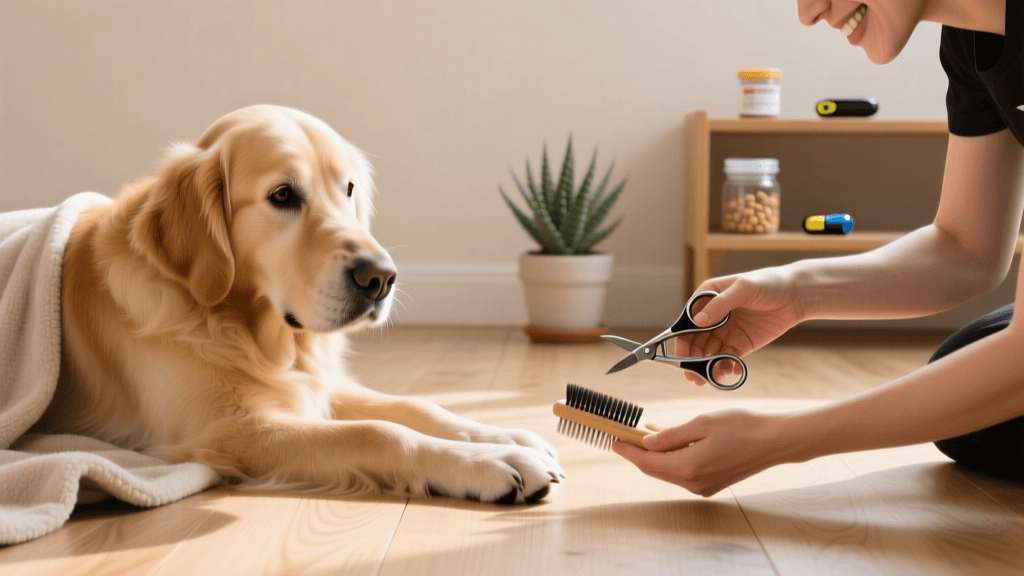
The Philosophy of Cooperative Care in Canine Wellness
For decades, the standard approach to canine grooming and veterinary care relied heavily on physical restraint. While this method often achieved the immediate goal of trimming a nail or drawing blood, it frequently came at a severe cost to the dog's mental health and long-term wellbeing. Forced restraint triggers the hypothalamic-pituitary-adrenal (HPA) axis, flooding the dog's system with cortisol and adrenaline. Over time, this leads to learned helplessness, deep-seated phobias, and aggressive defensive behaviors. According to the principles championed by Fear Free Pets, reducing fear, anxiety, and stress (FAS) is just as critical as treating physical ailments.
Cooperative care is a revolutionary, science-backed training methodology that gives the dog a voice and a choice. By teaching your dog to 'opt-in' to their own medical and grooming care, you transform nail trimming from a traumatic wrestling match into a bonding, enriching experience. This step-by-step guide will walk you through the exact protocol for teaching cooperative care for nail trims, complete with specific product recommendations, timing, and troubleshooting strategies.
Understanding Canine Nail Anatomy
Before beginning any training, it is vital to understand the anatomy of the canine nail. As noted by VCA Animal Hospitals, the nail consists of a hard outer shell and a soft inner core known as the 'quick.' The quick contains a dense network of blood vessels and nerves. Cutting into the quick is highly painful and causes profuse bleeding. In dogs with white or translucent nails, the quick is easily visible as a pinkish-red tube. In dogs with black or dark brown nails, the quick is hidden, requiring you to make tiny, incremental cuts and look for a chalky white or grayish center, which indicates you are safely in the keratin shell. If you see a black or pinkish dot in the center of the cut surface, stop immediately—you are millimeters away from the quick.
Gathering Your Toolkit: Products and Costs
Success in cooperative care relies heavily on high-value reinforcement and the right equipment. Budget approximately $75 to $100 for a complete, professional-grade home grooming kit.
- Rotary Grinder: The Dremel PawControl 7760-PET (Approx. $39.99). This cordless, variable-speed grinder is quieter than standard hardware Dremels and features a 45-degree paw guide to prevent fur tangling.
- Manual Clippers: Millers Forge Professional Dog Nail Clipper (Approx. $14.50). A heavy-duty scissor-style clipper with a bypass blade that prevents the nail from shattering or splintering.
- Styptic Powder: Kwik Stop Styptic Powder (Approx. $9.99). An absolute necessity for instantly clotting blood if you accidentally nick the quick.
- Licking Mat: LickiMat Soother (Approx. $12.00). The textured nubs slow down licking, which naturally releases endorphins and soothes the canine nervous system.
- High-Value Spread: Hyper Pet IQ Treat Spread (Approx. $6.99). A dog-safe, xylitol-free peanut butter alternative designed specifically for licking mats.
Step-by-Step Cooperative Care Training Protocol
This protocol is divided into distinct phases. Do not rush from one step to the next. Progress is measured in days or weeks, not minutes. If your dog shows signs of stress (lip licking, yawning, whale eye, or pulling away), immediately return to the previous successful step.
Step 1: Desensitization to the Environment and Tools (Days 1-5)
Begin by simply placing the Dremel and the manual clippers on the floor near your dog's bed or favorite resting spot. Do not attempt to use them or even touch them. Every time your dog voluntarily sniffs or investigates the tools, mark the behavior with a clicker or a verbal 'Yes!' and toss a high-value treat (like freeze-dried beef liver) away from the tools. This builds a positive classical association: the presence of the tools predicts excellent food. Next, turn the Dremel on at its lowest speed in a different room, gradually moving closer over several days while feeding treats, allowing your dog to acclimate to the 60-decibel hum without pressure.
Step 2: Introducing the Lick Mat and Positive Association (Days 6-10)
Smear a generous layer of the Hyper Pet IQ Treat Spread onto the LickiMat Soother. Present the mat to your dog in a quiet, familiar room. Allow them to lick the mat for 3 to 5 minutes. Licking is a self-soothing behavior for dogs; it lowers their heart rate and promotes a state of calm. Practice this daily until the presentation of the LickiMat becomes a reliable cue for your dog to settle into a relaxed, prone position.
Step 3: Paw Handling and the 'Opt-In' Touch (Weeks 2-3)
While your dog is engaged with the LickiMat, gently touch their shoulder. If they continue licking and remain relaxed, say 'Yes' and place a treat near the mat. Gradually work your way down the leg to the paw. The golden rule of cooperative care is the 'Opt-Out.' If your dog pulls their paw away or stops licking, you must immediately release the paw and withdraw your hand. This teaches the dog that they have control over the interaction, which paradoxically makes them far more willing to participate. Once your dog readily accepts a 5-second paw hold while licking, you are ready for the next phase.
Step 4: Tool Application Without Cutting (Week 4)
With the dog on the LickiMat, pick up the manual clippers or the powered-off Dremel. Gently touch the cold metal or plastic guide to a single nail. Do not squeeze or apply pressure. Mark ('Yes') and reward. Repeat this for all nails on one paw. Over subsequent sessions, begin to apply gentle squeezing pressure with the clippers without actually cutting the nail, or turn the Dremel on and let the vibrating guard rest against the nail for 1 second. This acclimates the dog to the physical sensation and sound of the trim.
Step 5: The First Cooperative Trim (Week 5 and Beyond)
When your dog is happily licking the mat and shows zero tension during tool application, you are ready to trim. Isolate one nail. Using the Millers Forge clippers, snip exactly 1 millimeter off the tip at a 45-degree angle. Examine the cross-section. If it is chalky white, you can take one more 1-millimeter slice. If you see a dark or pinkish center, stop immediately and move to the next nail. According to the American Kennel Club, it is far better to trim small amounts frequently (every 3 to 4 days) to encourage the quick to recede, rather than attempting a massive chop every month.
Tool Comparison Chart: Choosing the Right Equipment
Selecting the correct tool depends on your dog's temperament, nail thickness, and your own dexterity. Below is a structured comparison to help you decide.
| Tool Type | Mechanism | Noise Level | Risk of Quicking | Average Cost |
|---|---|---|---|---|
| Guillotine Clippers | Slicing blade pushed through a ring | Silent | High (can crush thick nails) | $10 - $15 |
| Scissor Clippers | Bypass shearing blades | Silent (audible snap) | Moderate | $12 - $20 |
| Rotary Grinder (Dremel) | Sanding friction via rotation | High (approx. 60dB) | Low (gradual removal) | $30 - $45 |
For cooperative care beginners, the Rotary Grinder is often recommended because it removes the nail gradually, eliminating the sudden 'snap' pressure that startles many dogs. However, if your dog is highly noise-sensitive, high-quality Scissor Clippers are the superior choice.
Troubleshooting Common Challenges
My dog won't touch the LickiMat when the tools are out.
This indicates that the classical conditioning in Step 1 was rushed. Put the tools away. Spend another week simply feeding high-value meals near the closed tool case. Do not proceed until the dog exhibits relaxed body language (soft eyes, loose wagging, relaxed ears) in the presence of the tools.
I accidentally quicked my dog and now they won't cooperate.
Accidents happen. If you nick the quick, immediately apply Kwik Stop Styptic Powder with firm pressure for 10 seconds. Do not force the dog to continue the session. End the training immediately, offer a 'jackpot' reward (a large handful of boiled chicken or cheese), and give your dog a 48-hour break from all nail-related activities. When you resume, drop back to Step 3 (Paw Handling) to rebuild trust.
My dog's nails are black and I am terrified of cutting the quick.
Use the 'flashlight trick.' Shine a small LED flashlight directly against the underside of the nail. In many dark nails, the quick will cast a shadow or appear as a slightly darker, opaque mass compared to the translucent keratin tip. Alternatively, use the Dremel grinder on a low speed, checking the nail tip every 3 seconds. When the center of the nail begins to look leathery or slightly spongy rather than hard and chalky, you are at the pre-quick and must stop.
Long-Term Maintenance and Veterinary Wellness
Cooperative care is not a one-time fix; it is a lifelong maintenance routine. The ASPCA recommends checking your dog's nails every two weeks. Overgrown nails alter the biomechanics of a dog's paws, leading to splayed toes, reduced traction, and eventually chronic joint pain and arthritis. By integrating these step-by-step cooperative care techniques, you are not merely achieving a cosmetic grooming goal; you are actively protecting your dog's orthopedic health, preserving their mental wellbeing, and deepening the bond of trust between you and your canine companion. Remember, patience and consistency are your greatest tools in the journey toward stress-free veterinary and grooming care.
priya-sutaria
All our authors care for dogs every day — read more of their work on the authors page.