How to Brush Your Dog's Teeth: A Step-by-Step Guide
Learn how to brush your dog's teeth with our step-by-step guide. Discover the best toothpastes, brushes, and routines for optimal canine dental health.
Why Canine Dental Health is Non-Negotiable
When we think about our dog's overall health and wellbeing, we often focus on diet, exercise, and joint care. However, oral hygiene is one of the most critical, yet frequently overlooked, aspects of veterinary preventive care. According to the American Veterinary Medical Association (AVMA), over 80% of dogs show signs of periodontal disease by the time they reach three years of age. If left untreated, the bacteria from infected gums can enter the bloodstream, potentially causing severe damage to the heart, liver, and kidneys.
Professional veterinary dental cleanings under anesthesia are essential, but they are costly (typically ranging from $500 to $1,500 depending on your region and the extent of extractions needed) and carry inherent anesthetic risks. The most effective, cost-efficient way to prevent plaque buildup and extend the time between professional cleanings is daily at-home brushing. This comprehensive, step-by-step training guide will teach you how to turn teeth brushing from a stressful wrestling match into a positive, bonding daily routine.
Gathering Your Dental Supplies
Before you begin training, you need the right tools. Never use human toothpaste. Human toothpaste contains fluoride and often xylitol, both of which are highly toxic to dogs when ingested. You must use a veterinary-formulated enzymatic toothpaste. Enzymatic toothpastes, such as the Virbac C.E.T. Enzymatic Toothpaste (typically $10 to $15), contain enzymes that continue to break down plaque even after you finish brushing. Poultry, beef, or seafood flavors are highly palatable and act as a built-in reward.
Choosing the right brush depends on your dog's size and your own dexterity. Below is a comparison chart to help you select the best tool for your specific needs.
Dental Tool Comparison Chart
| Tool Type | Average Cost | Pros | Cons | Best For |
|---|---|---|---|---|
| Finger Brush (Silicone) | $4 - $8 | Gentle, easy to maneuver, great for desensitization | Less effective at reaching deep gumlines and back teeth | Puppies, toy breeds, and highly anxious dogs |
| Dual-Head Bristle Brush | $5 - $10 | Cleans both sides of the tooth simultaneously, reaches back molars | Can be bulky for small mouths, requires better technique | Medium to large breeds, adult dogs with full dentition |
| Dental Wipes | $8 - $12 | Convenient, no rinsing required, easy to travel with | Cannot scrub away hardened tartar, misses interdental spaces | Quick touch-ups, senior dogs, or as a backup option |
Step-by-Step Training Guide to Brushing
Dogs do not naturally understand why you are putting a foreign object into their mouths. Forcing the issue will result in fear, biting, and a lifelong aversion to dental care. The American Kennel Club (AKC) recommends a gradual desensitization process. Plan to spend at least two weeks on the following four phases before attempting a full brushing session.
Phase 1: Muzzle Desensitization (Days 1-4)
The goal of this phase is to get your dog comfortable with you handling their mouth without any tools or toothpaste.
- Step 1: Choose a quiet time when your dog is relaxed, such as after a long walk or play session.
- Step 2: Sit beside your dog (not straddling or looming over them, which can trigger a fear response). Gently stroke their face and muzzle.
- Step 3: Use your index finger to gently lift their upper lip to expose the front teeth. Hold for one second, then release and immediately give a high-value treat (like a small piece of boiled chicken or freeze-dried liver).
- Step 4: Repeat this 5 to 10 times per session, twice a day. Gradually increase the time you hold the lip up, and slowly run your finger along the outside of their teeth and gums.
Phase 2: Introducing the Toothpaste (Days 5-8)
Now we introduce the flavor of the enzymatic toothpaste, turning it into a treat rather than a medical procedure.
- Step 1: Squeeze a pea-sized amount of Virbac C.E.T. enzymatic toothpaste onto your bare index finger.
- Step 2: Allow your dog to sniff and lick the toothpaste off your finger. Praise them enthusiastically.
- Step 3: Once they are eagerly licking the paste, apply a small dab directly onto their front canine teeth and gumline. Let them lick it off.
- Step 4: Progress to gently rubbing the toothpaste along the outer gumline with your finger, focusing on the buccal (cheek-facing) surfaces. Do not worry about the inside of the teeth; a dog's tongue naturally keeps the lingual surfaces relatively clean.
Phase 3: Introducing the Brush (Days 9-12)
It is time to bring in the physical brush, but we are not brushing yet. We are simply building a positive association with the tool.
- Step 1: Let your dog sniff the dual-head brush or finger brush. Reward them for investigating it.
- Step 2: Apply the toothpaste to the bristles. Let your dog lick the paste directly off the brush. This teaches them that the brush is a delivery system for a delicious treat.
- Step 3: Once they are comfortable, gently touch the bristles to a single front tooth. Praise and reward. Gradually work your way to the back premolars and the large carnassial teeth (the large chewing teeth in the upper jaw).
Phase 4: The Full Brushing Routine (Day 13 and Beyond)
Once your dog accepts the brush in their mouth, you can begin the actual mechanical cleaning process.
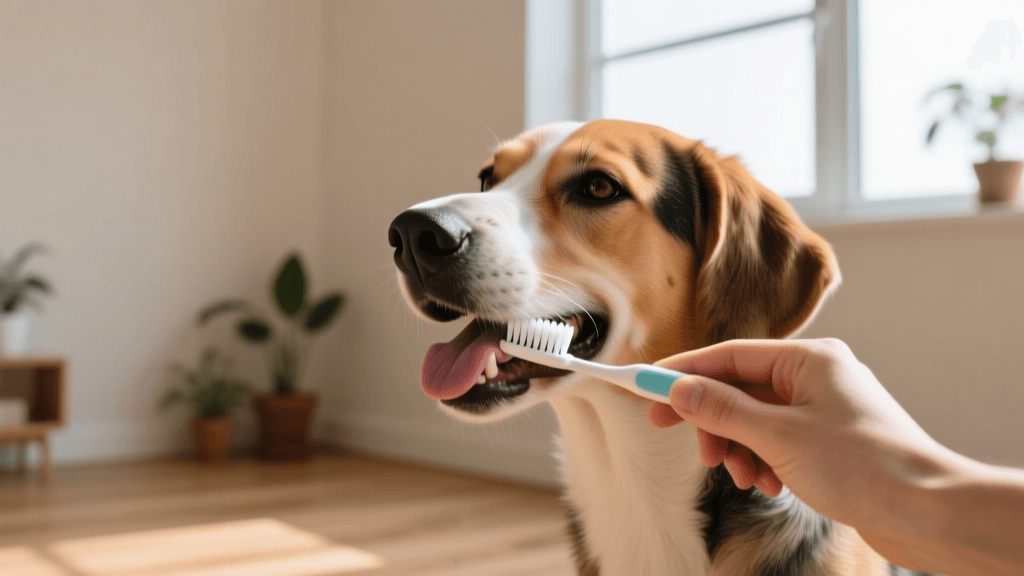
- Step 1: Hold the brush at a 45-degree angle to the tooth surface. This angle is crucial as it allows the bristles to reach slightly under the gumline where plaque-causing bacteria hide.
- Step 2: Use gentle, circular motions. Apply light pressure—you should see the bristles bend slightly, but you should not cause the gums to blanch (turn white) or bleed.
- Step 3: Divide the mouth into four quadrants (upper left, upper right, lower left, lower right). Spend about 15 to 20 seconds per quadrant. The entire process should take no more than 60 to 90 seconds.
- Step 4: Finish with a jackpot reward and a favorite game. Consistency is key; aim to brush daily, but at an absolute minimum, brush three times a week to disrupt the plaque biofilm before it hardens into calculus (tartar).
Troubleshooting Common Challenges
My dog bites the brush: This usually happens because the dog thinks the brush is a chew toy. Switch to a softer silicone finger brush temporarily, or use a dental wipe wrapped around your finger. Ensure you are using a calming, low-pitched voice rather than a high-pitched, exciting tone that might trigger play-biting.
My dog runs away when they see the toothpaste: You may have moved too quickly through the phases. Go back to Phase 1 for a week. Leave the toothpaste tube on the counter and occasionally offer a dab on your finger as a random treat throughout the day to rebuild positive associations.
My dog's gums bleed slightly: Mild bleeding can occur if your dog already has early-stage gingivitis. Do not stop brushing; gentle, consistent brushing will actually help heal the inflammation over a week or two. However, if the bleeding is heavy, or if your dog shows signs of pain (whining, pulling away, dropping food), stop immediately and consult your veterinarian, as they may have a fractured tooth or advanced periodontal disease requiring professional extraction.
Supplemental Dental Care Options
While brushing is the gold standard, supplemental care can help maintain oral health, especially on days you miss or for dogs that absolutely will not tolerate a brush. When selecting dental chews or water additives, always look for the Veterinary Oral Health Council (VOHC) seal of acceptance. The VOHC is an independent entity that rigorously tests pet dental products to verify their claims of reducing plaque and tartar.
Excellent VOHC-accepted options include Greenies Original Dental Dog Treats and Purina DentaLife chews. These treats are designed with a porous texture that mechanically scrubs the teeth as the dog chews. Costing roughly $1.00 to $1.50 per treat, they are a cost-effective addition to your routine. Additionally, water additives like TROPICLEAN Fresh Breath (approx. $12 per bottle) can help reduce oral bacteria when added to your dog's daily drinking water, though they should never replace mechanical brushing.
Conclusion
Training your dog to accept teeth brushing is an investment of time that pays massive dividends in their long-term health and your wallet. By utilizing high-quality enzymatic toothpaste, selecting the right brush, and following a patient, step-by-step desensitization protocol, you can prevent painful periodontal disease and ensure your dog's smile remains as bright and healthy as their spirit. Remember to schedule annual veterinary wellness exams, where your vet can assess your home-care efforts and recommend professional cleanings when necessary.
robin-maitland
All our authors care for dogs every day — read more of their work on the authors page.