Training Senior Dogs: Adapting Obedience for Aging Pets
Learn how to adapt obedience and trick training for senior dogs. Discover low-impact exercises, cognitive enrichment, and joint-friendly tips for aging pets.

The Myth of the "Old Dog"
The phrase "you can't teach an old dog new tricks" is not only a cliché, but it is also scientifically inaccurate. Senior dogs possess a remarkable capacity for learning, and engaging their minds through adapted obedience training is one of the most effective ways to maintain their cognitive health and deepen your bond. However, training an aging dog requires a fundamental shift in perspective. You are no longer building a foundation of high-drive obedience; you are preserving mobility, stimulating neural pathways, and accommodating the physical realities of an aging body.
According to the American Veterinary Medical Association (AVMA), senior dogs require specialized care that addresses their changing physical and mental needs. Training is a vital component of this care, provided it is modified to prevent pain and frustration. In this comprehensive guide, we will explore how to adapt your training regimen to suit the unique needs of your aging companion, ensuring their golden years are as enriching and comfortable as possible.
Understanding Physical and Cognitive Changes
Arthritis and Mobility Issues
Osteoarthritis (OA) is incredibly common in aging canines, affecting a significant majority of dogs over the age of eight. The cartilage that cushions their joints gradually wears away, making repetitive movements—such as sitting, lying down, or jumping—painful. When a senior dog hesitates to perform a previously mastered command like "sit" or "down," it is rarely an act of defiance; it is often a physical limitation. Forcing a dog with hip dysplasia or spinal stiffness into traditional obedience positions can cause micro-tears in the joint capsule and lead to long-term aversion to training.
Canine Cognitive Dysfunction (CCD)
Similar to Alzheimer's disease in humans, Canine Cognitive Dysfunction (CCD) affects a dog's memory, learning, and perception. The ASPCA notes that signs of CCD include disorientation, altered sleep-wake cycles, and a decreased ability to recognize familiar commands or family members. While CCD cannot be cured, mental stimulation through low-stress, high-reward training exercises can help build "cognitive reserve," slowing the progression of symptoms and keeping your dog's brain actively engaged.
Essential Gear for Senior Dog Training
Before beginning a modified training program, invest in equipment that supports your dog's aging body. Standard training gear may no longer be appropriate.
- Orthopedic Training Mats: Instead of asking your dog to lie down on a hard floor, use a dedicated orthopedic mat. Brands like Furhaven or Big Barker offer supportive, memory-foam resting spots ($45 to $250+ depending on size). This provides a clear, comfortable target for "place" commands.
- Non-Slip Rugs: Aging dogs often lose traction on hardwood or tile floors, leading to anxiety and splaying. Place rubber-backed runner rugs ($30 to $50) in your primary training areas to give them the confidence to stand and move without fear of slipping.
- Soft, Low-Calorie Treats: Senior dogs often have dental issues or sensitive digestion. Avoid hard biscuits. Opt for soft, easily chewable treats like Zuke's Mini Naturals (approx. $6.99 per bag), which are only 3 calories each, allowing for high-frequency rewarding without weight gain.
- Snuffle Mats: For scent-based enrichment, a fabric snuffle mat ($15 to $30) encourages natural foraging behaviors and provides immense mental stimulation without requiring physical exertion.
Modifying Traditional Commands: A Comparison Guide
To protect your dog's joints while maintaining their obedience, you must translate traditional commands into senior-friendly alternatives. The Humane Society of the United States emphasizes the importance of adapting to your pet's physical limitations to ensure their quality of life.
| Traditional Command | Senior-Friendly Modification | Primary Reason for Change |
|---|---|---|
| Sit | "Touch" (Nose Target) or "Stand-Stay" | Reduces strain on arthritic hips and stifles when lowering the hindquarters. |
| Down | "Settle" on an elevated cot or thick mat | Prevents the pain of lowering to cold, hard floors and makes getting back up easier. |
| Shake / Paw | "Look" or "Chin Rest" | Eliminates the need to lift weight off carpal/wrist joints, which are prone to arthritis. |
| Come (Recall) | Short-distance recall or Scent Trail | Accommodates reduced vision, hearing loss, and decreased cardiovascular stamina. |
Top 3 Low-Impact Training Exercises for Seniors
1. Nose Targeting ("Touch")
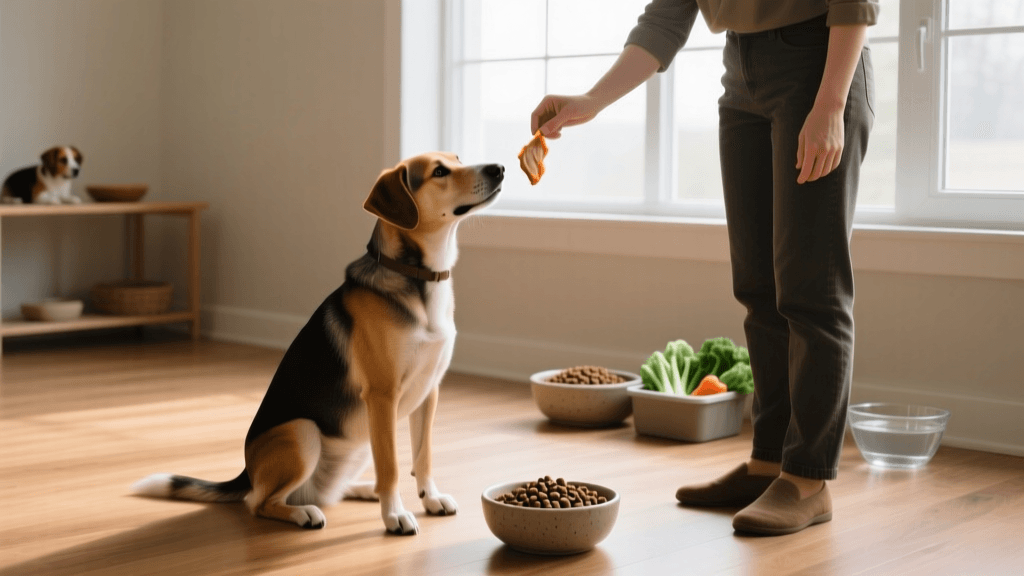
Nose targeting is an invaluable replacement for the "sit" command. It gives your dog a job to do while remaining in a comfortable standing position, and it is highly effective for guiding them into cars or onto grooming tables without physical lifting.
How to Teach It:
- Hold a pea-sized treat between your fingers and present your open palm about two inches from your dog's nose.
- The moment your dog sniffs or nudges your hand, say "Yes!" and give them the treat from your other hand.
- Repeat this 5 to 10 times. Once they reliably bump your hand, introduce the verbal cue "Touch" just before presenting your palm.
- Gradually move your hand higher, lower, or slightly to the side to encourage gentle neck mobility and stretching.
2. Scent Work ("Find It")
As dogs age, their vision and hearing may decline, but their olfactory senses remain remarkably sharp. Scent work leverages their strongest sense, providing deep mental exhaustion that rivals a long physical hike.
How to Teach It:
- Start with your dog in a "stand-stay" or have a partner gently hold their collar. Place a strong-smelling treat, such as freeze-dried beef liver ($12 for 3oz), on the floor in plain sight.
- Say "Find it!" and release them to eat the treat.
- Progress to hiding the treat under a household object like a plastic cup or behind a table leg while they watch.
- Eventually, move to hiding treats in different rooms or using a snuffle mat. Keep the search area small and well-lit to accommodate any vision loss or lenticular sclerosis (cloudy eyes).
3. Mat Training ("Place" / "Settle")
Teaching your senior dog to go to a specific, comfortable bed is excellent for managing anxiety and keeping them out from underfoot in the kitchen.
How to Teach It:
- Place the orthopedic mat on a non-slip surface. Toss a soft treat directly onto the center of the mat.
- When all four paws are on the mat, offer continuous praise and drop 2 to 3 more treats onto the bed.
- Add the cue "Place" as they step onto it. Do not require a "down" position; a comfortable stand or relaxed sit is perfectly acceptable.
- Practice having them stay on the mat for 30 seconds to 1 minute while you sit nearby, rewarding them intermittently for calm behavior.
Session Timing and Treat Management
When training a senior dog, the structure of your sessions is just as critical as the exercises themselves. Aging dogs fatigue quickly, both physically and mentally. Keep your training sessions strictly between 3 to 5 minutes in length, ideally practicing 2 to 3 times a day rather than one long, exhausting session.
Pay close attention to your dog's body language. Signs of fatigue in older dogs include excessive panting, lip licking, yawning, or a sudden loss of interest in high-value treats. If you observe these stress signals, end the session immediately on a positive note with a simple command they know well, like a gentle "touch," followed by a jackpot reward.
Finally, monitor their caloric intake. Because senior dogs have slower metabolisms and lower activity levels, training treats can quickly lead to obesity, which exacerbates joint pain. Deduct the calories used during training from their daily meal allowance, or simply use their measured daily kibble as training rewards if they are sufficiently food-motivated.
Conclusion
Adapting your training approach for a senior dog is a profound act of empathy and love. By replacing high-impact, joint-straining commands with low-impact, cognitively stimulating exercises, you allow your aging dog to continue experiencing the joy of learning and the satisfaction of earning rewards. Training is no longer about perfect obedience; it is about maintaining their dignity, preserving their mobility, and ensuring that their mind stays as vibrant as their spirit. With patience, the right gear, and a few modified tricks, your senior dog will continue to thrive in their golden years.
jonas-cole
All our authors care for dogs every day — read more of their work on the authors page.