2026 Canine Scent Work Games: Bond Through Nosework
Discover how 2026 canine scent work games build deep trust. Learn step-by-step nosework imprinting routines to bond with your dog through olfactory play.
Dogs experience the world primarily through their noses. While a human might walk into a park and see a beautiful landscape of green grass and towering trees, a dog reads a complex, invisible tapestry of pheromones, territorial markers, and environmental shifts. In 2026, the shift toward species-appropriate enrichment has moved far beyond basic puzzle toys and into the realm of structured canine scent work. Often referred to as nosework, this activity is not just a game; it is a profound psychological exercise that taps into your dog's most primal and powerful sense.
Engaging in scent work with your dog is one of the most effective ways to build a deep, unshakeable bond. Unlike obedience training, which often relies on the dog conforming to human rules, scent work requires the human to step back, observe, and trust the dog's natural abilities. This role reversal fosters immense mutual respect and trust. In this comprehensive guide, we will explore the psychology behind olfactory bonding, the essential gear you need for home nosework, and a step-by-step imprinting routine to transform your daily walks and living room sessions into powerful bonding experiences.
The Psychology of Scent and Canine Bonding
To understand why scent work builds such a strong relationship, we must look at canine neurobiology. A dog's olfactory bulb is proportionally 40 times larger than a human's, and they possess up to 300 million olfactory receptors compared to our mere 6 million. When a dog actively uses their nose to hunt for a specific odor, their brain releases a massive cascade of dopamine—the neurotransmitter associated with pleasure, motivation, and reward.
According to the American Kennel Club's Scent Work program, allowing dogs to engage in natural hunting behaviors significantly reduces anxiety and builds confidence. When you act as the facilitator of this dopamine release, your dog begins to associate you with the ultimate psychological reward. You are no longer just the provider of kibble; you are the gateway to their most fulfilling biological imperative. Furthermore, scent work is a cooperative endeavor. The dog has the nose, but the human has the eyes and the strategy. Learning to read your dog's subtle body language as they track an odor cone forces you to become deeply attuned to their non-verbal cues, creating a shared language that translates to better communication in all other areas of your life together.
Essential Gear for 2026 Home Nosework
You do not need an expensive setup to begin building trust through nosework. The modern enrichment market offers fantastic tools, but the foundations can be built with simple, accessible items. Here is what you need to start your 2026 home scent work journey:
- Target Odors: In competitive nosework, dogs search for Birch, Anise, and Clove. For home bonding, you can purchase pre-diluted, dog-safe essential oil kits specifically designed for canine scent work. Never use undiluted essential oils directly on your dog or their gear.
- Scent Vessels (Hides): Small metal tins with holes punched in the lids, or specialized plastic scent tubes. These hold the Q-tip infused with the target odor, ensuring the dog searches for the smell, not the physical object.
- Cotton Swabs: Standard Q-tips cut in half. These are used to absorb the diluted essential oil and are placed inside the scent vessels.
- High-Value Reward Paste: While some dogs work for kibble, scent work requires a 'jackpot' reward to build drive. Freeze-dried beef liver, chicken baby food, or a specialized reward paste squeezed from a tube works best for rapid, high-motivation rewarding.
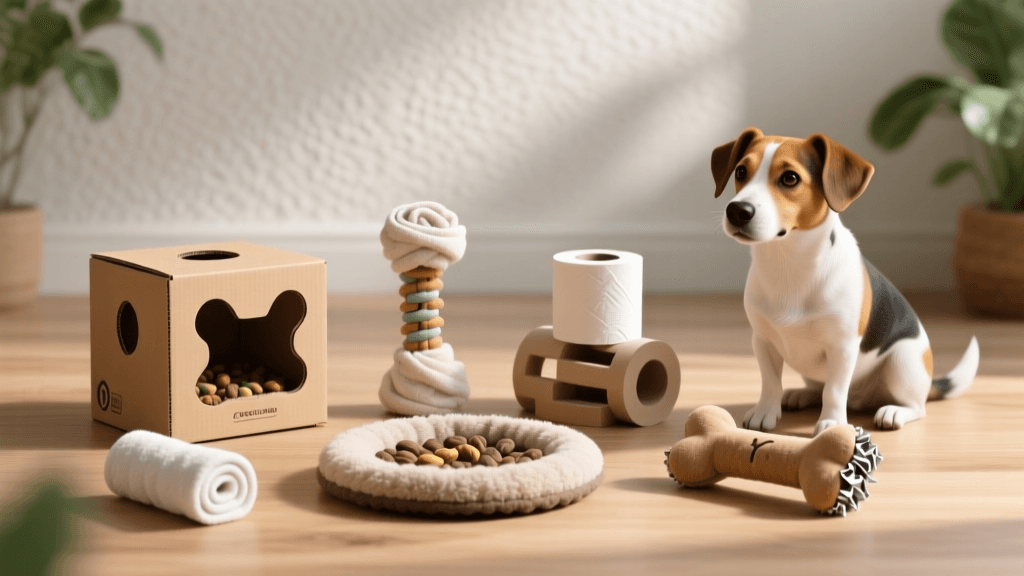
- Snuffle Mats for Foundation: Products like the Sniffiz Snuffle Mat or the Paw5 Wooly Mat are excellent for teaching the foundational concept of 'hunting for food' before introducing specific target odors. The Humane Society's enrichment guidelines highly recommend foraging mats as a baseline for mental stimulation in domestic dogs.
Step-by-Step Scent Imprinting Routine
Imprinting is the process of teaching your dog that a specific smell equals a massive reward. This phase is critical and should be done in a quiet, low-distraction environment like your living room or bedroom. Keep sessions incredibly short—no more than 3 to 5 minutes—to prevent mental fatigue and frustration.
Phase 1: The Pairing Game
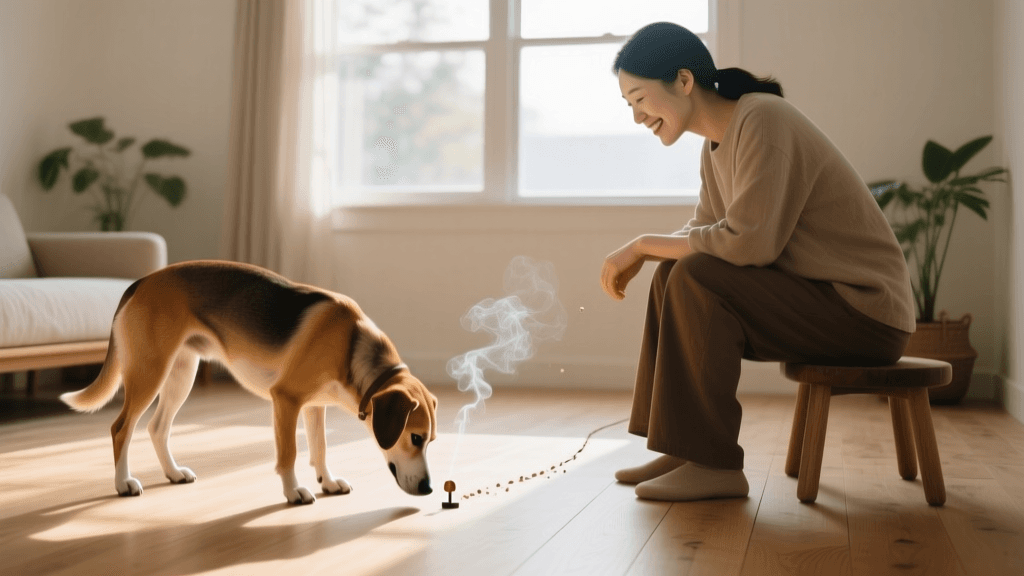
Place your metal scent tin on the floor. The tin should contain a cotton swab with a single drop of diluted Birch oil. The moment the tin touches the floor, immediately place three to four high-value treats directly on top of or immediately next to the tin. The goal is for the dog to eat the treats while simultaneously inhaling the odor of the Birch. Repeat this 5 to 10 times in a session. You are not asking the dog to do anything; you are simply wiring their brain to understand: Birch odor = delicious food appears.
Phase 2: The 'Find It' Cue and the Search
Once your dog is visibly excited when they see the tin (panting, wagging, staring at your hands), it is time to introduce the search. Hold your dog gently or have a partner hold them. Place the tin on the floor, about two feet away. Say your cue word, such as 'Find it!' or 'Search!', and release the dog. The moment their nose touches the tin or they show clear interest in the odor, mark the behavior with a 'Yes!' and deliver a jackpot of treats directly at the source (the tin).
Phase 3: Adding Complexity and Elevation
As your dog masters finding the tin on the floor, begin to change the picture. Place the tin on a chair, behind a table leg, or on a low bookshelf. Dogs naturally search at nose-level, so teaching them to lift their heads and search vertically builds immense confidence and physical awareness. Always reward directly at the source of the odor so the dog learns that the odor itself, not the floor or the furniture, is what pays the reward.
2026 Scent Work Progression Chart
Tracking your progress is essential for maintaining a structured, frustration-free bonding routine. Use the following chart to guide your daily sessions.
| Progression Stage | Setup Complexity | Primary Goal | Time Commitment |
|---|---|---|---|
| Stage 1: Pairing | Single tin on an open floor. | Associate target odor with high-value food reward. | 3 minutes, twice daily. |
| Stage 2: The Simple Search | Single tin in the same room, slightly off-center. | Introduce the 'Search' cue and build drive to the source. | 5 minutes, once daily. |
| Stage 3: Environmental Blanks | Single tin hidden behind furniture or on a chair. | Teach the dog to navigate physical obstacles to find odor. | 10 minutes, 3x a week. |
| Stage 4: The Blank Room | Single tin hidden in a new room with no prior odor history. | Build confidence in novel environments and generalize the cue. | 15 minutes, 2x a week. |
| Stage 5: Multiple Hides | Two tins in the same room, spaced far apart. | Teach the dog to return to the search after finding the first hide. | 15 minutes, weekly. |
Reading Your Dog's Olfactory Body Language
The true magic of scent work for relationship building lies in learning to 'listen' to your dog's nose. Because you cannot smell what they are smelling, you must become an expert in reading their physical reactions to invisible odor cones. When you accurately read your dog's behavior and reward them at the right moment, trust skyrockets.
- Change of Behavior (COB): This is the very first sign your dog has hit the edge of an odor cone. It might be a sudden head snap, a closing of the mouth, a quickening of pace, or an abrupt pause. Recognizing the COB is the key to knowing your dog is 'in odor'.
- Bracketing: As the dog gets closer to the source, they will often move their head left and right, trying to determine the edges of the scent cone. This looks like a snake-like head movement.
- The Source Response: When the dog's nose touches the exact location of the hide, you will see a distinct change. The breathing rate will alter, the tail might freeze or wag furiously, and they will often look back at you, expecting their reward. This is your cue to throw a jackpot party.
Troubleshooting Common Scent Work Hurdles
Even with the best intentions, you may hit roadblocks. The key to maintaining the bond is to never show frustration. If your dog fails, it is simply a reflection of the setup being too difficult, not a failure of the dog.
Hurdle: The dog is frantically searching using their eyes, not their nose.
Solution: You have likely progressed too quickly, or the environment is too visually stimulating. Return to the Phase 1 Pairing Game. Remind the dog that the nose is the tool that unlocks the reward. Ensure your scent vessels are completely opaque and do not look like treat jars.
Hurdle: The dog gives up and walks away after 30 seconds.
Solution: The hide is too difficult, or the dog is mentally fatigued. Scent work burns a tremendous amount of calories and glucose in the brain. End the session on a positive note by making the hide incredibly easy (e.g., right next to their paw), reward heavily, and put the gear away. Keep them wanting more.
Hurdle: The dog alerts on the food in your pocket instead of the tin.
Solution: You are 'luring' rather than rewarding. Keep your treat hand entirely out of the picture until the exact millisecond the dog commits to the odor source. Mark the behavior verbally ('Yes!'), and then bring the food to the source.
Conclusion: A Lifelong Bonding Journey
Integrating canine scent work into your 2026 daily routine is about much more than teaching a cool party trick. It is a profound commitment to honoring your dog's biological nature. By stepping into their olfactory world, you are telling your dog that you see them, you respect their instincts, and you are a willing partner in their adventures. Whether you spend ten minutes a day hiding a Birch tin in your living room or you eventually progress to competitive nosework trials, the shared language you develop through scent will forge a bond that transcends basic obedience, resulting in a happier, more confident, and deeply connected canine companion.
jonas-cole
All our authors care for dogs every day — read more of their work on the authors page.