Holistic Puppy Proofing: Non-Toxic Home Prep Guide 2026
Prepare your home for a new dog using our 2026 holistic puppy proofing guide. Discover non-toxic cleaners, safe chews, and natural calming tips.
The Hidden Chemical Burden in Modern Homes
Bringing a new puppy or rescue dog into your home is a profound milestone, but traditional puppy-proofing checklists often miss the most critical hazards of all: invisible chemical toxins. As we navigate 2026, holistic veterinarians and canine environmental researchers are increasingly sounding the alarm about the cumulative effect of household chemicals on canine health. Standard puppy-proofing usually focuses on securing electrical cords and putting away shoes. While these are important steps according to the American Kennel Club's puppy preparation guidelines, a truly holistic approach requires us to examine the microscopic and chemical environment our dogs will inhabit.
Dogs are uniquely vulnerable to indoor environmental toxins. They spend the vast majority of their time indoors, lounging on floors where heavy chemical residues settle, and they explore the world primarily through their mouths and noses. By adopting a natural and holistic approach to home preparation, you are not just preventing acute poisoning; you are actively reducing your dog's long-term toxic load, supporting their endocrine system, and fostering a biologically appropriate living space from day one.
Canine Olfactory Sensitivity and VOCs
To understand why holistic home prep is vital, we must first look at canine biology. A dog's olfactory system is extraordinarily complex, possessing up to 300 million olfactory receptors compared to our mere six million. When we use synthetic air fresheners, aerosol sprays, or harsh chemical cleaners, we are not just masking odors; we are assaulting our dog's primary sensory organ.
Many conventional household products emit Volatile Organic Compounds (VOCs). The Environmental Protection Agency (EPA) notes that VOCs can cause severe respiratory irritation, headaches, and long-term organ damage. For a puppy whose respiratory and immune systems are still developing, chronic exposure to VOCs from synthetic floor cleaners and off-gassing furniture can trigger early-onset allergies and canine asthma. In 2026, the holistic standard for puppy-proofing mandates a strict 'low-VOC' or 'zero-VOC' environment, prioritizing natural ventilation and botanical air purification over chemical aerosols.
Room-by-Room Non-Toxic Transition
Transitioning to a holistic home does not require throwing away everything you own, but it does require strategic replacements in areas where your dog will spend the most time. Below is a comprehensive comparison of conventional hazards and their natural alternatives for your new dog's environment.
| Home Area | Conventional Hazard | Holistic 2026 Alternative | Estimated Cost | Primary Health Benefit |
|---|---|---|---|---|
| Kitchen Flooring | Bleach & Quaternary Ammonium Cleaners | Castile Soap & White Vinegar Solution | $15 - $25 | Prevents paw pad burns and gastrointestinal upset from licking. |
| Feeding Station | BPA/BPS Plastic Bowls | Food-Grade Stainless Steel or Ceramic | $30 - $50 | Eliminates endocrine disruptors and prevents canine acne. |
| Living Room Air | Synthetic Plug-in Fragrances | HEPA Filtration & Pet-Safe Essential Oil Diffusers | $80 - $150 | Protects olfactory receptors and reduces respiratory inflammation. |
| Puppy Bedding | Polyester Beds with PFAS Waterproofing | Organic Hemp & Natural Latex Mattresses | $120 - $200 | Avoids 'forever chemicals' linked to thyroid and liver issues. |
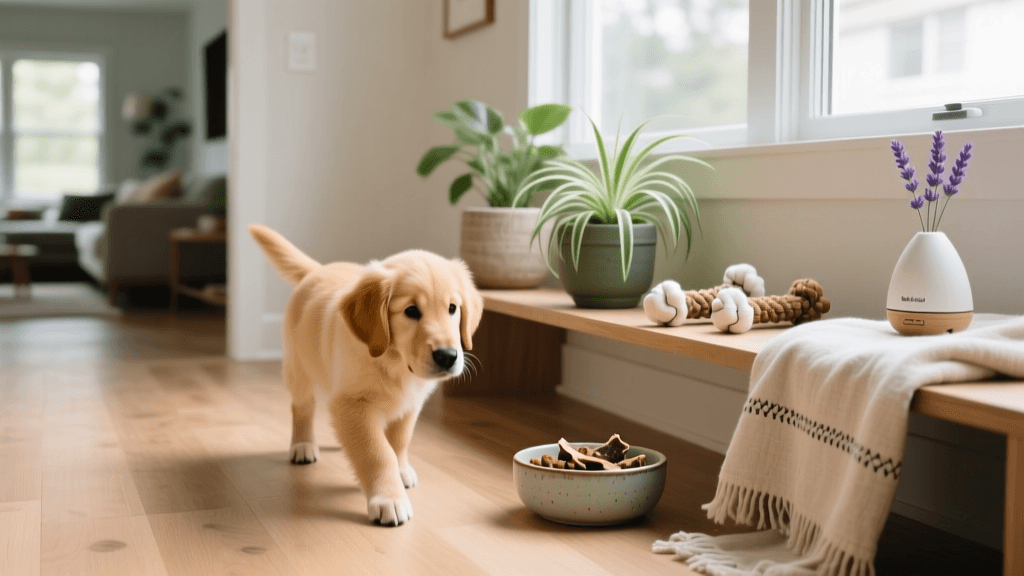
| Chew Toy Bin | Synthetic Nylon & Scented Rubber | Olive Wood Roots & Organic Cotton Ropes | $20 - $40 | Prevents microplastic ingestion and chemical leaching. |
Holistic Cleaning Protocols for 2026
The cleaning aisle is a minefield for new pet owners. Products marketed as 'pet-safe' often still contain synthetic fragrances and preservatives like methylisothiazolinone, which can trigger severe contact dermatitis in puppies with delicate skin. A holistic cleaning protocol relies on simple, biodegradable, and non-toxic ingredients.
For hard surface floors, a mixture of warm water, a splash of distilled white vinegar, and a few drops of high-quality, unscented castile soap provides excellent cleaning power without leaving a toxic residue. When it comes to carpet cleaning and stain removal for inevitable puppy accidents, enzyme-based cleaners derived from natural plant and bacterial cultures are the gold standard. These break down uric acid at the molecular level without relying on harsh oxidizing agents that can bleach your carpets and irritate your dog's paws. Always ensure that any natural cleaner is thoroughly dried before allowing your puppy to walk on the surface, as even natural essential oils can be potent in their concentrated liquid form.
Biologically Appropriate Chewing: The Microplastic Crisis
Puppies need to chew; it is a biological imperative that helps soothe teething pain and develops jaw strength. However, the pet industry has historically relied heavily on synthetic nylon bones, cheap rubber toys, and plastic-infused 'edible' chews. In 2026, veterinary awareness regarding microplastic ingestion in companion animals is at an all-time high. Every time a puppy gnaws on a synthetic toy, they ingest microscopic plastic particles that can accumulate in their gastrointestinal tract and bloodstream.
A holistic approach to puppy chewing focuses on natural, biodegradable, and single-ingredient alternatives. Olive wood roots and coffee wood chews are exceptional, sustainable options that splinter into soft, digestible fibers rather than sharp, dangerous shards. For high-value chewing sessions, naturally shed elk or deer antlers provide essential minerals like calcium and phosphorus, though they should always be supervised and sized appropriately to prevent tooth fractures. Organic, unbleached cotton rope toys offer a safe alternative to synthetic nylon ropes, ensuring that if your puppy accidentally swallows a fiber, it will pass through their system without causing a synthetic blockage.
Botanical Hazards and Safe Indoor Jungles
Houseplants remain a staple of modern home decor, but many popular varieties are highly toxic to dogs. The ASPCA's comprehensive toxic plant database highlights that common plants like Sago Palms, Lilies, Pothos, and Monsteras contain insoluble calcium oxalates or deadly hepatotoxins. A curious puppy investigating the lower leaves of a toxic plant can suffer from severe oral irritation, vomiting, and in extreme cases, fatal organ failure.
Holistic puppy-proofing requires either elevating all toxic plants to completely inaccessible heights or, preferably, replacing them with canine-safe botanicals. Creating a 'safe indoor jungle' not only protects your puppy but also contributes to natural indoor air purification. Excellent pet-safe alternatives include the Spider Plant (Chlorophytum comosum), Calathea species, Boston Ferns, and the Parlor Palm. These plants are non-toxic if ingested and can even provide a stimulating, natural visual environment for your new dog.
The Holistic Sanctuary: Bedding, PFAS, and Sleep
Your dog will spend up to 14 hours a day sleeping, making their bed one of the most critical investments in their holistic health. Historically, pet beds have been manufactured using synthetic polyurethane foams that off-gas VOCs, and they are frequently treated with PFAS (per- and polyfluoroalkyl substances) to make the covers water-resistant. PFAS, commonly known as 'forever chemicals,' do not break down in the environment or the body, and recent 2026 veterinary studies continue to link them to immune suppression and endocrine disruption in canines.
When preparing your dog's sleeping sanctuary, seek out beds constructed from natural, breathable materials. Organic hemp canvas is incredibly durable, naturally resistant to mold and mildew, and requires far less water to produce than conventional cotton. For the filling, natural shredded latex (derived from rubber trees) or organic wool provides excellent orthopedic support without the chemical flame retardants found in synthetic foams. Wool is a miraculous natural material; it is inherently flame-resistant, regulates temperature beautifully, and wicks moisture away from your puppy's coat, keeping them comfortable and dry.
Sensory Calming and Bioacoustics
Finally, holistic puppy-proofing extends beyond the physical and chemical environment into the sensory realm. The transition to a new home is inherently stressful for a dog. Instead of relying immediately on synthetic calming medications, holistic practitioners recommend utilizing bioacoustics and natural pheromones to ease the transition. Playing clinically tested, species-specific bioacoustic music—which simplifies classical arrangements to match the canine heart rate and hearing range—can significantly lower cortisol levels in newly adopted dogs.
Pairing this auditory therapy with a natural, plant-based canine calming pheromone diffuser creates a multi-sensory sanctuary. By addressing the invisible chemical hazards, providing biologically appropriate chewing outlets, and curating a low-stress sensory environment, you are setting the foundation for a vibrant, naturally healthy life for your new companion. Welcome to the future of conscious, holistic dog ownership.
aaron-whyte
All our authors care for dogs every day — read more of their work on the authors page.