Diagnosing and Solving Resource Guarding in Adopted Dogs
Discover how to diagnose and solve resource guarding in newly adopted dogs. Learn actionable steps, trading games, and management strategies for a safe home.
The Honeymoon Phase is Over: Recognizing Resource Guarding
Bringing a newly adopted rescue dog home is an exhilarating experience. During the first few days, your new companion may seem incredibly polite, quiet, and eager to please. However, as the dog begins to decompress and realize that your home is their permanent territory, hidden behavioral quirks often surface. One of the most common and alarming issues new adopters face is resource guarding. According to the American Kennel Club (AKC), resource guarding is a natural survival behavior where a dog exhibits aggressive or defensive body language to maintain control over a valued item, space, or person.
In a shelter or foster environment, resources like food, prime sleeping spots, and human attention are often scarce. Dogs learn that they must fiercely protect what they have to survive. When they transition into a loving home, it takes time for their nervous system to regulate and understand that resources are now abundant. Understanding the famous '3-3-3 Rule' of dog adoption is critical here: it takes 3 days for a dog to decompress, 3 weeks to learn your routine, and 3 months to truly feel at home. Resource guarding frequently rears its head right around the 3-week mark, catching many new owners completely off guard.
Diagnosing the Severity: Is It Fear or Aggression?
Before implementing a solution, you must accurately diagnose the severity of the guarding behavior. Dogs rarely bite 'out of nowhere.' They communicate their discomfort through a well-documented escalation ladder. Recognizing the early warning signs is the key to preventing a bite and solving the problem humanely.
Use the following diagnostic table to assess your dog's current guarding threshold:
| Severity Level | Canine Body Language | Human Action Required |
|---|---|---|
| Level 1: Mild | Freezing, hard stare, lip licking, whale eye (showing the whites of the eyes) | Stop approaching immediately; toss a high-value treat away from the item to create distance. |
| Level 2: Moderate | Low rumbling growl, covering the item with paws, stiff tail, ears pinned back | Do not reach for the item; manage the environment to prevent future access to the trigger. |
| Level 3: Severe | Air snaps, lunging, baring teeth, intense vocalization | Leave the room, implement strict environmental management, and consult a professional. |
| Level 4: Critical | Making physical contact, inhibited bites (bruising) or uninhibited bites (punctures) | Ensure immediate physical safety, begin muzzle conditioning, and hire a certified behaviorist. |
Immediate Management Solutions (Days 1-14)
When diagnosing a Level 2 or higher guarding issue, your immediate goal is not training; it is management. Management prevents the dog from rehearsing the unwanted behavior while you prepare a long-term modification plan. Every time a dog successfully guards an item and keeps you away, the behavior is reinforced.
1. Environmental Control
Invest in high-quality baby gates and playpens to restrict access to high-risk areas. The Regalo Easy Step Walk Thru Gate (approx. $45) is a staple for blocking off kitchens or living rooms where stray socks, children's toys, or dropped food might trigger a guarding episode. If your dog guards the couch or bed (space guarding), simply deny them access to elevated furniture using physical barriers or tethering until a professional can assess them.
2. Change the Feeding Routine
If your dog guards their food bowl, remove the bowl entirely. Scarcity mindset is the root of food guarding. Instead, utilize a Paw5 Wooly Snuffle Mat (approx. $45) or scatter their daily kibble across a grassy backyard. Snuffle mats engage a dog's natural foraging instincts, slow down their eating, and completely eliminate the concept of a 'defendable' central bowl. For high-value chews like bully puffs or yak cheese, only offer them when the dog is safely inside their crate or a gated-off pen, and let them finish entirely without interruption.
Active Modification: The 'Trade-Up' Protocol
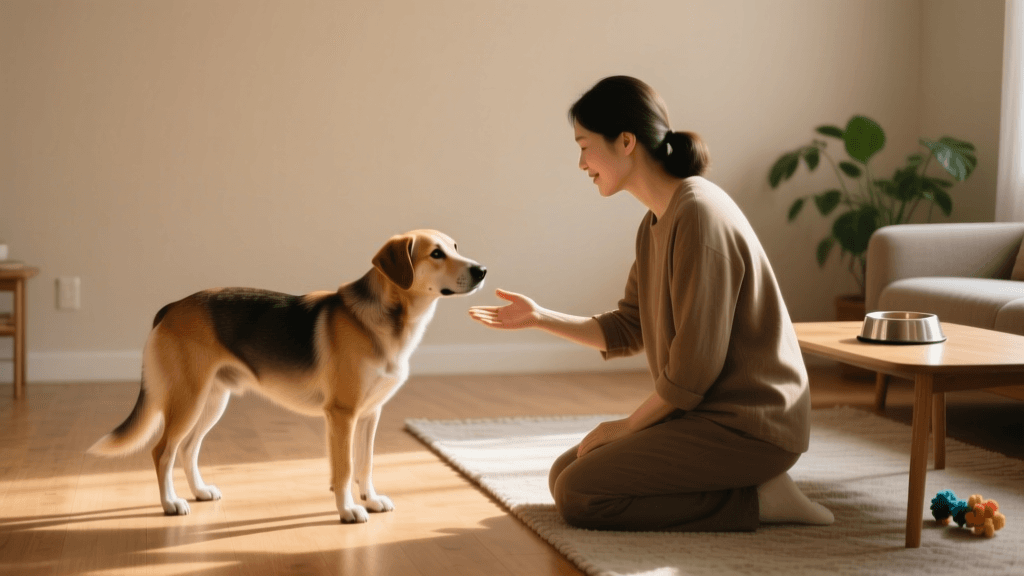
Once management is in place and the dog is no longer practicing the guarding behavior, you can begin counter-conditioning using the 'Trade-Up' game. This protocol teaches the dog that a human approaching them while they have an item predicts something wonderful, rather than a theft.
Step-by-Step Trading Game
- Step 1: Gather your tools. You need a low-value item (like a boring dog toy or a piece of kibble) and a high-value treat (such as Zuke's Mini Naturals or boiled chicken breast, approx. $8 per bag).
- Step 2: Offer the low-value item. Toss the boring toy to your dog and let them pick it up.
- Step 3: Approach with the jackpot. Walk toward your dog, stop about 4 feet away (outside their trigger zone), and enthusiastically say 'Look what I have!'
- Step 4: Toss the high-value treat. Toss the chicken about 3 to 4 feet away from the dog. The goal is to lure them off the low-value item voluntarily.
- Step 5: The 2-Second Rule. As the dog moves toward the chicken, wait exactly 2 seconds, then calmly pick up the low-value toy. Do not snatch it; move smoothly.
- Step 6: Return the item. Once the dog eats the chicken, happily hand the low-value toy back to them. This proves that giving up an item doesn't mean losing it forever.
Repeat this exercise 5 to 10 times per session, twice a day. Over several weeks, you will gradually decrease the distance between you and the dog, eventually working up to handing the high-value treat directly to them while gently touching the low-value item.
What NOT to Do: Avoiding the Punishment Trap
Outdated dog training television shows have popularized the dangerous myth that you must 'show the dog who is boss' by forcibly taking items from their mouth or pinning them to the ground (the 'alpha roll'). This approach is not only ineffective, but it actively worsens resource guarding by confirming the dog's deepest fear: humans are unpredictable thieves who must be fought off with teeth.
The American Veterinary Society of Animal Behavior (AVSAB) strongly advises against the use of punishment or dominance-based theories in dog training. Confrontational methods frequently increase fear and anxiety, directly correlating with a higher incidence of dog bites and severe behavioral fallout.
If you yell, hit, or force your hand into a guarding dog's mouth, you might suppress the growl out of sheer terror. A dog that learns 'growling gets me punished' will simply skip the warning signs next time and go straight to biting. Always prioritize building trust over asserting dominance.
Addressing Space and Person Guarding
While food and toy guarding are common, adopted dogs may also guard spaces (like doorways or the master bedroom) or specific family members. Person guarding often manifests as the dog growling at a spouse or child when they approach the primary caregiver on the couch.
Solution: Implement the 'Nothing in Life is Free' (NILIF) protocol. The dog must earn all resources, including access to the guarded person. If the dog is on the couch and a spouse approaches, the primary caregiver should ask the dog to 'sit' or 'down' before the spouse is allowed to sit. Alternatively, use a drag-leash (a lightweight leash attached to a well-fitted harness like the Ruffwear Front Range, approx. $40) indoors. If the dog begins to stiffen or stare at an approaching family member, calmly use the leash to guide the dog off the furniture without needing to grab their collar, which could trigger a bite.
When to Call a Professional
Resource guarding is highly treatable, but it carries inherent risks. You should immediately seek the help of a certified professional if your dog is exhibiting Level 3 or Level 4 behaviors, if there are young children in the home, or if the guarding is unpredictable and lacks clear triggers.
Look for professionals who hold credentials from reputable organizations, such as the Certification Council for Professional Dog Trainers (CCPDT) or the International Association of Animal Behavior Consultants (IAABC). Avoid trainers who guarantee a 'quick fix' or advocate for shock collars and physical corrections.
Expected Costs for Professional Help
- Initial Behavioral Consultation: $150 to $300 (usually 90 to 120 minutes, includes a comprehensive history and customized management plan).
- Follow-Up Sessions: $100 to $150 per hour.
- Day Training (where the trainer works with the dog directly): $75 to $125 per session.
Investing in a qualified behaviorist early on can save you thousands of dollars in medical bills and potential legal liabilities later. By diagnosing the problem accurately, managing the environment, and utilizing science-based trade-up protocols, you can help your newly adopted rescue dog realize that they never have to fight for their resources ever again.
anouk-beaumont
All our authors care for dogs every day — read more of their work on the authors page.