High-Value Raw Food Recall Training For Dogs 2026
Discover how to use raw and fresh food lures for reactive dog recall training in 2026. Learn protocols, top products, and safety tips.
The Evolution of Canine Training Rewards in 2026
As we navigate the dog training landscape in 2026, the intersection of canine nutrition and behavioral conditioning has never been more prominent. For owners of reactive, high-drive, or easily distracted dogs, standard kibble or commercial soft chews often fail to cut through the environmental noise. When a squirrel darts across the park or an unfamiliar dog approaches, a dry biscuit simply cannot compete with the dog's prey drive or fear response. This is where raw, fresh, and alternative diets step in—not just as meal replacements, but as high-octane training fuel.
Using raw and fresh food lures for recall training leverages a dog's primal olfactory senses. The intense scent profile of raw meats, organ tissues, and fresh whole-food toppers creates a 'jackpot' reward system that can literally rewire a reactive dog's emotional response to triggers. In this comprehensive guide, we will explore the science behind fresh food lures, identify the best raw training products available in 2026, and provide a step-by-step recall protocol for reactive dogs.
The Gut-Brain Axis: Why Fresh and Raw Diets Boost Focus
Recent 2026 veterinary nutrition studies have heavily emphasized the canine gut-brain axis. A dog's ability to learn, retain commands, and regulate emotional responses (like fear or reactivity) is deeply tied to their microbiome. Highly processed kibble, while convenient, often lacks the diverse, living enzymes and natural probiotics found in raw and gently cooked fresh diets.
When you use fresh foods—such as lightly steamed green tripe, raw goat milk, or biologically appropriate raw meaty bones—as training rewards, you are providing bioavailable nutrients that support neurotransmitter production. Dopamine and serotonin, the primary chemicals responsible for motivation and calmness, are heavily synthesized in the gut. By utilizing fresh, species-appropriate treats during high-stress recall training, you are biologically priming your dog's brain to focus, learn, and remain under threshold.
Top Raw & Fresh Training Rewards for 2026
Not all raw and fresh foods are created equal when it comes to the mechanics of dog training. You need rewards that are highly aromatic, easily consumable in under two seconds, and safe to carry in a training pouch. Here are the top-tier options dominating the 2026 market:
1. Freeze-Dried Raw Beef Liver (Single Ingredient)
Freeze-drying preserves the raw nutritional profile and intense scent while removing the moisture that makes raw meat messy to carry. Brands like Stella & Chewy's and K9 Natural offer single-ingredient liver treats that can be easily broken into pea-sized lures. In 2026, premium freeze-dried liver averages around $14.50 per ounce, but because you only need tiny micro-doses for luring, a single bag lasts for months of intensive recall training.
2. Fresh Green Tripe Topper
Green tripe (the unbleached stomach lining of ruminants) is famously pungent. To humans, it smells terrible; to dogs, it is the ultimate high-value jackpot. Companies like We Feed Raw now offer frozen, pre-portioned green tripe patties. For training, you can thaw a patty and scoop 1/4 teaspoon amounts into a silicone treat pouch. The overwhelming scent is perfect for 'emergency recalls' when your dog is fixated on a high-level distraction.
3. Commercial Fresh Food 'Training Tubs'
Fresh food pioneers like The Farmer's Dog and Nom Nom have adapted to the training market by releasing high-protein, single-source fresh meat 'training tubs' in 2026. These are gently cooked beef or turkey recipes packaged in squeeze-tubes, allowing you to dispense a 1/2 inch lick of fresh meat paste without ever touching the food. This is a game-changer for continuous luring and keeping a reactive dog's nose glued to your hand.
Comparison Chart: Training Treat Efficacy in 2026
| Treat Category | Scent Profile | Consumption Speed | Reactive Dog Value | 2026 Avg. Cost (per oz) |
|---|---|---|---|---|
| Standard Dry Kibble | Low | Moderate (requires chewing) | Low (easily ignored outdoors) | $0.25 |
| Commercial Soft Chews | Medium | Fast | Medium (good for mild distractions) | $1.80 |
| Freeze-Dried Raw Liver | High | Instant (crumbles/melts) | High (excellent for focus) | $14.50 |
| Fresh Green Tripe Paste | Extreme | Instant (lickable) | Maximum (emergency recall only) | $6.00 |
Step-by-Step Raw Food Recall Protocol for Reactive Dogs
When training a reactive dog, the goal is to change their emotional response to a trigger from 'fight/flight' to 'anticipation of a high-value reward'. Here is how to implement a raw food recall protocol.
Phase 1: Indoor Scent Association (Weeks 1-2)
Begin in a low-distraction environment. Use a fresh meat paste (like a Nom Nom turkey recipe). Say your recall cue (e.g., 'Come' or a specific whistle), and immediately present the squeeze-tube. Allow the dog to lick the fresh meat for 3 to 5 seconds. The prolonged licking action releases endorphins, which naturally soothe an anxious or reactive nervous system. Repeat this 10 times per session, twice a day.
Phase 2: The 'Engage-Disengage' Raw Lure (Weeks 3-4)
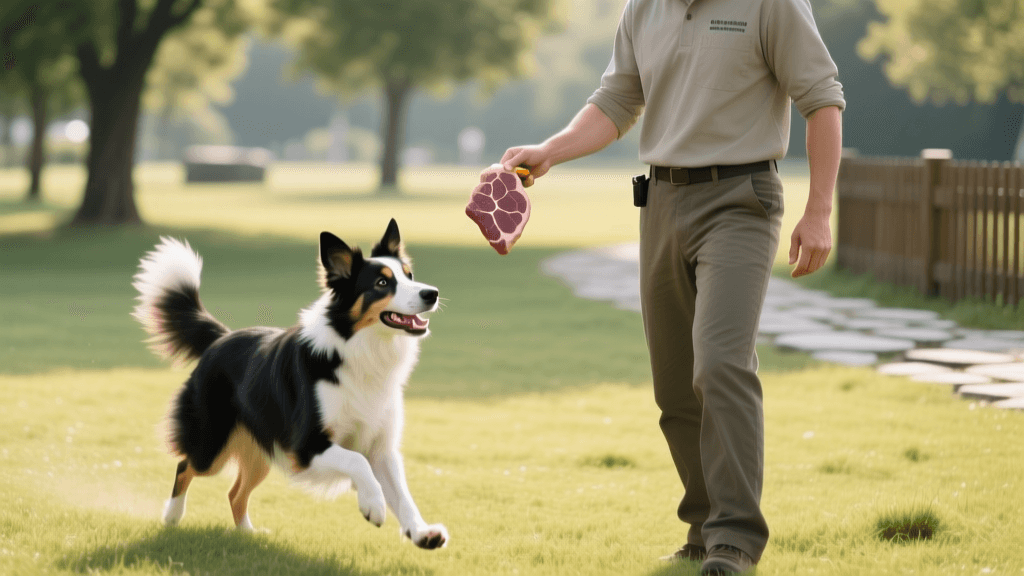
Move to a fenced yard or quiet park. Have a helper stand at a distance with a mild distraction (e.g., a calm dog on a leash or a tossed toy). The moment your dog notices the distraction but before they react, blow your recall whistle. Mark the behavior with a 'Yes!' and reward with a pea-sized piece of freeze-dried raw liver. The intense flavor of the raw liver reinforces the decision to disengage from the trigger and orient back to you.
Phase 3: The Emergency Tripe Recall (Ongoing)
For severe reactivity or off-leash emergencies where prey drive has taken over, standard treats will fail. Keep a dedicated pouch of thawed green tripe paste. This is your 'nuclear option'. If your dog breaks a stay to chase a deer, use your emergency recall cue and present the tripe. The primal, overwhelming scent of raw tripe bypasses the logical brain and taps directly into the olfactory cortex, often snapping a dog out of a prey-drive trance.
Caloric Management and Stomach Transitioning
A common concern among owners transitioning to raw and fresh training treats is gastrointestinal upset and caloric overload. In 2026, veterinary nutritionists recommend the '10% Rule': no more than 10% of your dog's daily caloric intake should come from training treats. Because raw and fresh foods are highly bioavailable and nutrient-dense, you must adjust their baseline meals accordingly.
If you are using 2 ounces of fresh beef topper for a morning training session, reduce their standard raw or fresh dinner portion by an equivalent caloric amount. Furthermore, if your dog is new to raw diets, introduce raw training treats slowly. Start with freeze-dried options, which are gentler on unaccustomed stomachs, before progressing to raw green tripe or raw organ meats. Always monitor your dog's stool quality; firm, well-formed stools indicate that the raw training treats are being properly digested.
Safe Handling and Pouch Hygiene
While the benefits of raw and fresh diets for behavioral conditioning are immense, safety and hygiene must remain a top priority. The FDA guidelines on raw pet food emphasize the risk of bacterial pathogens like Salmonella and Listeria, which can affect both canines and humans handling the food.
To mitigate these risks during training sessions:
- Use Silicone Pouches: Ditch traditional nylon or canvas treat bags. In 2026, trainers favor medical-grade silicone treat pouches that can be turned inside out and run through the dishwasher on a sanitize cycle after every use.
- Temperature Control: Fresh and raw treats should not sit at room temperature for more than two hours. Use insulated treat coolers or freeze-dried alternatives for long outdoor hikes.
- Hand Sanitization: Keep a clip-on, dog-safe hand sanitizer or a pack of biodegradable wipes attached to your leash belt. Always wash your hands thoroughly with hot, soapy water once you return home, as recommended by the AVMA's stance on raw diets and safe handling practices.
Conclusion
Training a reactive dog requires patience, precise timing, and rewards that hold genuine biological value. By integrating raw, fresh, and alternative diets into your 2026 recall training protocol, you are doing more than just bribing your dog to come back. You are leveraging their ancestral senses, supporting their gut-brain axis, and building a foundation of trust that dry kibble simply cannot achieve. Equip your silicone pouch with high-value raw lures, respect the safety protocols, and watch your dog's focus and recall transform in the face of their biggest triggers.
beth-carrasco
All our authors care for dogs every day — read more of their work on the authors page.