Trainability Showdown: Herding vs. Sporting Breeds Compared
Discover how herding and sporting breeds differ in trainability. Learn breed-specific socialization, conditioning, and selection tips for novice owners.
Understanding Breed-Specific Trainability
When selecting a canine companion, many prospective owners focus primarily on appearance, size, or shedding levels. However, for a harmonious household, understanding breed-specific trainability and behavioral conditioning is paramount. Dogs were selectively bred for centuries to perform specific jobs, and these ancestral instincts heavily dictate how they learn, react to stimuli, and respond to obedience training. In the world of dog training, two of the most popular and highly trainable groups are the Herding breeds and the Sporting breeds. While both groups are celebrated for their intelligence, their underlying motivations, learning styles, and socialization requirements differ drastically.
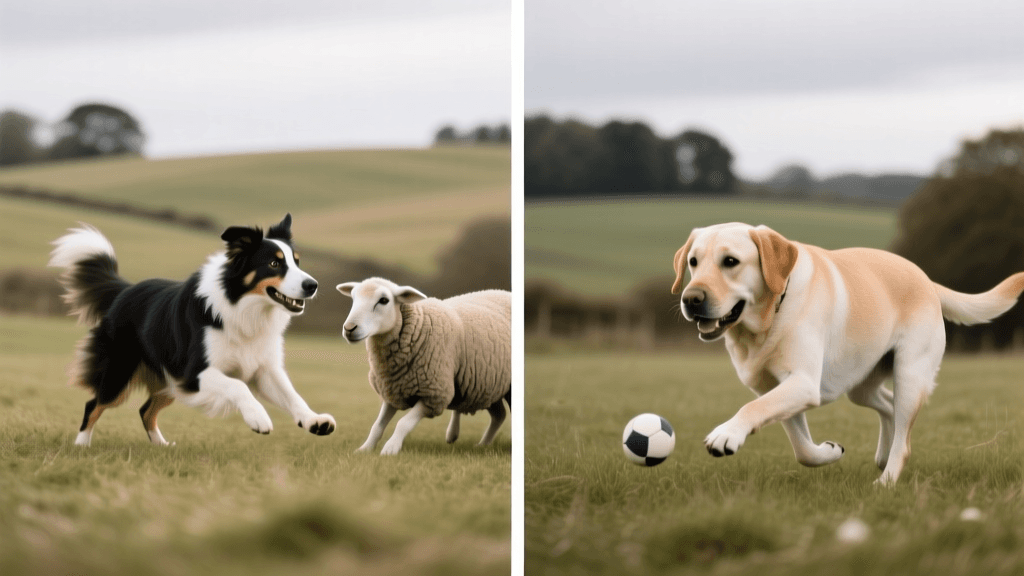
According to the American Kennel Club (AKC), recognizing a dog's genetic predispositions is the first step in creating a successful training roadmap. A Border Collie's instinct to control movement requires a vastly different behavioral conditioning approach than a Golden Retriever's instinct to carry objects in its mouth. For novice owners, choosing between these two groups requires a deep dive into their distinct psychological profiles, energy outputs, and specific training needs.
The Herding Group: Intelligence, Intensity, and Impulse Control
Herding breeds, such as the Border Collie, Australian Shepherd, and Shetland Sheepdog, are the geniuses of the canine world. Bred to move livestock over vast distances using visual pressure, vocalization, and physical nipping, these dogs possess an unparalleled work ethic. Their trainability is exceptional, but it comes with a caveat: they are hyper-vigilant and highly sensitive to environmental movement.
Behavioral Challenges in Herding Breeds
Because herding breeds are hardwired to react to motion, they are notoriously prone to chasing cars, bicycles, and even running children. If not properly channeled, this instinct manifests as nipping at heels or obsessive shadowing. Training a herding breed requires a heavy emphasis on impulse control. Commands like "leave it," "watch me," and a rock-solid recall are not just party tricks; they are essential safety tools. Novice owners often mistake a herding dog's ability to learn a trick in three repetitions for overall obedience, only to find that the dog completely ignores the command when a squirrel darts across the yard.
The Sporting Group: Biddability, Scent, and Food Drive
Sporting breeds, including the Labrador Retriever, Golden Retriever, and English Springer Spaniel, were developed to work closely with human hunters to flush, point, and retrieve game. Unlike the independent, high-pressure nature of herding dogs, sporting breeds are known for their "biddability"—an eagerness to please and a natural inclination to work cooperatively with their handlers.
Behavioral Challenges in Sporting Breeds
The primary challenge with sporting breeds is their intense environmental awareness, specifically regarding scent and sound. A retriever in training might execute a perfect "sit-stay" in the living room, but the moment they catch the scent of a discarded food wrapper on the sidewalk, their nose overrides their brain. Furthermore, their breeding to carry birds requires early "soft mouth" conditioning to prevent destructive chewing. While they are generally more forgiving of novice handler mistakes than herding breeds, their susceptibility to distraction requires structured, high-reward obedience training.
Breed Comparison Chart: Trainability and Traits
To help prospective owners make an informed selection, the following table compares the core training traits of popular breeds from both groups.
| Breed | Group | Primary Drive | Trainability & Focus | Best Owner Type |
|---|---|---|---|---|
| Border Collie | Herding | Visual / Movement | Exceptional (Requires high mental stimulation) | Active, Experienced, Dedicated |
| Australian Shepherd | Herding | Visual / Territorial | High (Prone to reactivity if under-socialized) | Active, Outdoorsy, Patient |
| Golden Retriever | Sporting | Food / Retrieving | High (Forgiving, eager to please) | Novice, Families, Therapy Work |
| Labrador Retriever | Sporting | Scent / Retrieving | High (Food motivated, easily distracted) | Novice, Active Families, Hunters |
Early Socialization and Behavioral Conditioning
Regardless of the breed group, the critical socialization window occurs between 3 and 14 weeks of age. The Humane Society of the United States emphasizes that positive exposure to novel surfaces, sounds, people, and other animals during this period is vital to prevent fear-based reactivity later in life. However, the type of socialization should be tailored to the breed's genetic tendencies.
Conditioning the Herding Breed
For herding puppies, socialization must focus on desensitization to movement and noise. Because they are visually stimulated, expose them to chaotic environments from a safe distance. Sit on a bench near a busy playground and feed high-value treats every time a child runs past. This conditions the puppy to associate erratic movement with positive outcomes rather than a trigger to chase or herd. Teach the "touch" command (targeting your hand with their nose) early on; this gives the dog a default behavior to fall back on when they feel overwhelmed by their environment.
Conditioning the Sporting Breed
Sporting puppies need heavy socialization focused on scent and texture. Take them on "sniffaris" where they are allowed to explore different terrains like gravel, wet grass, and mulch. To condition a soft mouth and prevent resource guarding, practice the "drop it" and "trade" games using a variety of objects, from soft plush toys to hard rubber chews. Introduce them to water early, as many retrievers will naturally gravitate toward it, but ensure the entry is gradual to build confidence rather than panic.
Practical Training Tools and Budgeting
Effective training requires the right equipment. Investing in quality tools early on saves money on behavioral correction later. Here is a breakdown of essential products and estimated costs for novice owners training either a herding or sporting breed:
- Ruffwear Front Range Harness ($40 - $50): A dual-clip harness that provides excellent control for strong-pulling sporting breeds and prevents the tracheal damage that can occur if a reactive herding breed lunges on a flat collar.
- Kong Classic ($15 - $25): Essential for mental enrichment. Stuff it with frozen peanut butter and kibble to keep high-energy herding breeds occupied and prevent destructive chewing when left alone.
- Zuke's Mini Naturals ($6 - $8 per 16oz bag): High-value, low-calorie training treats. Cut them into 1/4 inch pieces. You will burn through these quickly during 15-minute impulse control sessions.
- 6-Foot Biothane Leash ($25 - $40): Avoid retractable leashes, which teach dogs to pull. A waterproof biothane leash provides a secure grip during wet-weather retrieving drills for sporting breeds.
Financial Planning for Training: Budget approximately $150 to $250 for a 6-week foundational group obedience class. If you adopt an adolescent herding breed exhibiting severe reactivity or a sporting breed with severe counter-surfing habits, expect to pay $100 to $200 per hour for a Certified Professional Dog Trainer (CPDT-KA) or a veterinary behaviorist for private in-home sessions.
Making the Right Selection for Your Lifestyle
Choosing between a herding and a sporting breed ultimately comes down to your daily routine, your tolerance for intensity, and the environment you can provide. If you are an avid runner, hiker, or dog-sport enthusiast who wants a partner capable of complex agility courses and off-leash precision, a herding breed may be your ideal match. However, you must be prepared for the mental fatigue of managing a dog that "turns on" at the sight of a moving bicycle.
Conversely, if you desire a family companion who is eager to learn tricks, excels in scent work, and possesses an "off-switch" that is slightly easier to engage indoors, a sporting breed like a Golden or Labrador Retriever is generally the superior choice for a novice owner. They are more forgiving of inconsistent timing and handler errors during the learning curve of dog ownership.
Conclusion
Both herding and sporting breeds offer incredible trainability, but they speak entirely different psychological languages. By understanding the difference between a herding dog's visual intensity and a sporting dog's scent-driven biddability, you can tailor your socialization, select the right training tools, and build a lifelong bond based on mutual understanding. Remember that genetics provide the blueprint, but consistent, positive reinforcement training builds the house. Take the time to evaluate your lifestyle honestly, and select the breed whose ancestral purpose aligns with your modern reality.
beth-carrasco
All our authors care for dogs every day — read more of their work on the authors page.