2026 Puppy Bonding: Hand-Feeding & Scent Game Protocols
Discover the 2026 hand-feeding and scent-work protocols to build deep trust and bond with your eight-week-old puppy during the critical socialization window.
The Critical Window: Why Early Bonding Matters in 2026
Welcoming a new puppy into your home is one of life's most rewarding experiences, but the first twelve weeks are far more than just a time for cute photos and cuddles. According to modern veterinary behavioral science, the eight-to-twelve-week period represents the most critical socialization and attachment window in a dog's life. In 2026, canine behaviorists have moved entirely away from outdated dominance-based training models, focusing instead on cooperative care, oxytocin-driven bonding, and positive reinforcement. Building a deep, unshakeable trust with your puppy during these early weeks sets the foundation for a confident, well-adjusted adult dog.
According to the RSPCA, proper early socialization and positive human interaction are vital for preventing fear-based behaviors later in life. However, many new owners miss out on the easiest, most effective bonding opportunities simply by putting their puppy's meals in a bowl and walking away. By implementing structured hand-feeding and introductory scent-work protocols, you transform daily routines into powerful relationship-building exercises.
The 2026 Hand-Feeding Protocol for Trust Building
Hand-feeding is not about starving your puppy or making them beg; it is about positioning yourself as the source of all good things. When you control the food, you naturally become the focal point of your puppy's universe. This protocol utilizes your puppy's daily caloric allowance to reinforce eye contact, recall, and gentle bite inhibition.
Step 1: The Lure and Reward (Weeks 8-9)
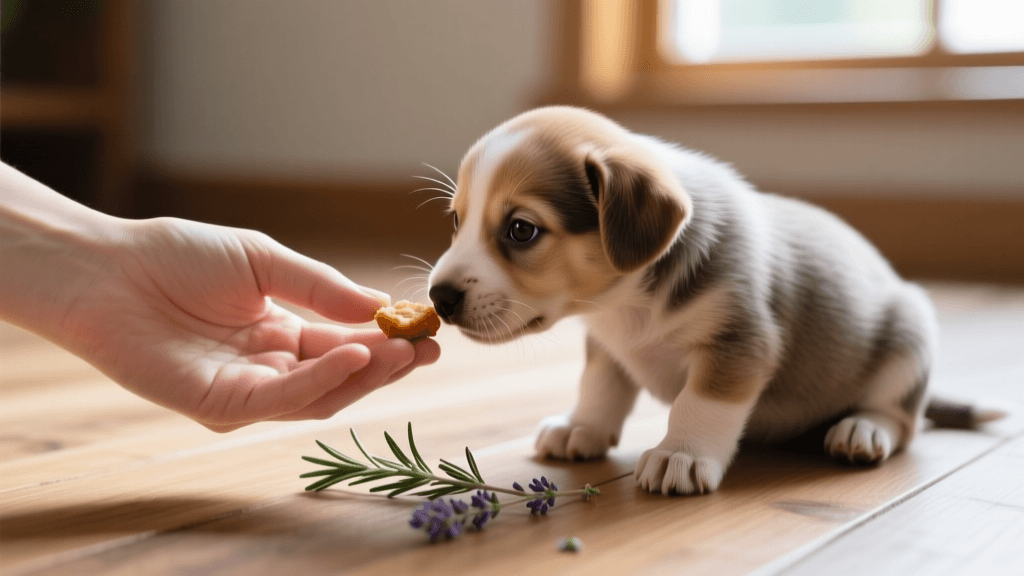
During the first week home, ditch the food bowl entirely. Measure out your puppy's daily ration of high-quality kibble, such as Purina Pro Plan Puppy or Royal Canin Puppy, into a treat pouch. Throughout the day, use individual pieces of kibble to lure your puppy into basic positions like 'sit' or 'down'. If your puppy is highly food-motivated, you can mix in a few high-value training treats like Zuke's Mini Naturals to maintain engagement. Every piece of food is delivered gently from your fingertips, teaching the puppy that human hands are safe, rewarding, and gentle.
Step 2: The Eye-Contact Capture (Weeks 9-10)
Once your puppy understands that your hands hold value, begin capturing spontaneous eye contact. Hold a piece of kibble near your face, right between your eyes. The moment your puppy looks up and makes eye contact, mark the behavior with a gentle 'yes' and deliver the reward. This builds a default 'check-in' behavior, which is crucial for off-leash reliability and deep focus in distracting environments later in life.
Step 3: The Recall Foundation (Weeks 10-12)
Use hand-feeding to build a bulletproof recall. Toss a piece of kibble a few feet away. As your puppy eats it and turns back toward you, say their name followed by your recall cue (e.g., 'Come'). When they return to you, reward them with a 'jackpot' of three to four pieces of kibble fed directly from your hand. This creates a powerful positive association with returning to you, making you far more interesting than the surrounding environment.
Introductory Scent-Work Bonding Games
While hand-feeding builds focus and obedience, scent-work builds confidence and mental resilience. A puppy's olfactory system is highly developed, and engaging their nose releases dopamine, reducing stress and anxiety. The PDSA emphasizes that mental enrichment is just as tiring and beneficial for a growing puppy as physical exercise, without the risk of joint damage from over-exercising young bones.
Game 1: The 'Find It' Floor Scatter
This is the simplest scent game and requires no special equipment. Take a handful of your puppy's kibble and let them watch you scatter it across a small, non-slippery area of the floor. Say 'Find it!' in an enthusiastic tone. Initially, scatter the food in a small radius so the puppy succeeds quickly. As they get better, expand the search area and hide pieces behind table legs or under low furniture. This game teaches your puppy to use their nose to solve problems, building independence while keeping you engaged in their success.
Game 2: The Snuffle Mat Introduction
For a more advanced scent challenge, introduce a snuffle mat, such as the Paw5 Wooly Snuffle Mat. These mats mimic the act of foraging in tall grass. Sprinkle a portion of your puppy's meal deep into the fabric strips. Sit with your puppy and encourage them to sniff out the hidden treasures. If they get frustrated and start pawing or digging at the mat, gently guide their nose back to the fabric and help them find a piece of kibble to keep the experience positive and rewarding.
Weekly Bonding and Enrichment Schedule
Consistency is the cornerstone of relationship building. Below is a structured daily schedule designed for an eight-to-twelve-week-old puppy, integrating hand-feeding and scent-work into their natural routine.
| Time of Day | Activity | Bonding Focus | Tools Needed |
|---|---|---|---|
| 7:00 AM | Hand-Fed Breakfast | Eye contact capture and basic luring | Morning kibble ration, treat pouch |
| 10:00 AM | Post-Nap Potty & Play | Recall foundation and gentle handling | High-value treats (e.g., Zuke's) |
| 1:00 PM | Mid-Day Scent Work | Confidence building and mental fatigue | Paw5 Wooly Snuffle Mat |
| 4:00 PM | Afternoon Training | Impulse control and focus | Kibble ration, clicker (optional) |
| 7:00 PM | Evening 'Find It' Game | Independent problem solving | Evening kibble ration |
Tracking Your Puppy's Trust Milestones
How do you know if your bonding protocols are working? In 2026, veterinary behaviorists look for specific, observable indicators of a secure attachment. Watch for these positive milestones as your puppy grows:
- The 'Check-In': When exploring a new room or yard, your puppy frequently stops, turns around, and looks back at you to ensure you are still there.
- Relaxed Body Language: Your puppy exhibits a loose, wiggly body, soft eyes, and a relaxed, open mouth when interacting with you.
- Proximity Seeking: Rather than sleeping in the furthest corner of the room, your puppy chooses to nap near you or physically touching your feet.
- Recovery from Startle: If a loud noise occurs, your puppy looks to you for reassurance and recovers quickly when you offer a calm, soothing presence.
- Gentle Mouthing: Through consistent hand-feeding, your puppy learns to take treats with a soft mouth, drastically reducing hard biting or nipping.
Common Relationship-Building Mistakes to Avoid
Even with the best intentions, new owners can inadvertently damage the bond they are trying to build. Avoid these common pitfalls:
Forcing Interactions: Never force your puppy to accept petting or handling if they are showing signs of stress, such as lip licking, yawning, or turning their head away. Respect their boundaries to build lasting trust.
Inconsistent Rules: If you are hand-feeding to teach gentle bite inhibition, ensure all family members follow the exact same protocol. Inconsistency creates confusion and anxiety.
Using the Crate as Punishment: The crate should be a sanctuary, not a time-out zone. Feed your puppy their meals inside the crate with the door open to build a positive association with their safe space.
Trust is not demanded; it is earned through consistent, positive, and predictable interactions during the critical developmental windows. Your puppy is learning who you are every single day.
Conclusion
Building a profound bond with your puppy in 2026 requires intentionality, patience, and a willingness to engage with them on their level. By replacing the passive food bowl with active hand-feeding sessions and introducing scent-work games, you are not just feeding your puppy; you are communicating with them. You are teaching them that you are a reliable, rewarding, and safe partner in a big, sometimes overwhelming world. For more comprehensive guidelines on early canine development and health, the AVMA provides excellent resources for new pet owners. Embrace these protocols during the eight-to-twelve-week window, and you will forge a relationship that will bring joy and companionship for the rest of your dog's life.
anouk-beaumont
All our authors care for dogs every day — read more of their work on the authors page.