Group Class Vs One To One Dog Training
Learn about group class vs one to one dog training with expert tips and data-backed advice.
What Each Format Actually Offers Your Dog
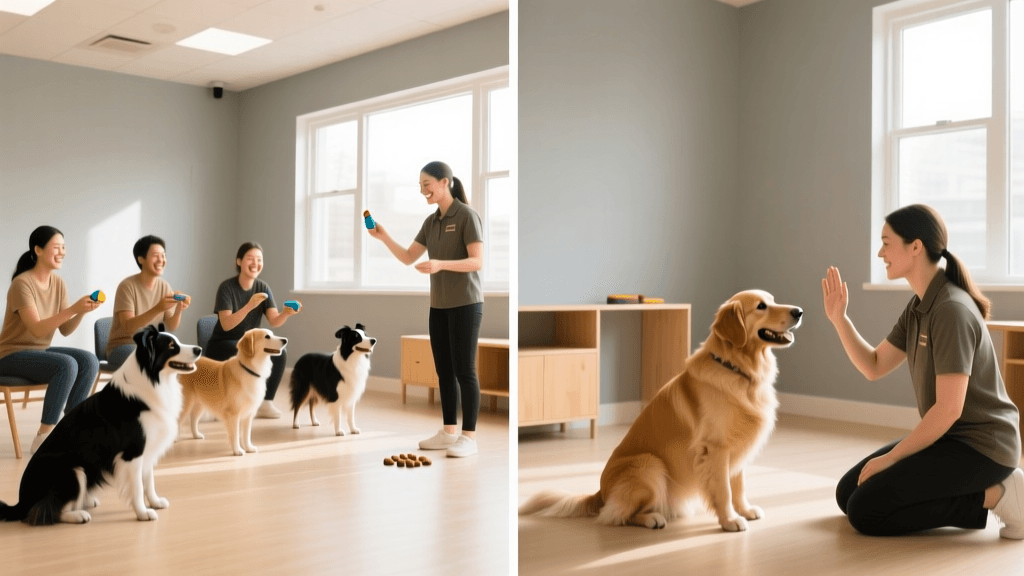
Choosing between a group obedience class and private one-to-one sessions is one of the first decisions a new dog owner faces, and it carries real consequences for how quickly a dog learns and how well those lessons stick. Both formats draw on the same underlying science — operant conditioning, classical conditioning, and the principles of positive reinforcement — but they deliver that science in very different environments, at different paces, and with different outcomes depending on the dog and handler in front of the trainer.
The Association of Professional Dog Trainers (APDT) reported in its 2022 member survey that approximately 68% of certified trainers offer both formats, yet fewer than 30% of dog owners said they understood the practical differences before enrolling. That gap in understanding often leads owners to pick the cheaper or more convenient option rather than the most effective one for their specific situation.
The Science Behind the Session Structure
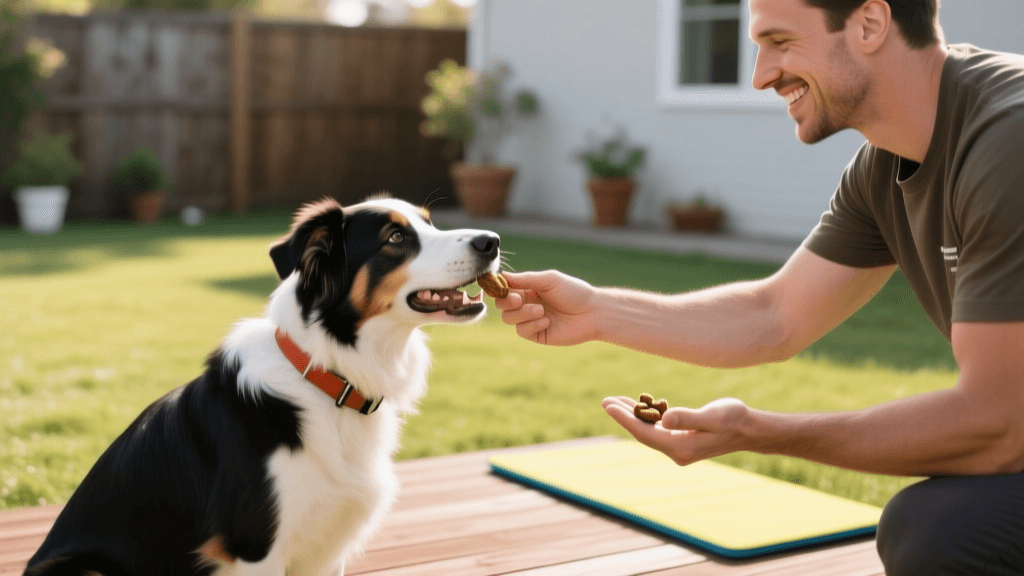
Modern dog training is grounded in applied behaviour analysis. A reinforcer delivered within 1.3 seconds of a behaviour is significantly more likely to strengthen that behaviour than one delivered after a 3-second delay, according to research published by the Companion Animal Sciences Institute. This timing window is easy to hit in a one-to-one session where the trainer's full attention is on a single dog. In a group class of eight dogs, the same trainer may be watching a different handler when your dog sits correctly, meaning the marker — whether a clicker or a verbal "yes" — arrives late or not at all.
That said, group environments introduce something private sessions cannot replicate cheaply: distraction. The Certification Council for Professional Dog Trainers (CCPDT) notes in its 2023 candidate handbook that generalisation — the ability of a dog to perform a behaviour across varied contexts — is one of the most commonly undertrained skills. A dog that sits perfectly in a quiet living room but ignores the cue at the park has not generalised the behaviour. Group classes, by placing dogs within 3 to 6 metres of other dogs and unfamiliar people, create a controlled distraction gradient that accelerates generalisation.
Operant Conditioning in Practice
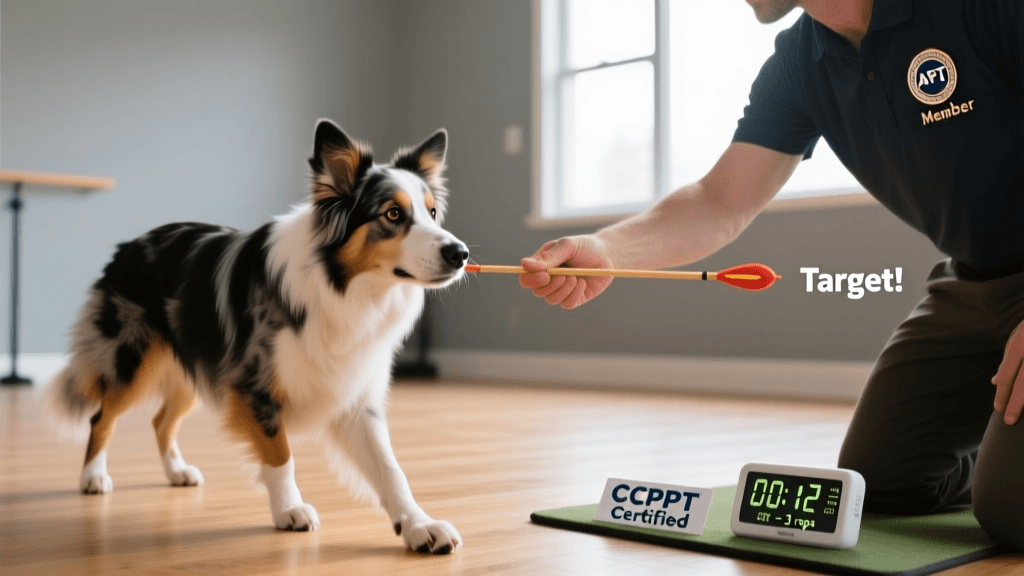
Both formats rely on the four quadrants of operant conditioning, but positive reinforcement (R+) and negative punishment (P−) dominate ethical modern training. In a group class, trainers typically run 3 to 5 repetitions of a new behaviour per dog per exercise block, then rotate to the next skill. In a private session, a trainer can run 10 to 15 repetitions of a single behaviour within the same time window, allowing for faster shaping of precise responses.
For complex behaviours like a reliable recall or a sustained down-stay, the additional repetition density of private sessions matters. Research from the University of Lincoln's Animal Behaviour Cognition and Welfare Group suggests that dogs require an average of 25 to 40 successful repetitions across varied contexts before a behaviour reaches a 90% reliability threshold. A private client working three 30-minute sessions per week can accumulate those repetitions in two to three weeks. A group class student attending one 60-minute session per week may take six to eight weeks to reach the same threshold.
Classical Conditioning and Emotional State
Not all training is about teaching commands. A significant portion of behaviour work involves changing a dog's emotional response to a stimulus — a process rooted in classical conditioning. For a dog that reacts fearfully or aggressively to other dogs, a group class is not a neutral learning environment; it is the trigger environment. Placing a reactive dog in a group class before their threshold has been raised through systematic desensitisation and counter-conditioning is counterproductive and, in some cases, dangerous.
Private sessions allow a trainer to work below the dog's threshold — the distance or intensity at which the dog notices a stimulus but does not react — and gradually reduce that threshold over multiple sessions. The APDT's 2022 position statement on fear-free training explicitly recommends individual behaviour consultations as the first intervention for dogs displaying fear, anxiety, or stress responses before any group enrolment is considered.
Typical Programme Structures and Costs
Group classes in the United Kingdom typically run as six-week courses with one session per week, each lasting 45 to 60 minutes. Costs range from £80 to £150 for the full course, placing the per-session cost between £13 and £25. In the United States, comparable programmes at facilities like the San Francisco SPCA or the Zoom Room franchise run between $150 and $250 for a six-week course.
Private sessions are priced per hour or per half-hour. In the UK, APDT-registered trainers charge between £50 and £90 per hour. In the US, CCPDT-certified trainers in metropolitan areas typically charge between $75 and $150 per hour. A standard private behaviour modification programme involves four to six sessions, placing the total investment between £200 and £540 in the UK and $300 to $900 in the US.
| Factor | Group Class | One-to-One Sessions |
|---|---|---|
| Average cost per session (UK) | £13–£25 | £50–£90 |
| Repetitions per behaviour per session | 3–5 | 10–15 |
| Distraction exposure | High (built-in) | Low (trainer-controlled) |
| Trainer attention per dog | Divided (6–10 dogs) | Undivided |
| Suitable for reactive dogs | Not initially | Yes |
| Handler socialisation | Yes | No |
Specific Commands and How Each Format Teaches Them
The core obedience commands — sit, down, stay, come, leave it, and loose-lead walking — are taught in both formats, but the progression differs substantially.
Teaching "Stay" in Each Context
A solid stay requires building three variables independently: duration, distance, and distraction. Trainers use the shorthand "3 Ds" to describe this progression. In a private session, a trainer can spend an entire 30-minute block on duration alone, starting with a 2-second stay and adding 2 seconds per successful repetition until the dog holds for 30 seconds. The following session introduces distance, beginning at 0.5 metres and extending to 3 metres before distraction is layered in.
In a group class, all three Ds are often introduced within the same six-week course, sometimes within the same session. This is not inherently wrong — it reflects the reality of a fixed curriculum — but it means individual dogs that struggle with one variable do not receive the targeted repetition they need. A handler whose dog breaks the stay at 5 seconds cannot pause the class to work that specific threshold while others move on to distance work.
The "come" command, or recall, is another area where format matters. Group classes often use a game called "round robin recall," where handlers stand in a circle and take turns calling the dog. This is an excellent exercise for building enthusiasm and generalisation simultaneously. It is difficult to replicate in a private session without additional people present, which is one concrete advantage group classes hold for recall training specifically.
Loose-Lead Walking
Loose-lead walking is consistently cited by trainers as the skill owners struggle with most. It requires the handler to change direction the moment the lead tightens — a response that must become automatic. In a private session, a trainer can walk alongside the handler, giving real-time verbal cues and adjusting body mechanics immediately. Studies from the Royal Veterinary College in London have found that handler mechanics — specifically the position of the lead hand and the timing of direction changes — account for more variance in loose-lead outcomes than the specific training method used.
Group classes provide a different advantage here: the presence of other dogs and people creates the exact conditions under which most dogs pull. Practising loose-lead walking in a room with seven other dogs is closer to a real-world pavement scenario than practising in a quiet garden with a private trainer.
Matching Format to Dog and Handler Profile
There is no universally superior format. The right choice depends on a clear-eyed assessment of the dog's current behaviour, the handler's experience level, and the specific goals of training.
Puppies between 8 and 16 weeks are in a critical socialisation window. The American Veterinary Society of Animal Behavior (AVSAB) published a position statement in 2021 stating that the benefits of early socialisation in puppy classes outweigh the small infectious disease risk for puppies that have received at least one set of vaccinations. For this age group, group puppy classes are the evidence-based first choice, not because the training is superior, but because the social exposure is irreplaceable.
Adult dogs with no prior training and no behavioural concerns can succeed in either format. Handlers who are first-time dog owners often benefit from the peer support and shared learning environment of a group class. Watching another handler work through the same challenge — a dog that spins instead of sitting, or a dog that takes the treat and walks away — normalises the learning process and reduces handler frustration.
Dogs with established problem behaviours — reactivity, resource guarding, separation anxiety, or fear-based aggression — require private sessions with a qualified behaviourist, not a group class trainer. These are not training problems; they are behaviour modification cases that require individualised assessment, a written behaviour modification plan, and often coordination with a veterinary behaviourist. The CCPDT's 2023 scope of practice guidelines draw a clear distinction between obedience training and behaviour modification, and recommend that trainers refer cases involving aggression or severe anxiety to credentialed behaviourists.
- Puppies 8–16 weeks with no behavioural concerns: group puppy socialisation class
- Adult dogs, first-time owners, basic obedience goals: group class or private, based on budget
- Dogs with reactivity, fear, or aggression: private sessions with a certified behaviourist first
- Handlers wanting to compete in obedience or agility: private sessions for precision, group classes for distraction proofing
- Dogs that have completed group training but need refinement: private top-up sessions targeting specific gaps
What to Look for in a Trainer Regardless of Format
Credentials matter more than format. A poorly run group class with an unqualified instructor will produce worse outcomes than a well-structured private session with a certified professional, and vice versa. When evaluating a trainer, look for membership of the APDT (UK or US chapter), CCPDT certification, or a qualification from the Institute of Modern Dog Trainers (IMDT) in the UK. These organisations require trainers to demonstrate knowledge of learning theory, pass written examinations, and complete continuing education hours.
Ask any prospective trainer to describe how they would handle a dog that is not responding to a cue. A trainer who defaults to physical correction or who cannot articulate a positive reinforcement-based alternative is not aligned with current behavioural science. The answer should involve breaking the behaviour into smaller steps, reducing distraction, increasing reinforcer value, or reassessing whether the dog has been adequately conditioned to the cue in the first place.
"The goal of any training programme — group or individual — is not a dog that performs on command. It is a dog that has learned that engaging with its handler produces good outcomes, and a handler who has learned to read their dog accurately enough to make that happen." — Karen Overall, MA, VMD, PhD, DACVB, in Manual of Clinical Behavioral Medicine for Dogs and Cats, 2013.
Class size in group settings is a practical quality indicator. The APDT recommends a maximum ratio of one instructor to six dog-handler pairs for basic obedience classes, and one instructor to four pairs when an assistant is not present. Classes exceeding eight dogs without a second trainer on the floor compromise the feedback quality each handler receives and increase the risk of stress-related incidents between dogs.
For private sessions, ask whether the trainer conducts an initial assessment before beginning training. A thorough assessment should include a history of the dog's early socialisation, any known triggers, the owner's daily routine, and a brief observation of the dog's behaviour in its home environment. Trainers who skip this step and begin teaching "sit" in the first five minutes of a first session are not practising evidence-based behaviour work.
- Verify APDT, CCPDT, or IMDT credentials before booking
- Confirm class size does not exceed 6 dog-handler pairs per instructor
- Ask how the trainer handles non-response to a cue
- Confirm private trainers conduct a written behaviour history assessment
- Check whether the trainer has liability insurance and a clear cancellation policy
The most effective training programmes often combine both formats sequentially. A dog might begin with four private sessions to establish foundational responses and address any early behavioural concerns, then transition to a group class to proof those behaviours against distraction, and return to private sessions if specific challenges emerge. This hybrid approach is increasingly recommended by organisations like the San Francisco SPCA's training department and the Blue Cross animal welfare charity in the UK, both of which offer structured pathways that move dogs between formats based on assessed progress rather than a fixed schedule.
Jonas Cole
All our authors care for dogs every day — read more of their work on the authors page.