Living With a Greyhound in an Apartment: The Ultimate Guide
Discover how to thrive with a Greyhound in an apartment. Learn daily routines, space-saving bed tips, and exercise needs for the ultimate couch potato.
The Myth of the High-Energy Apartment Dog
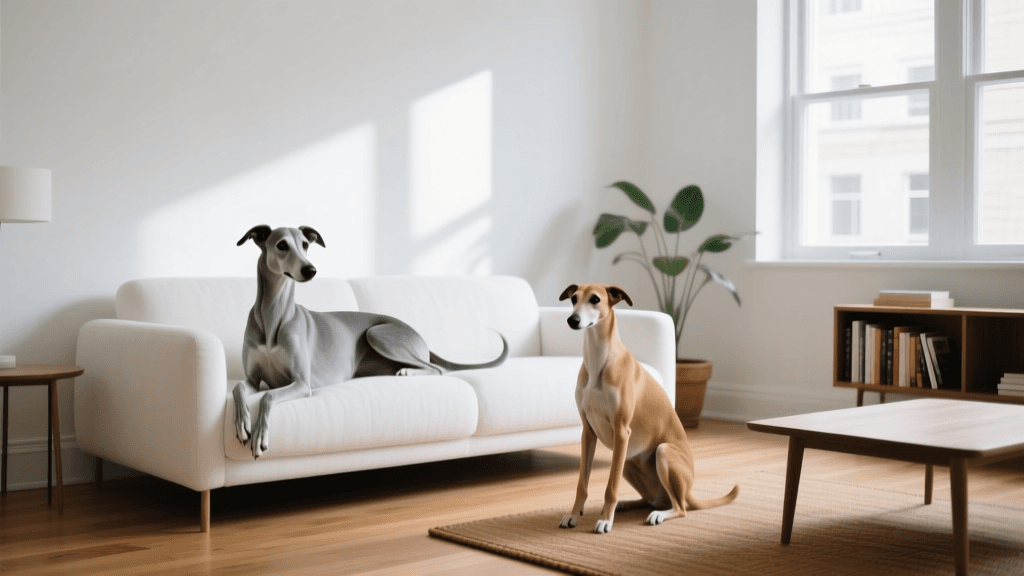
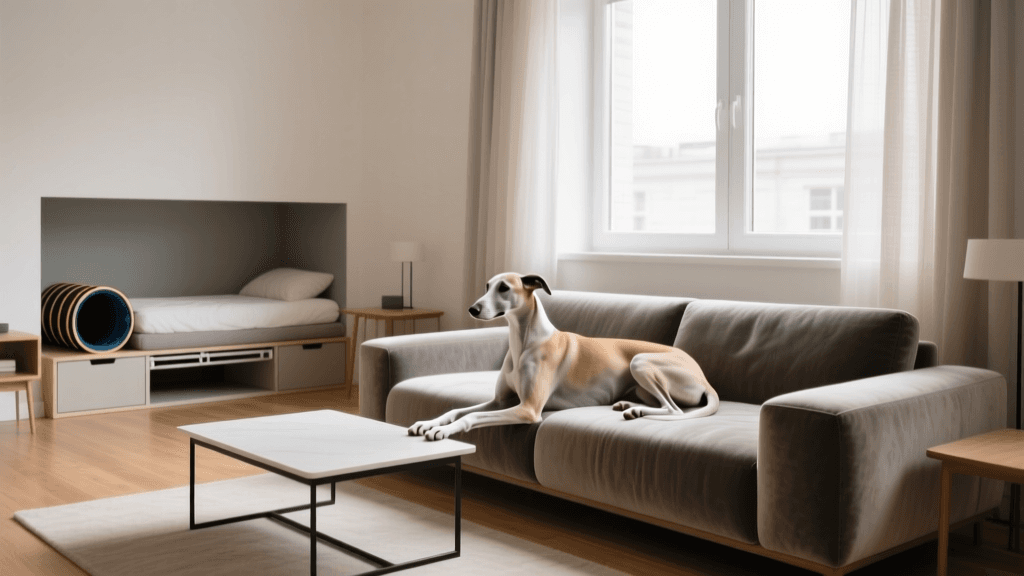
When most people picture a Greyhound, they imagine the blur of fur tearing down a racetrack at 45 miles per hour. Because of this, many apartment dwellers assume that sharing a small living space with the world's fastest dog breed is a recipe for disaster. However, the reality of Greyhound ownership is vastly different from their racing reputation. According to the American Kennel Club, Greyhounds are famously known as '45-mph couch potatoes.' They are sprinters, not endurance athletes, meaning they expend their energy in short, explosive bursts and then require up to 18 hours of sleep per day.
For apartment residents, this temperament is actually a massive advantage. Unlike herding breeds or terriers that require constant mental stimulation and hours of daily running, a retired racing Greyhound or a well-adjusted pet Greyhound is remarkably suited to indoor lounging. They are generally quiet, rarely bark at passersby, and are content to simply occupy a soft corner of your living room. However, thriving with a sighthound in a compact space requires specific adjustments to your environment, daily routine, and climate control.
Space Management: Fitting a Giant Dog in a Small Space
Greyhounds are large dogs, typically weighing between 60 and 70 pounds, with a deep chest and long, gangly legs. While they do not need a massive backyard, they do require adequate indoor clearance to stretch out. Greyhounds are notorious for 'roaching'—sleeping flat on their backs with all four legs pointing toward the ceiling. To accommodate this, you need a living space with unobstructed floor area.
Furthermore, consider the placement of your furniture. Greyhounds are tall, and they often like to rest their chins on coffee tables or low windowsills. Ensure that fragile items are secured or placed out of reach of a sweeping tail or a suddenly stretching hound. Navigating a small apartment requires clear pathways to prevent awkward collisions.
The Right Bed for a Bony Dog
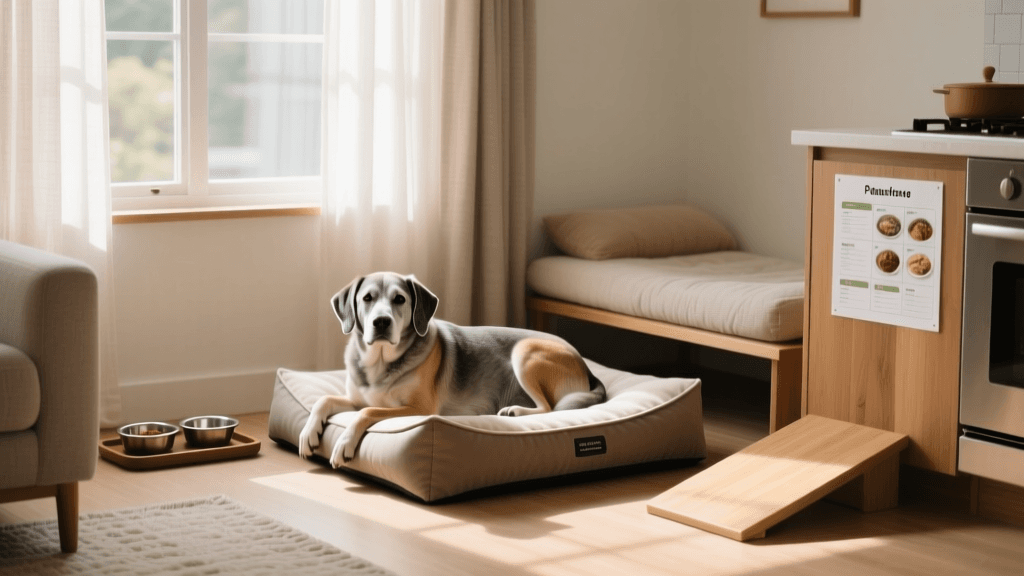
Greyhounds have very low body fat and minimal natural padding over their bony prominences. A standard plush dog bed will quickly flatten out, leading to painful pressure sores on their hocks and elbows. You must invest in a high-quality, supportive bed. The Kuranda Chewproof Dog Bed (approx. $130 for the 44' x 30' large size) is a staple in the Greyhound community. Its elevated, hammock-style design distributes weight evenly and keeps the dog off cold apartment floors. Alternatively, a 4-inch orthopedic memory foam mattress, such as the Big Barker Top Dog Bed (approx. $240), provides the necessary joint support for older retirees.
Traction and Flooring
Most modern apartments feature laminate, hardwood, or tile flooring. For a Greyhound, these surfaces are essentially ice rinks. Their paws are not as heavily padded as working breeds, and their nails can struggle to find grip. Slipping can lead to catastrophic injuries, including torn cruciate ligaments or splayed toes. You must create 'safe zones' of traction. Invest in large, non-slip area rugs or modular carpet tiles. Brands like Ruggable are excellent for apartment dwellers because their top layers are machine-washable, which is crucial for managing the occasional muddy paw print or drool.
The Daily Routine: Exercise and Enrichment
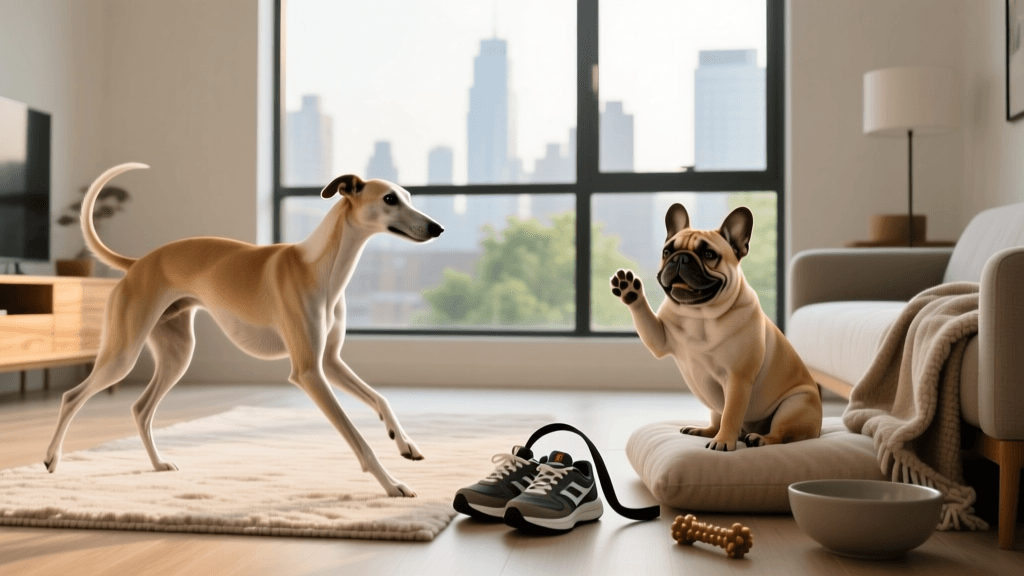
While they are couch potatoes, Greyhounds still require structured daily exercise to maintain muscle tone, prevent obesity, and support mental health. Rescue organizations like the Greyhound Adoption Center emphasize that a predictable routine helps retired racers transition smoothly into pet life. You do not need hours of free-running space; instead, focus on structured leash walks and brief, high-intensity enrichment.
Mental enrichment is just as important as physical exercise. Because Greyhounds are visual hunters, puzzle toys that rely heavily on scent might not be their primary preference. Instead, utilize visual enrichment games like 'Find It' with brightly colored toys on a snuffle mat, or engage in short, five-minute training sessions focusing on basic obedience using positive reinforcement. This keeps their minds sharp without requiring them to run laps around your living room.
When managing their outdoor exercise, always adhere to the ASPCA's guidelines on safe dog walking, which stress the importance of secure leashes and harnesses. Greyhounds have a high prey drive and can accelerate from zero to full speed in three strides. Never trust a Greyhound off-leash in an unfenced area.
Sample Apartment Greyhound Daily Schedule
| Time of Day | Activity | Duration | Recommended Products & Estimated Costs |
|---|---|---|---|
| 7:00 AM | Morning Potty & Sniffari | 20 mins | Ruffwear Front Range Harness ($40) |
| 8:00 AM | Breakfast & Post-Meal Rest | 45 mins | Slow Feeder Bowl ($15) |
| 12:30 PM | Midday Potty Break | 10 mins | High-Value Treats (Zuke's Mini Naturals, $8) |
| 5:30 PM | Evening Walk & Flirt Pole | 30 mins | Squishy Face Studio Flirt Pole V2 ($35) |
| 8:00 PM | Dinner & Couch Cuddles | 1 hr | Orthopedic Bed / Washable Throw Blanket ($25) |
Climate Control: Managing Thin Coats and Low Body Fat
One of the most critical aspects of living with a Greyhound is managing their sensitivity to temperature. Their single, thin coat and lack of insulating body fat mean they feel the cold much faster than other breeds. Conversely, they can easily overheat in the summer months due to their dark coats and limited ability to pant efficiently compared to larger-chested breeds.
In an apartment, you must curate their wardrobe. During winter walks, a fleece sweater is mandatory. The Hurtta Winter Dog Coat (approx. $90) is highly recommended because it covers the dog's deep chest and extends down to the base of the tail, protecting their vital organs from biting winds. Inside the apartment, if you lower the thermostat at night, provide a self-warming thermal blanket, such as the K&H Pet Products Self-Warming Crate Pad ($30), which reflects the dog's natural body heat back to them without the fire hazard of electric heating pads.
During the peak of summer, apartment air conditioning is usually sufficient, but be mindful of hot pavement during your morning and evening walks. Greyhounds have thin skin on their paw pads, and asphalt can quickly reach burning temperatures. Always perform the 'seven-second test' with the back of your hand before stepping out. If it is too hot for your hand, it is too hot for their paws.
Navigating Prey Drive and Muzzle Training
Living in an apartment means navigating shared spaces: narrow hallways, crowded elevators, and busy lobby areas. Many retired Greyhounds have a high prey drive, which can manifest as lunging at small dogs, cats, or even fast-moving children. To ensure the safety of your neighbors and your dog, muzzle training is a non-negotiable aspect of responsible Greyhound ownership.
A muzzle is not a punishment; it is a vital safety tool that allows your dog to participate in the world safely. The Baskerville Ultra Muzzle (Size 4 or 5, approx. $25) is the gold standard for sighthounds. It is made of a flexible, lightweight thermoplastic rubber that allows the dog to pant, drink, and accept treats while completely preventing bites. Begin conditioning your Greyhound to the muzzle inside your apartment using high-value treats like squeeze cheese or peanut butter, gradually working up to wearing it during elevator rides and lobby walks.
The Real Costs of Apartment Greyhound Ownership
Budgeting for a large breed in an urban environment requires foresight. While Greyhounds eat less than you might expect for their size (usually 3 to 4 cups of high-quality kibble per day), their specialized gear and medical needs can add up.
- Adoption Fee: $300 - $500 (Usually includes spay/neuter, dental cleaning, and microchip).
- Specialized Bedding: $130 - $250 (Kuranda or Memory Foam).
- Winter Wardrobe: $100 - $150 (Coats, fleece pajamas for indoor lounging).
- Pet Rent/Deposit: $50/month or $300 deposit (Standard for large breeds in most apartment complexes).
- Veterinary Care: Greyhounds have unique blood chemistry and are highly sensitive to certain anesthetics (specifically barbiturates). Ensure your apartment-adjacent vet is sighthound-savvy. Annual checkups and preventative care will cost roughly $400 - $600.
Final Thoughts
Sharing your apartment with a Greyhound is a deeply rewarding experience. They are gentle, affectionate, and remarkably adaptable dogs that thrive on companionship rather than square footage. By investing in the right orthopedic bedding, managing your floor traction, and committing to a structured, climate-aware daily routine, you can provide a luxurious, fulfilling life for a retired racer or a pet Greyhound. Embrace the roaching, enjoy the quiet evenings, and revel in the joy of living with the world's most elegant couch potato.
priya-sutaria
All our authors care for dogs every day — read more of their work on the authors page.