Vet and Trainer QA: Managing Canine Osteoarthritis
Discover expert vet and trainer advice on managing canine osteoarthritis. Learn about joint supplements, safe exercises, and pain management strategies.

Introduction: A Dual Approach to Canine Osteoarthritis
Canine osteoarthritis (OA) is a progressive, degenerative joint disease that affects an estimated 1 in 5 adult dogs. It is characterized by the breakdown of joint cartilage, leading to pain, stiffness, and a significant decrease in mobility. While the medical diagnosis and pharmaceutical management of OA fall squarely into the veterinary domain, the day-to-day lifestyle, exercise modification, and mental enrichment of an arthritic dog require the expertise of a professional dog trainer. When these two disciplines collaborate, the quality of life for the senior or injured dog improves exponentially.
In this exclusive Q&A, we sit down with Dr. Elena Rostova, a board-certified veterinary surgeon specializing in canine orthopedics, and Marcus Thorne, a Certified Professional Dog Trainer (CPDT-KA) who specializes in senior dog mobility and canine conditioning. Together, they break down the medical realities of joint disease and provide actionable, measurable strategies for pet parents navigating a canine OA diagnosis.
The Veterinary Perspective: Understanding and Managing Joint Pain
Dr. Rostova: Osteoarthritis is not simply a 'wear and tear' condition of old age; it is a complex, inflammatory disease. When cartilage degrades, the underlying bone is exposed, leading to the formation of osteophytes (bone spurs) and chronic inflammation of the synovial fluid. The most critical mistake I see owners make is waiting until their dog is visibly limping to seek help. By the time a limp is obvious, significant joint remodeling has already occurred.
Modern veterinary medicine utilizes a multimodal approach to pain management. According to the guidelines established by the WSAVA Global Pain Council, relying on a single medication is rarely sufficient for chronic OA. We typically combine Non-Steroidal Anti-Inflammatory Drugs (NSAIDs) like carprofen or meloxicam with adjunctive therapies such as gabapentin for neuropathic pain, or the newer monoclonal antibody therapy, bedinvetmab (Librela), which specifically targets Nerve Growth Factor (NGF) to block pain signals at the source.
The Trainer Perspective: Modifying Exercise and Enrichment
Marcus Thorne: From a behavioral and conditioning standpoint, the biggest hurdle for owners is accepting that their dog's physical capabilities have changed. Many owners try to 'push through' the stiffness, believing that long, strenuous hikes will keep the dog's muscles strong. In reality, high-impact activities like repetitive ball fetching, jumping into SUVs, or running on hard pavement accelerate cartilage degradation.
My role is to help owners transition from high-impact physical exhaustion to low-impact mental exhaustion. A 45-minute game of fetch might leave an arthritic dog in agonizing pain for the next 48 hours. However, a 20-minute 'Sniffari'—a decompression walk on a long line in a natural, soft-surfaced environment where the dog is allowed to sniff at their own pace—provides immense mental stimulation without the concussive force on the joints. Sniffing lowers a dog's heart rate and engages their parasympathetic nervous system, offering a profound sense of calm and satisfaction.
Expert Q&A: Tackling Common OA Challenges
Q1: The pet store aisle is overwhelming. Which joint supplements actually have clinical backing, and what should I look for on the label?
Dr. Rostova: The supplement industry is largely unregulated, meaning many products do not contain the active ingredients listed on their labels. I always recommend products that carry the National Animal Supplement Council (NASC) seal of quality. Here is a breakdown of the most evidence-based supplements, specific product examples, and general dosage guidelines.
| Supplement Type | Primary Benefit | Recommended Product Example | Target Dosage Guideline |
|---|---|---|---|
| Omega-3 Fatty Acids (EPA/DHA) | Reduces synovial inflammation and modulates the immune response in the joint. | Nordic Naturals Omega-3 Pet or Welactin Canine | Aim for 100mg of combined EPA/DHA per 10 lbs of body weight daily. |
| Green-Lipped Mussel (GLM) | Provides natural glycosaminoglycans (GAGs) and unique anti-inflammatory compounds. | Super Snouts Joint Balm (oral) or YuMOVE Dog | 15mg to 20mg of GLM extract per pound of body weight. |
| Glucosamine HCl & Chondroitin Sulfate | Provides building blocks for cartilage repair and inhibits cartilage-degrading enzymes. | Dasuquin Advanced or GlycoFlex Plus | Follow manufacturer weight-based loading dose for 4-6 weeks, then maintain. |
| Adequan (Polysulfated Glycosaminoglycan) | Prescription injectable that prevents cartilage breakdown and stimulates new synthesis. | Adequan Canine (Veterinary Prescription Only) | Administered via intramuscular injection by a vet, typically twice weekly for 4 weeks. |
Q2: My 70lb Labrador struggles to get into the back of my SUV. What are the exact measurements I need for a safe ramp?
Marcus Thorne: Jumping down from a vehicle is actually more destructive to arthritic joints than jumping up, due to the eccentric muscle contractions and concussive landing forces. When buying a ramp, the critical metric is the incline grade. For a senior or arthritic dog, you want an incline no steeper than 18 to 20 degrees.
If the bed of your SUV is 30 inches off the ground, a 4-foot ramp will create a dangerous 32-degree incline. You need a ramp that is at least 7 to 8 feet long to achieve a safe, gentle slope. Look for telescoping aluminum ramps with a high-traction, sandpaper-like surface or artificial turf. Avoid plastic ramps that flex under a 70lb dog, as the instability will cause anxiety and potential paw-pad burns or slips.
Q3: Since we stopped playing fetch, my dog seems bored and slightly depressed. How do I tire him out safely?
Marcus Thorne: Physical fatigue and mental fatigue are not the same, but mental fatigue often leaves a dog feeling more satisfied. We replace fetch with 'cognitive conditioning.' Here are three low-impact, high-reward activities:
- Snuffle Mats and Scatter Feeding: Hide your dog's daily kibble ration in a dense snuffle mat or scatter it across a grassy lawn. It can take a dog 20 minutes to forage their meal, burning as many calories and providing as much mental engagement as a 2-mile run.
- Lick Mats with Frozen Enrichment: Spread plain Greek yogurt, pumpkin puree, or bone broth on a textured silicone lick mat and freeze it. Licking releases endorphins in the canine brain, providing a natural soothing effect for chronic pain sufferers.
- Hand-Targeting and Shaping: Teach your dog to 'touch' your hand with their nose while they are lying on an orthopedic bed. This 10-minute training session builds focus and burns mental energy without requiring them to stand or pivot on sore hips.
Structured Daily Routine for the Arthritic Dog
Consistency is vital for managing canine OA. Fluctuating activity levels—such as resting all week and then going on a massive weekend hike—will trigger severe inflammatory flare-ups. Here is a structured, actionable daily routine designed to maintain joint mobility without triggering pain.
Morning (7:00 AM - 8:00 AM)
- Warm-Up: Before the first outdoor potty break, spend 3 minutes gently massaging the dog's hindquarters and doing passive range-of-motion (PROM) exercises if taught by your veterinary rehab therapist.
- Walk: A 15-minute leash walk on a flat, soft surface (grass or dirt). Avoid concrete.
- Medication: Administer morning NSAIDs or joint supplements with breakfast to prevent gastrointestinal upset.
Mid-Day (12:00 PM - 2:00 PM)
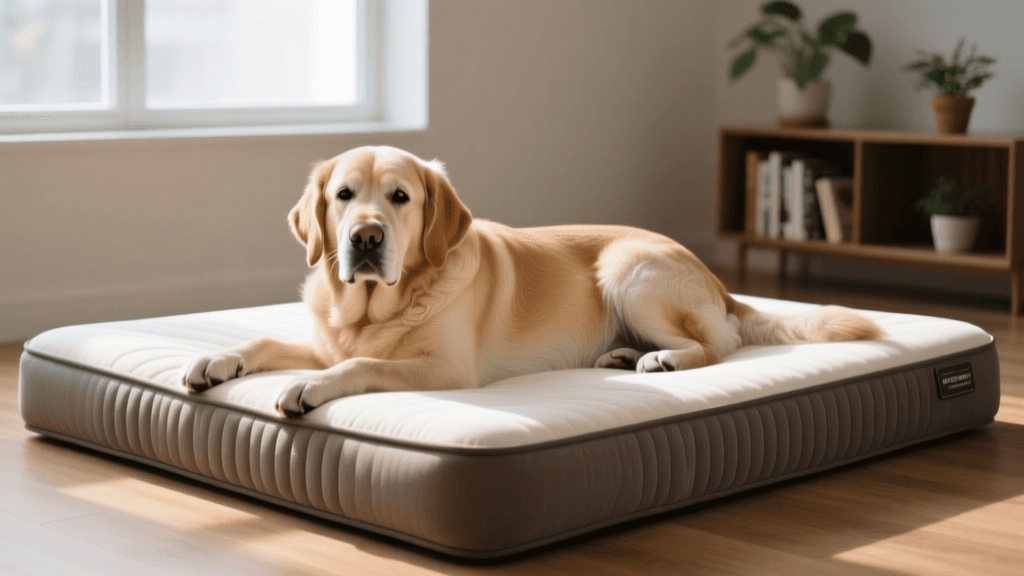
- Enrichment: Provide a frozen lick mat or a puzzle toy while the dog is resting on a supportive orthopedic bed (minimum 4 inches of high-density memory foam to prevent pressure sores on bony prominences).
- Potty Break: A brief 5-minute outdoor trip. Use a supportive rear-lift harness (like the Help 'Em Up Harness) if the dog struggles with stairs or slippery indoor floors.
Evening (5:00 PM - 7:00 PM)
- Sniffari: A 20-minute decompression walk in a quiet park, allowing the dog to dictate the pace and sniff extensively.
- Training: 10 minutes of low-impact trick training (e.g., 'spin' slowly, 'touch', 'speak') to maintain neuromuscular pathways.
- Environment Prep: Ensure the home is set up for the night. Lay down yoga mats or area rugs over hardwood floors to provide traction, preventing the dog's legs from splaying out when they try to stand.
Conclusion: A Partnership in Care
Managing canine osteoarthritis is not about finding a cure; it is about curating a lifestyle that maximizes comfort, dignity, and joy. As highlighted by the comprehensive disease models in the Merck Veterinary Manual, OA requires continuous monitoring and adjustment. By combining the pharmacological expertise of your veterinarian with the environmental and behavioral strategies of a professional trainer, you can ensure your dog's golden years are defined by comfort and engagement, rather than pain and limitation. Always consult your veterinary team before introducing new supplements or altering your dog's exercise regimen.
aaron-whyte
All our authors care for dogs every day — read more of their work on the authors page.