8 to 12 Week Puppy Care Guide: Feeding, Potty Training, and Sleep
Master the 8 to 12 week puppy stage with our expert guide on feeding schedules, potty training timelines, sleep needs, and early socialization tips.
The Critical 8 to 12 Week Window: What to Expect
Bringing home an 8-week-old puppy is a monumental milestone, but it also marks the beginning of one of the most demanding developmental stages in a dog's life. The 8 to 12-week period is characterized by rapid physical growth, intense neurological development, and the crucial transition from litter-dependent life to human-guided routines. During this window, your puppy's brain is highly receptive to new experiences, making it the prime time for foundational training and socialization. However, it is also a period of extreme vulnerability, both physically and emotionally. According to the ASPCA's comprehensive puppy care guidelines, establishing a consistent, safe, and nurturing environment during these first four weeks at home will dictate your dog's behavioral and physical health for the rest of their life. This guide provides a meticulous, actionable blueprint for navigating the 8 to 12-week life stage, covering exact feeding measurements, potty training schedules, sleep requirements, and veterinary milestones.
Nutrition and Feeding Schedules
At 8 weeks of age, your puppy is fully weaned and requires a diet specifically formulated for rapid growth phases. Their stomachs are exceptionally small, meaning they cannot consume large meals. Instead, you must divide their daily caloric intake into three to four distinct meals per day. Feeding a high-quality, AAFCO-approved puppy food is non-negotiable. For large breeds, select a 'Large Breed Puppy' formula to regulate calcium and phosphorus levels, preventing developmental orthopedic diseases like hip dysplasia.
Portion Sizes, Brands, and Costs
While you should always refer to the feeding chart on your specific kibble packaging and your veterinarian's recommendations, a general guideline for an 8-to-10-week-old medium-breed puppy (expected adult weight 30-50 lbs) is approximately 1/2 to 3/4 cup of high-quality dry kibble per meal, fed three times daily. Premium brands such as Purina Pro Plan Focus Puppy or Royal Canin Puppy typically cost between $50 and $75 for an 18-pound bag, which should last an average medium-breed puppy about a month during this stage. If your puppy struggles with hard kibble, you can soften it using warm water or a dedicated puppy milk replacer like PetAg Esbilac (approx. $20 per canister). Never use cow's milk, as the lactose will cause severe gastrointestinal distress and diarrhea, leading to dangerous dehydration in young puppies.
Potty Training: A Structured Blueprint
Potty training an 8-week-old puppy requires immense patience and an understanding of their physiological limitations. At 8 weeks, a puppy's bladder sphincter muscles are not fully developed. The general rule of thumb is that a puppy can hold their bladder for one hour per month of age, plus one. Therefore, an 8-week-old (2-month-old) puppy can physically hold it for a maximum of three hours, but only while resting or sleeping. When active and playing, they will need to eliminate every 45 to 90 minutes.
Accidents are inevitable. When they occur, you must use an enzymatic cleaner specifically designed to break down uric acid crystals. Standard household cleaners will not eliminate the scent markers that draw the puppy back to the same spot. Products like Nature's Miracle Advanced Stain and Odor Eliminator (approx. $15 per bottle) are essential investments for this life stage.
Daily Potty and Activity Schedule (8 to 10 Weeks)
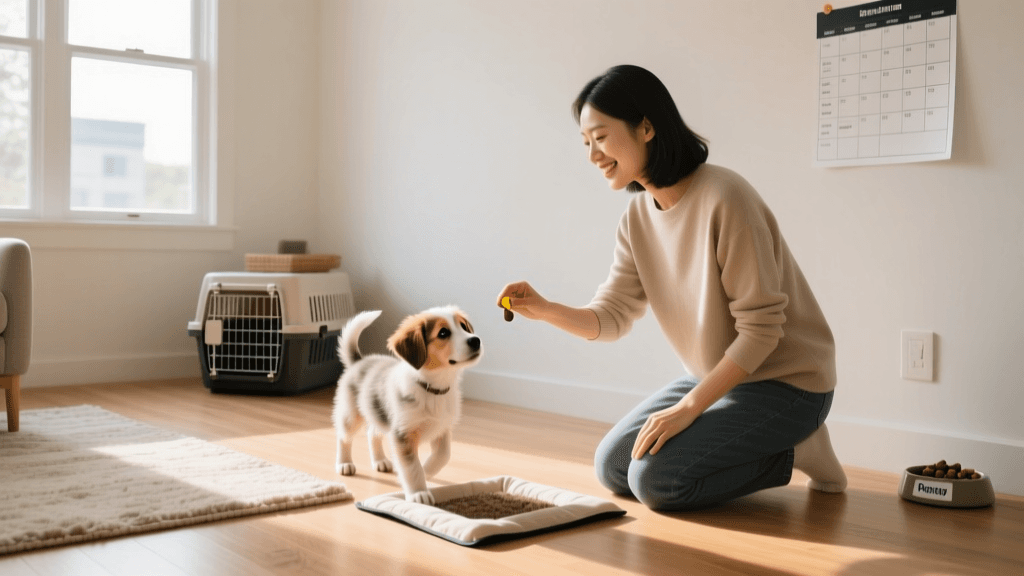
| Time | Activity | Details & Action Items |
|---|---|---|
| 7:00 AM | Wake & Potty | Carry the puppy outside immediately upon waking. Praise and reward with a high-value treat (e.g., Zuke's Mini Naturals). |
| 7:30 AM | Breakfast | Serve the first of three daily meals. Remove the bowl after 15 minutes to establish a schedule. |
| 7:45 AM | Potty & Play | Take outside immediately after eating. Engage in 20 minutes of gentle play and bite-inhibition training. |
| 8:15 AM | Enforced Nap | Place the puppy in their crate. Puppies this age need 18-20 hours of sleep. Expect crying; do not reward it with release. |
| 10:15 AM | Wake & Potty | Carry outside immediately. Follow with 30 minutes of supervised exploration and socialization exercises. |
| 11:00 AM | Lunch | Serve the second daily meal. Follow immediately with a potty break. |
| 11:30 AM | Enforced Nap | Back into the crate or a secure playpen for a 2-hour rest period. |
| 1:30 PM | Wake, Potty, Train | Outdoor potty break followed by 10 minutes of basic lure-reward training (sit, name recognition). |
| 2:00 PM | Enforced Nap | Crate time. Consistency in nap scheduling prevents overtired biting and hyperactivity. |
| 4:00 PM | Wake & Potty | Outdoor break, followed by gentle chewing time with a frozen KONG Puppy toy to soothe early teething gums. |
| 5:00 PM | Dinner | Final meal of the day. Follow with a potty break and a calm wind-down period. |
| 6:00 PM | Evening Routine | Low-energy play, grooming habituation (touching paws, ears), and final potty breaks before bed. |
| 9:00 PM | Bedtime | Crate covered with a light sheet. Set an alarm for 2:00 AM for a silent, middle-of-the-night potty break. |
Sleep Requirements and Crate Training
It often surprises new owners that an 8-week-old puppy requires between 18 and 20 hours of sleep per day. Much like human toddlers, puppies do not always recognize when they are exhausted. An overtired puppy will not simply fall asleep; instead, they will become hyperactive, vocal, and prone to aggressive 'landshark' biting. Implementing 'enforced naps' is a critical management tool during this life stage.
Crate training is the most effective method for enforcing naps and aiding potty training, as dogs naturally avoid soiling their sleeping quarters. Select a crate that will accommodate your dog's adult size, but use a wire divider to restrict the space. For example, if you have a Labrador Retriever, purchase a 36-inch or 42-inch MidWest Homes for Pets crate (approx. $55-$75), but divide it so the puppy only has enough room to stand up, turn around, and lie down. If the crate is too large, the puppy will designate one corner for sleeping and another for eliminating, entirely defeating the purpose of the training.
Navigating the First Fear Period and Socialization
The 8 to 12-week window coincides with a well-documented developmental phase known as the 'Fear Impact Period.' During this time, negative experiences can leave a lasting psychological imprint that may result in lifelong phobias or reactivity. The goal of socialization at this age is not to force interactions, but to provide positive, passive exposure to novel stimuli. Allow your puppy to observe traffic, hear household appliances, and see people wearing hats or carrying umbrellas from a safe distance, rewarding them with high-value treats like boiled chicken or freeze-dried liver.
The American Kennel Club (AKC) emphasizes that socialization is about quality, not quantity. Forcing a fearful 9-week-old puppy to be held by strangers can trigger a fear response. Instead, let the puppy approach new people on their own terms. Enrolling in a well-managed puppy kindergarten class where all attendees have had their first round of vaccinations is highly recommended to facilitate safe, size-appropriate play and build canine communication skills.
Veterinary Care and Core Vaccinations
Your puppy's immune system is heavily reliant on maternal antibodies during the first few weeks of life, but these antibodies wane rapidly between 6 and 12 weeks. This creates a window of susceptibility where the puppy is no longer protected by the mother but not yet fully immunized by vaccines. According to the American Veterinary Medical Association (AVMA), core vaccines—specifically the DHPP (Distemper, Hepatitis, Parainfluenza, and Parvovirus) combination—must be administered in a series every 3 to 4 weeks until the puppy is at least 16 weeks old.
Expected Veterinary Timeline and Costs
- 8-Week Visit: Initial physical exam, first DHPP booster, deworming (pyrantel pamoate), and fecal float test. Expect to pay between $100 and $150.
- 12-Week Visit: Second DHPP booster, Bordetella (kennel cough) vaccine if attending group classes, and heartworm/flea/tick prevention prescription. Expect to pay $80 to $120.
Because the puppy is not fully vaccinated until 16 weeks, you must practice strict biosecurity. Do not allow your 8-to-12-week-old puppy to walk on public sidewalks, visit dog parks, or interact with dogs of unknown vaccination status. Parvovirus is highly contagious, incredibly resilient in the environment, and frequently fatal to young puppies. You can safely socialize your puppy by carrying them in a sling or using a stroller to expose them to the outside world without letting their paws touch high-risk surfaces.
Early Teething Prep and Bite Inhibition
While the most intense teething phase occurs between 4 and 6 months, an 8-week-old puppy already possesses 28 razor-sharp deciduous (baby) teeth. Puppies explore the world with their mouths, and littermates naturally teach 'bite inhibition' by yelping and stopping play when bitten too hard. When you bring the puppy home, you must take over this educational role.
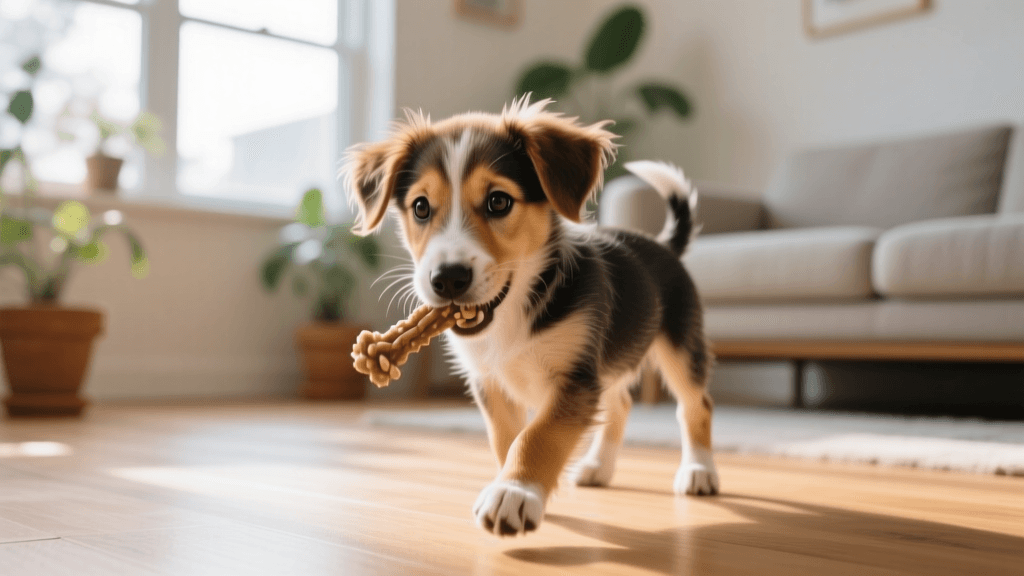
When the puppy's teeth touch human skin, let out a high-pitched 'ouch' and immediately withdraw your attention by standing up and turning away for 10 seconds. This mimics littermate behavior. Simultaneously, you must provide appropriate alternatives. Keep a variety of textures on hand, such as the KONG Classic Puppy (approx. $12), Nylabone Puppy Chew Toys, and frozen, twisted wet washcloths. The cold temperature numbs their gums and satisfies their biological urge to chew, saving your baseboards and furniture from destruction.
Conclusion
The 8 to 12-week life stage is a whirlwind of sleepless nights, potty accidents, and boundless energy. By adhering to a strict schedule, prioritizing positive socialization, and staying on top of veterinary protocols, you are laying an unshakable foundation for a well-adjusted, healthy adult dog. Consistency is your greatest tool during this transitional period.
priya-sutaria
All our authors care for dogs every day — read more of their work on the authors page.