Golden Retriever vs. Labrador: Puppy Care & Selection
Compare Golden Retriever and Labrador puppies. Learn about early socialization, teething, feeding costs, and which breed fits your lifestyle best.
Introduction to the Retriever Rivalry
Choosing between a Golden Retriever and a Labrador Retriever is one of the most common dilemmas for prospective dog owners. Both breeds consistently rank at the top of the American Kennel Club’s popularity lists, and for good reason. They are intelligent, affectionate, and highly trainable. However, when it comes to the first year of puppy care, subtle differences in their development, chewing habits, and physical growth can significantly impact your daily routine and budget. In this comprehensive guide, we break down the critical puppy care milestones, gear requirements, and first-year costs to help you select the perfect retriever for your family.
Breed Temperament and Early Selection
While adult Goldens and Labs share a friendly demeanor, their puppy temperaments differ slightly. According to the American Kennel Club's Golden Retriever breed profile, Goldens are known for their eager-to-please, slightly softer, and more sensitive nature. In contrast, the AKC's Labrador Retriever profile highlights their boisterous, high-energy, and sometimes more stubborn puppy phase. If you have very young children or a quieter household, a Golden Retriever puppy’s softer temperament might be easier to manage during the chaotic first few months. If you lead an active, outdoor-heavy lifestyle and want a rugged hiking companion, a Labrador’s boundless puppy energy is an excellent match.
Developmental Milestones: 8 Weeks to 12 Months
8 to 12 Weeks: Socialization and Bite Inhibition
Both breeds are highly mouthy as puppies, a trait stemming from their retrieving genetics. However, Labrador puppies tend to bite harder and more persistently. During the 8 to 12-week window, focus heavily on bite inhibition. Use redirection techniques, offering a KONG Classic Puppy Toy stuffed with frozen peanut butter whenever the puppy’s teeth touch your skin. Goldens typically grasp bite inhibition slightly faster due to their sensitive nature, often responding well to a simple yelp and withdrawal of attention. Labs may require more consistent, repetitive redirection and structured timeout periods in their playpen.
3 to 6 Months: The Teething and Chewing Phase
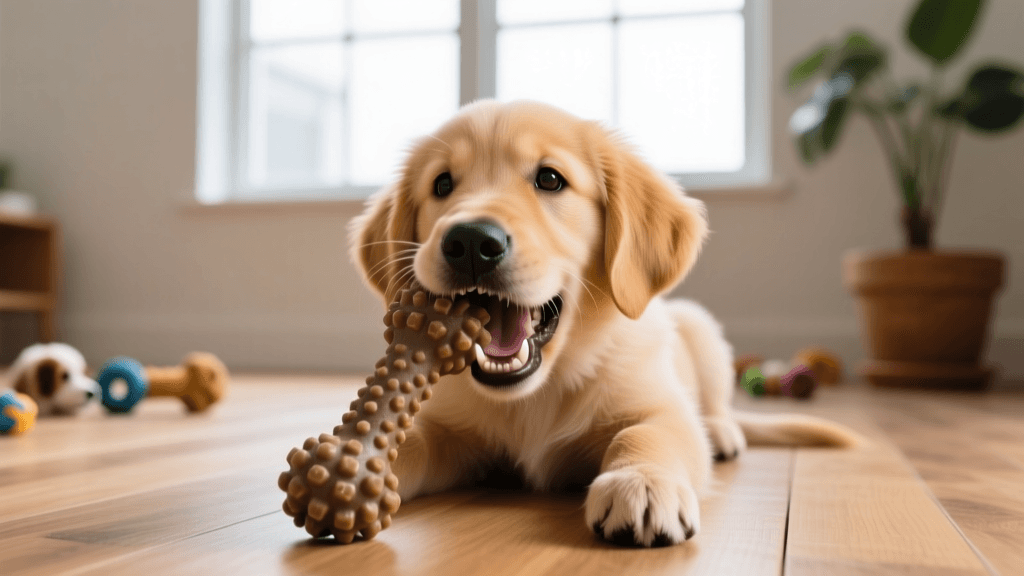
This is where the breeds diverge most noticeably in terms of household destruction. Labrador puppies are notorious for their intense, prolonged chewing phase, which can last well past their first birthday. You will need to invest heavily in durable chew toys like the Nylabone Dura Chew or Benebone Wishbone. Golden Retrievers also chew, but they are generally less destructive with hard household items. For Labs, puppy-proofing must be extreme; baseboards, shoes, and drywall are all fair game. Keep a spray bottle of bitter apple deterrent on hand and restrict unsupervised roaming until they are at least 12 months old.
6 to 12 Months: Adolescence and Joint Care
Both breeds are prone to hip and elbow dysplasia. During the adolescent growth spurts, it is vital to avoid forced exercise on hard surfaces. The Orthopedic Foundation for Animals (OFA) recommends limiting repetitive jumping and jogging until a large breed puppy's growth plates close, typically around 18 to 24 months. Feed both breeds a high-quality large-breed puppy formula, such as Purina Pro Plan Large Breed Puppy, which contains calibrated calcium and phosphorus levels to ensure steady, safe bone growth. Incorporating a joint supplement like Dasuquin early on can also support long-term orthopedic health.
Potty Training and Crate Sizing
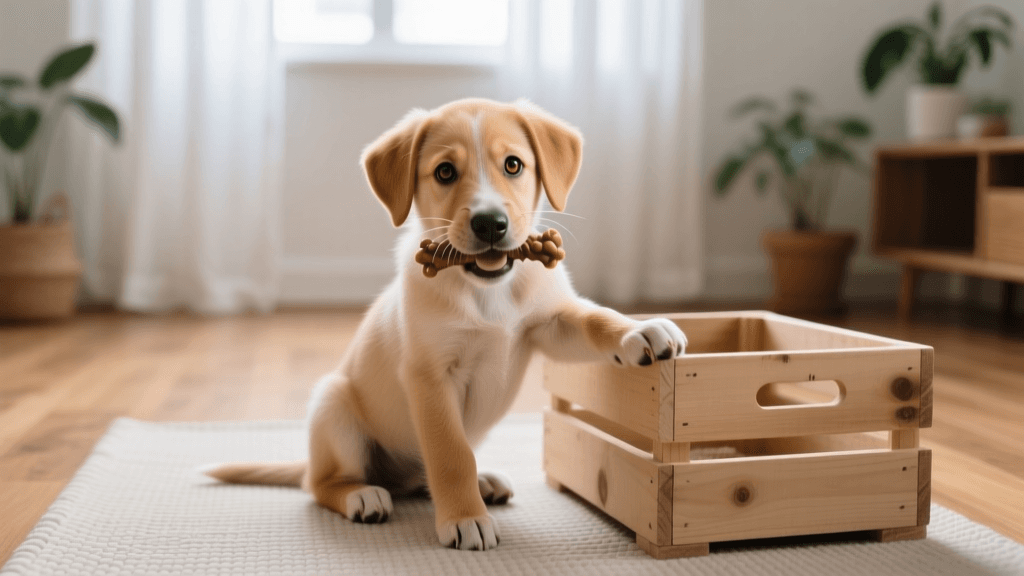
Potty training timelines are nearly identical for both breeds, with most puppies achieving reliable house training between 4 and 6 months of age. However, crate sizing requires foresight. Both Goldens and Labs will eventually need a 42-inch crate. To save money, purchase a MidWest Homes for Pets iCrate that comes with an adjustable divider panel. This allows you to expand the sleeping area as your puppy grows, preventing them from soiling one end of the crate while sleeping in the other. Because Labrador puppies tend to be slightly more restless at night during their early weeks, placing the crate in your bedroom and using a white noise machine can help soothe their anxiety.
First-Year Cost and Gear Comparison
While the initial purchase or adoption fee varies, the first-year care costs for these two breeds have slight variations, primarily driven by their appetite and chewing intensity. Below is a comparative breakdown of estimated first-year expenses for a healthy puppy.
| Expense Category | Golden Retriever | Labrador Retriever |
|---|---|---|
| Large Breed Puppy Food (Year 1) | $450 - $600 | $550 - $700 |
| Durable Chew Toys & Deterrents | $120 | $250 |
| 42-Inch Crate with Divider | $75 | $75 |
| Puppy Obedience Classes | $200 | $200 |
| Grooming Supplies & Tools | $80 | $45 |
| Joint Supplements (Dasuquin) | $150 | $150 |
| Total Estimated Gear & Care | $1,075 - $1,225 | $1,270 - $1,420 |
Nutrition and Feeding Schedules
Large breed puppies require carefully managed caloric intake to prevent rapid growth, which stresses developing joints. From 8 weeks to 3 months, feed your puppy three to four measured meals a day. Transition to two meals a day after 3 months. Labrador puppies are notoriously food-motivated and prone to rapid eating, which increases the risk of gastric dilatation-volvulus (bloat) later in life. It is highly recommended to feed Labs using a slow-feeder bowl, such as the Outward Hound Fun Feeder, from day one. Golden Retrievers are also food-loving but generally eat at a more moderate pace, though a slow feeder is still a wise preventive measure.
Early Grooming and Maintenance
Coat care begins in puppyhood to establish positive handling routines. Golden Retrievers possess a longer, flowing double coat that requires brushing at least three times a week using a slicker brush and an undercoat rake to prevent severe matting behind the ears and on the feathering. Labrador Retrievers have a short, dense, water-resistant double coat. While they don't mat, they shed profusely. Introducing a Furminator deShedding Tool or a rubber grooming mitt during the first 8 weeks helps desensitize the puppy to grooming. Both breeds require regular nail trims every two weeks; starting this early prevents the painful quick-growth issues common in adult dogs.
The Verdict: Which Puppy is Right for You?
Selecting between a Golden Retriever and a Labrador Retriever ultimately comes down to your household's tolerance for puppy chaos and your long-term lifestyle. If you prefer a slightly softer, more sensitive companion and don't mind dedicating extra time to coat grooming, the Golden Retriever is an unparalleled family dog. If you want a rugged, highly energetic, and resilient outdoor partner—and you are prepared to replace a few pairs of chewed shoes during their extended teething phase—the Labrador Retriever will be your ultimate adventure buddy. Whichever you choose, committing to early socialization, structured training, and proactive joint care will ensure your puppy thrives into a healthy, well-adjusted adult dog.
priya-sutaria
All our authors care for dogs every day — read more of their work on the authors page.