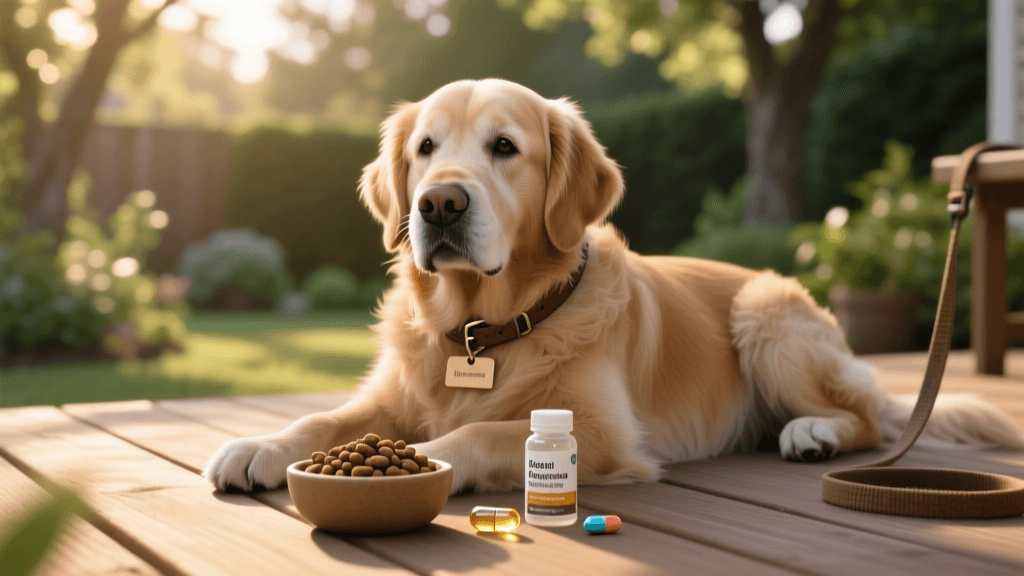
Golden Retriever vs. German Shepherd: Health & Selection Guide
Compare Golden Retriever and German Shepherd health profiles, joint risks, lifespans, and vet costs to make the best breed selection for your family.

Introduction: Choosing Between Two Canine Giants
When selecting a large breed dog, prospective owners often find themselves torn between the Golden Retriever and the German Shepherd Dog (GSD). Both breeds are iconic, intelligent, and deeply loyal. However, from a veterinary and health management perspective, they present vastly different lifelong care requirements, genetic predispositions, and financial commitments. Understanding these breed-specific health profiles is crucial for making an informed selection that aligns with your lifestyle, budget, and emotional readiness. This guide breaks down the physiological vulnerabilities, preventive care protocols, and lifetime costs associated with both breeds to help you make the healthiest choice for your household.
Golden Retriever Health Profile: Cancer and Cardiac Concerns
The Golden Retriever is beloved for its gentle temperament, but the breed is unfortunately plagued by a remarkably high incidence of cancer. According to the extensive data gathered by the Morris Animal Foundation Golden Retriever Lifetime Study, approximately 60% of Golden Retrievers will develop cancer in their lifetime, with hemangiosarcoma and lymphoma being the most prevalent and aggressive forms. This makes oncological screenings and early detection a cornerstone of Golden Retriever healthcare.
Beyond oncology, Goldens are predisposed to cardiac conditions, specifically subvalvular aortic stenosis (SAS), a congenital heart defect that restricts blood flow from the heart. Dermatological issues are also common; many Goldens suffer from severe environmental allergies (atopic dermatitis) and hot spots, requiring lifelong management with medications like Apoquel or Cytopoint injections, which can cost between $40 and $150 per month. While generally robust in their youth, the Golden's senior years require intensive veterinary oversight to manage these compounding systemic issues.
German Shepherd Health Profile: Orthopedic and Neurological Risks
The German Shepherd Dog is a working breed characterized by a sloping back and powerful hindquarters, a conformation that unfortunately predisposes them to severe orthopedic and neurological conditions. The American Kennel Club (AKC) highlights Degenerative Myelopathy (DM) as a critical concern for the breed. DM is an incurable, progressive neurological disease of the spinal cord that eventually leads to paralysis, typically manifesting between 8 and 14 years of age.
Orthopedically, GSDs are highly susceptible to hip and elbow dysplasia, as well as cranial cruciate ligament (CCL) tears. Furthermore, German Shepherds possess a deep chest, placing them at a significantly elevated risk for Gastric Dilatation-Volvulus (GDV), commonly known as bloat. This is a life-threatening emergency where the stomach twists on itself, requiring immediate surgical intervention. Additionally, GSDs are one of the primary breeds affected by Exocrine Pancreatic Insufficiency (EPI), a digestive disorder that prevents the absorption of nutrients and requires lifelong enzyme replacement therapy.
Head-to-Head Health and Financial Comparison
When comparing the two breeds side-by-side, the nature of their health risks shifts from systemic and oncological (Golden) to structural and gastrointestinal (GSD). Below is a comparative breakdown of their primary health metrics and associated costs.
| Health Metric | Golden Retriever | German Shepherd |
|---|---|---|
| Average Lifespan | 10 - 12 Years | 9 - 13 Years |
| Highest Risk Condition | Cancer (Hemangiosarcoma) | Hip Dysplasia & Bloat |
| Hip Dysplasia Prevalence | ~20.5% (OFA Data) | ~19.8% (OFA Data) |
| Prophylactic Surgery Need | Low | High (Gastropexy) |
| Average Monthly Pet Insurance | $65 - $90 | $75 - $110 |
Data from the Orthopedic Foundation for Animals (OFA) indicates that both breeds suffer from hip dysplasia at alarmingly similar rates, hovering around 20%. However, the surgical and management trajectories for these conditions differ based on the dog's weight distribution and working drive.
Orthopedic Care: Managing Joint Dysplasia
Because both breeds are heavily predisposed to joint malformations, responsible breed selection must begin with verifying the orthopedic health of the parents. Prospective owners should only purchase puppies from breeders who provide OFA or PennHIP certifications for hips and elbows. Once the puppy is home, managing joint health becomes a daily routine.
Weight management is the single most effective preventive measure against osteoarthritis. A Golden Retriever should maintain a weight between 55-75 lbs, while a GSD typically ranges from 50-90 lbs. Keeping them on the lean side reduces mechanical stress on the joints. Supplementation should begin early; veterinary-recommended joint supplements containing glucosamine hydrochloride, chondroitin sulfate, and MSM, such as Nutramax Dasuquin Advanced or Cosequin DS Plus, cost approximately $40 to $70 for a two-month supply for a large dog. Additionally, incorporating Omega-3 fatty acids (EPA and DHA) via high-quality fish oil supplements like Nordic Naturals Omega-3 Pet can significantly reduce joint inflammation.
Nutritional Needs and Bloat Prevention
Nutrition plays a pivotal role in the developmental health of large breed puppies. Feeding a diet specifically formulated for large breeds is non-negotiable. These diets restrict calcium and phosphorus levels (ideally maintaining calcium between 1.2% and 1.5% on a dry matter basis) to prevent rapid bone growth that leads to orthopedic deformities. Premium options like Purina Pro Plan Large Breed Puppy or Royal Canin Giant Puppy are scientifically formulated to meet these precise requirements.
For the German Shepherd, bloat prevention is a critical component of daily care. Owners must invest in slow feeder bowls, such as the Outward Hound Fun Feeder, to prevent the dog from inhaling air while eating. Furthermore, veterinary professionals highly recommend a prophylactic gastropexy—a surgical procedure that tacks the stomach to the abdominal wall to prevent twisting. This procedure can be performed concurrently with a spay or neuter surgery, adding roughly $200 to $400 to the initial surgical cost, but it saves the dog's life in the event of a GDV emergency, which can otherwise cost upwards of $5,000 in emergency surgical fees.
Mental Health and Cognitive Decline
Health and wellbeing extend far beyond the physical body; canine mental health is equally vital. German Shepherds are high-drive working dogs that require intense mental stimulation. Without it, they are prone to severe separation anxiety, destructive behaviors, and stress-induced gastrointestinal issues. Investing in puzzle toys like the Kong Classic or Outward Hound Nina Ottosson Dog Brick is essential for their psychological wellbeing. Conversely, Golden Retrievers, while eager to please, are generally more adaptable to a relaxed household environment, though they still require daily engagement to prevent obesity and boredom.
In their senior years, both breeds are susceptible to Canine Cognitive Dysfunction (CCD), akin to dementia in humans. GSDs may show signs of pacing and sleep-wake cycle disruptions, while Goldens may exhibit disorientation. Early intervention with neuro-protective diets, such as Hill's Science Diet Youthful Vitality, and supplements containing medium-chain triglycerides (MCTs) can help support aging brain health.
Financial Realities: Pet Insurance and Lifetime Costs
Selecting between a Golden Retriever and a German Shepherd also means selecting between different financial risk profiles. Because Goldens have such a high rate of expensive cancer treatments, comprehensive pet insurance with high annual limits (e.g., $30,000 or unlimited) is strongly advised. Providers like Healthy Paws or Trupanion are popular choices. For GSDs, insurance is equally vital, primarily to cover the high likelihood of orthopedic surgeries, such as Tibial Plateau Leveling Osteotomy (TPLO) for torn cruciate ligaments, which routinely costs between $3,500 and $5,500 per knee.
Prospective owners must budget for an estimated $1,500 to $2,500 annually in routine and preventive care for either breed, excluding emergency interventions. This includes premium large-breed food ($70-$100/month), heartworm and flea prevention ($25/month), and annual bloodwork.
Final Verdict: Which Breed Fits Your Health Management Style?
Choosing between a Golden Retriever and a German Shepherd requires an honest assessment of your capacity to manage their specific health vulnerabilities. If you are prepared to navigate the emotional and financial challenges of potential oncological care and manage chronic skin allergies, the Golden Retriever offers an unparalleled, gentle companionship. However, if you are more equipped to handle structural orthopedic management, strict dietary protocols to prevent bloat, and the mental enrichment required to stave off anxiety, the German Shepherd will reward you with a fiercely loyal and capable partner. In either case, partnering with a reputable breeder who prioritizes genetic health testing is the most critical first step in ensuring a long, vibrant life for your future dog.
aaron-whyte
All our authors care for dogs every day — read more of their work on the authors page.