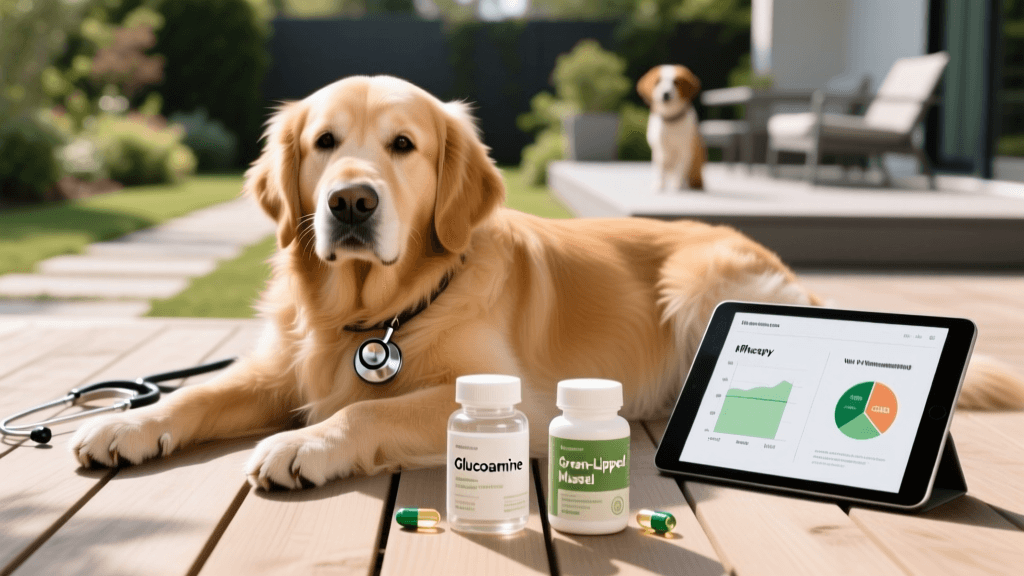
Glucosamine vs Green-Lipped Mussel for Dog Joints in 2026
Discover whether glucosamine or green-lipped mussel is better for your dog's joint health in 2026. Compare efficacy, costs, and vet recommendations.
The 2026 Landscape of Canine Joint Health
As we navigate the veterinary landscape in 2026, managing canine osteoarthritis (OA) and general joint degradation has evolved significantly. With over 20% of adult dogs experiencing some form of joint discomfort, pet parents are increasingly turning to nutraceuticals to maintain mobility and quality of life. The two undisputed heavyweights in the joint supplement market are Glucosamine and Green-Lipped Mussel (GLM). But which one is right for your dog? In this comprehensive guide, we break down the science, efficacy, and 2026 pricing of these two powerhouse ingredients to help you make an informed decision for your furry companion.
Glucosamine: The Traditional Cartilage Builder
Glucosamine is an amino sugar naturally produced in the body and found in the fluid around the joints. It serves as a fundamental building block for glycosaminoglycans (GAGs), which are essential components of cartilage. When a dog ages or suffers from high-impact wear and tear, their natural production of glucosamine slows down, leading to cartilage breakdown and painful bone-on-bone friction.
According to the American Kennel Club, glucosamine remains one of the most widely recommended supplements for joint health due to its proven ability to support cartilage repair and maintain synovial fluid viscosity. However, not all glucosamine is created equal. In 2026, veterinary nutritionists primarily focus on two forms:
- Glucosamine Sulfate: Often considered the most bioavailable form for joint tissue synthesis. It requires a stabilizer (like sodium or potassium chloride) to remain shelf-stable.
- Glucosamine Hydrochloride (HCl): More concentrated and often combined with other joint-supporting compounds like MSM (Methylsulfonylmethane) to enhance overall absorption and anti-inflammatory effects.
Dosing Guidelines: For a standard 50-pound dog, a typical maintenance dose is 500mg to 1000mg daily. Veterinarians usually recommend a 'loading dose' (double the maintenance amount) for the first four to six weeks to saturate the joint tissues before dropping down to the daily maintenance level.
Green-Lipped Mussel (GLM): The Omega-3 Powerhouse
Native to the pristine coastal waters of New Zealand, the Green-Lipped Mussel (Perna canaliculus) has surged in popularity over the last few years, becoming a staple in premium canine joint care by 2026. Unlike glucosamine, which primarily targets cartilage building, GLM is a broad-spectrum anti-inflammatory powerhouse.
GLM contains a unique profile of Omega-3 fatty acids, specifically Eicosatetraenoic Acid (ETA). ETA is exceptionally rare in nature and works by inhibiting the cyclooxygenase (COX) and lipoxygenase (LOX) pathways, which are responsible for producing inflammatory prostaglandins and leukotrienes. Essentially, GLM acts similarly to NSAIDs (non-steroidal anti-inflammatory drugs) but without the harsh gastrointestinal or hepatic side effects associated with long-term pharmaceutical use.
Furthermore, GLM naturally contains a complex matrix of glycosaminoglycans (including chondroitin sulfate and hyaluronic acid), vitamins C and E, and essential minerals like zinc and magnesium. This makes it a 'whole food' approach to joint care. When sourcing GLM in 2026, it is crucial to look for freeze-dried or cold-extracted oil formulations, as high-heat processing destroys the delicate ETA fatty acids and denatures the proteins.
Head-to-Head Comparison: Glucosamine vs. GLM
To help you decide which supplement aligns with your dog's specific needs, we have compiled a direct comparison based on 2026 veterinary consensus and market data.
| Feature | Glucosamine (with Chondroitin/MSM) | Green-Lipped Mussel (GLM) |
|---|---|---|
| Primary Mechanism | Cartilage building block & synovial fluid support | Broad-spectrum anti-inflammatory & nutrient matrix |
| Onset of Action | Slow (4 to 8 weeks for noticeable improvement) | Moderate (2 to 4 weeks for reduced inflammation) |
| Best For | Structural joint degradation, hip dysplasia, post-surgery | Generalized inflammation, senior stiffness, active working dogs |
| Average Monthly Cost (50lb Dog) | $35 - $60 | $40 - $75 |
| Synergy with Pharmaceuticals | High (often paired with Librela or Carprofen) | Moderate (consult vet if dog is on blood thinners) |
Top Vet-Recommended Joint Supplements for 2026
Based on current veterinary recommendations and third-party purity testing, here are three top-tier products dominating the market this year.
1. Nutramax Dasuquin Advanced (The Glucosamine Gold Standard)
Dasuquin Advanced remains a clinic favorite in 2026. It combines high-quality Glucosamine HCl and Chondroitin Sulfate with ASU (Avocado/Soybean Unsaponifiables) and Boswellia serrata extract. ASU has been shown to protect cartilage from degradation more effectively than glucosamine alone. Cost: ~$65 for a 150-count bottle (approx. $43/month for a medium dog). Best For: Dogs with diagnosed osteoarthritis, hip dysplasia, or those recovering from orthopedic surgeries like TPLO.
2. Super Snouts Joint Health (The Pure GLM Choice)
For pet parents seeking a single-ingredient, whole-food approach, Super Snouts offers 100% pure, cold-extracted New Zealand Green-Lipped Mussel powder. It contains no fillers, artificial flavors, or synthetic binders. The cold-extraction process ensures the ETA Omega-3s remain fully bioactive. Cost: ~$45 for a 100g tin (approx. $30/month for a medium dog). Best For: Active sporting dogs needing joint recovery, senior dogs with generalized stiffness, and dogs with sensitive stomachs who react to synthetic supplement blends.
3. VetriScience GlycoFlex Plus (The Hybrid Powerhouse)
Why choose one when you can have both? GlycoFlex Plus combines Glucosamine, MSM, and DMG with a potent dose of Green-Lipped Mussel. This hybrid approach tackles joint health from both the structural and inflammatory angles simultaneously. Cost: ~$55 for 120 chewable tablets (approx. $36/month for a medium dog). Best For: Aging large-breed dogs (like German Shepherds and Golden Retrievers) showing early signs of mobility loss and systemic inflammation.
Maximizing Absorption and Synergy in 2026
According to VCA Animal Hospitals, the efficacy of joint supplements relies heavily on consistent administration and proper pairing with other therapies. Here is how to get the most out of your investment:
- Always Give With Food: Both glucosamine and the Omega-3s in GLM are best absorbed when taken with a meal containing healthy fats. Tossing a chew or powder into your dog's breakfast bowl ensures maximum bioavailability.
- Pair with Monoclonal Antibodies: In 2026, the integration of supplements with veterinary biologics like Librela (bedinvetmab) is a common protocol. While Librela blocks the Nerve Growth Factor (NGF) to stop pain signaling, supplements like GLM and Glucosamine work locally to reduce joint inflammation and support tissue health. Always clear this combination with your primary veterinarian.
- Don't Forget Weight Management: No supplement can outwork the mechanical stress of excess weight. Keeping your dog at a lean Body Condition Score (BCS) of 4/9 or 5/9 reduces joint load by up to 25%, exponentially increasing the effectiveness of your chosen supplement.
The Verdict: Which Should You Choose?
If your dog is dealing with structural cartilage loss, post-surgical recovery, or diagnosed hip dysplasia, a high-quality Glucosamine/Chondroitin/ASU blend like Dasuquin Advanced is your best bet for providing the raw materials needed for joint repair.
If your dog is an active working dog, a senior experiencing generalized morning stiffness, or suffers from systemic inflammation, the unique ETA Omega-3 profile of Green-Lipped Mussel will provide faster, more noticeable relief from inflammatory pain.
Ultimately, the most effective 2026 joint care protocols often utilize a multimodal approach. Combining a premium supplement with weight management, low-impact hydrotherapy, and regular veterinary assessments will ensure your dog stays happy, mobile, and pain-free for years to come.
anouk-beaumont
All our authors care for dogs every day — read more of their work on the authors page.